Choosing a Children's Dentist Near Dobong Station — What Parents Should Actually Look For
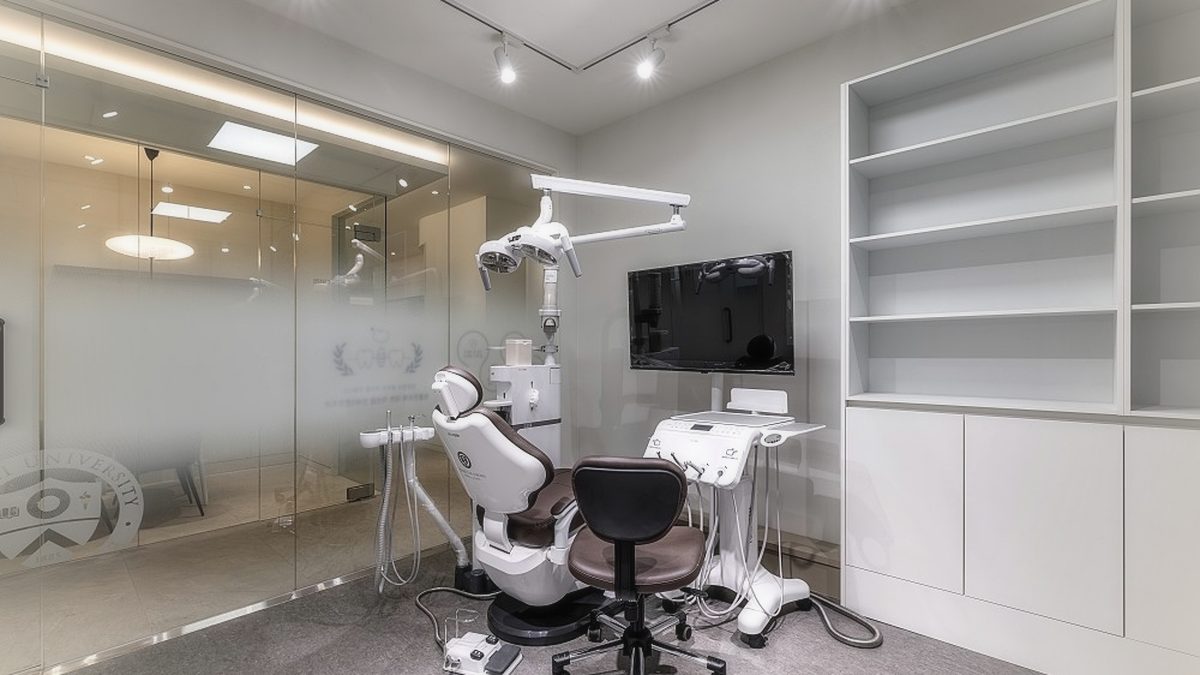
Key takeaway Choosing a dentist for your child is not about finding someone who soothes them well, but someone who keeps them in a state where treatment isn't needed. What happens at the first visit, how far national health insurance goes, five questions to ask at the consultation, and the signs that tell you to look elsewhere.
Hello. I'm Dr. Oh Ji-hwan, director of Yonsei The Strong Dental Clinic.
Let me give you the answer first. The standard for choosing a children's dentist is not "how well do they calm my child down," but "how long do they keep my child in a state where treatment isn't needed." The fact that today ended without tears tells you less about a clinic than what your child's mouth looks like six months later.
It's the season when school dental screening forms come out of backpacks, so I've been hearing one question unusually often in the consultation room: "I don't know where to go." Search for a children's dentist and you get plenty of clinic names, but nobody tells you what to actually look at. More and more families from inside and outside Dobong-gu bring that question to our clinic near Dobong Station.
So instead of introducing our clinic today, I want to lay out the criteria the person doing the choosing needs. How treating children differs from treating adults, what actually happens in what order at a first visit, how far health insurance reaches, and which questions at a consultation reveal how a clinic works. If you finish reading and go somewhere else, that's fine. If you leave holding the criteria, this article has done its job.
What are you really choosing when you choose a children's dentist
Choosing a dentist for a child is less about picking technical skill and more about deciding who will watch alongside you for the several years your child is growing.
Adults come in to fix a tooth that hurts. The problem has an address, and once it's solved the visit is over. Children are different. Filling one cavity today isn't the end of it — when that tooth is due to fall out, when the permanent tooth underneath will come up, whether the grooves on the molars run deep, whether the child has started brushing alone: all of it feeds the next decision. There's a time axis attached.
That difference is where judgments diverge. Faced with the same cavity in a baby tooth, "this one's falling out soon, let's watch it" and "this could threaten the permanent tooth below, let's treat it now" can both be reasonable. The child's age, when that tooth is due to come out, how deep the decay has gone, how long the child can sit still — those combine to set the answer. Whether someone recalculates that combination every single time is what you're actually looking for.
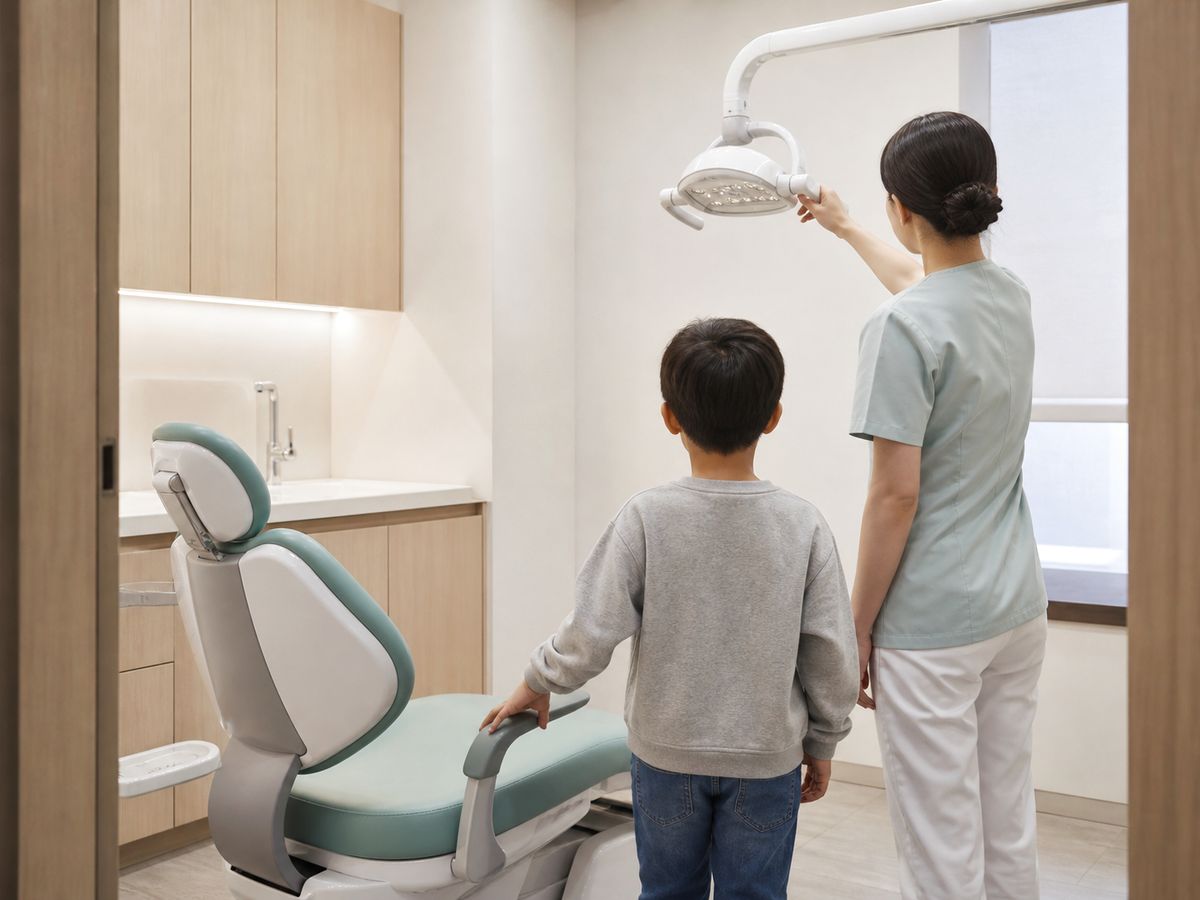
What changes between adult care and children's care
| Item | Adult care | Children's care |
|---|---|---|
| Goal of treatment | Solve the problem that has appeared | Manage so fewer problems appear while they grow |
| Sense of time | The tooth has to last the rest of a life | Baby teeth have a set date to fall out |
| Cooperation | Broadly predictable | Varies with that day's mood, sleep, condition |
| How much at once | Long appointments are possible | Shorter blocks give better results |
| Who gets the explanation | The patient | The child and the guardian, separately |
| Sign of failure | Pain, something coming loose | The child refusing to come back |
I want to sit with that last row a moment longer. The biggest loss in children's care isn't a treatment going wrong — it's the child rejecting dentistry altogether. Once that happens, nobody can touch the next problem until it has grown large. That's why I judge the first few visits not by how much treatment got done, but by whether the child can come back.
What kind of help does my child need right now
Count how many of these apply, and you'll get a rough sense of whether what's needed now is treatment or management.
- It's been more than six months since anyone looked inside their mouth
- The kindergarten or school screening form recommended treatment
- The child chews only on one side, or avoids cold things
- There are dark spots in the grooves on the chewing surfaces of the molars
- The child brushes alone and no adult finishes the job
- There are nights they have milk or a snack and fall asleep straight after
- Food often gets stuck between teeth and floss isn't used
- They cried at a dental visit once and haven't been back since
One or two, and keeping to a regular check-up interval is usually enough. Past three or four, there's more to look at during the check-up. Five or more, and it's worth having the current state properly assessed. This is a rough gauge, of course — it lands differently for every child.
With the criteria in hand, the next thing to see is what actually happens once you walk through the door.
The first visit, step by step
The point of a first visit isn't treatment. It's recording exactly where your child stands, and finding out whether they can tolerate the room.
The order varies a little between clinics, but the shape is usually this.
- Registration and history — I ask about past dental experiences, where it hurts, eating habits, how they brush, what the child particularly dislikes. "They cried at a visit before" matters more than parents expect. About 5–10 minutes.
- Getting used to the room — Before the chair goes back, we walk them around the room and let them feel an instrument against the back of their hand. To adult eyes this looks like wasted time, but the success rate on days we skip it drops noticeably. About 3–5 minutes.
- Visual examination — Tooth by tooth, with a mirror and light. Showing the child what we see, on a screen or in a mirror, helps with cooperation.
- X-rays — For what the eye can't reach, like between the teeth, and for the position of permanent teeth still under the gum. If a child can't tolerate the imaging, we skip it and take it another day.
- Explaining the findings — Separated into what needs treating now, what we watch, and what could use preventive care. Here you should be listening for "why this order" rather than "how many."
- A simple or preventive procedure — If the child is doing well and the scope is small, we sometimes go ahead that day. Otherwise we finish with something light, like a fluoride application. About 10–20 minutes.
- Setting the next appointment — The treatment order and the check-up interval, decided together.
All in, roughly 40 minutes to an hour. On a day when a child is very tense, step 2 can eat all the time and we finish having only examined — and I don't count that as a failed visit. If they walked out in a state where they can come back, the day did its work.
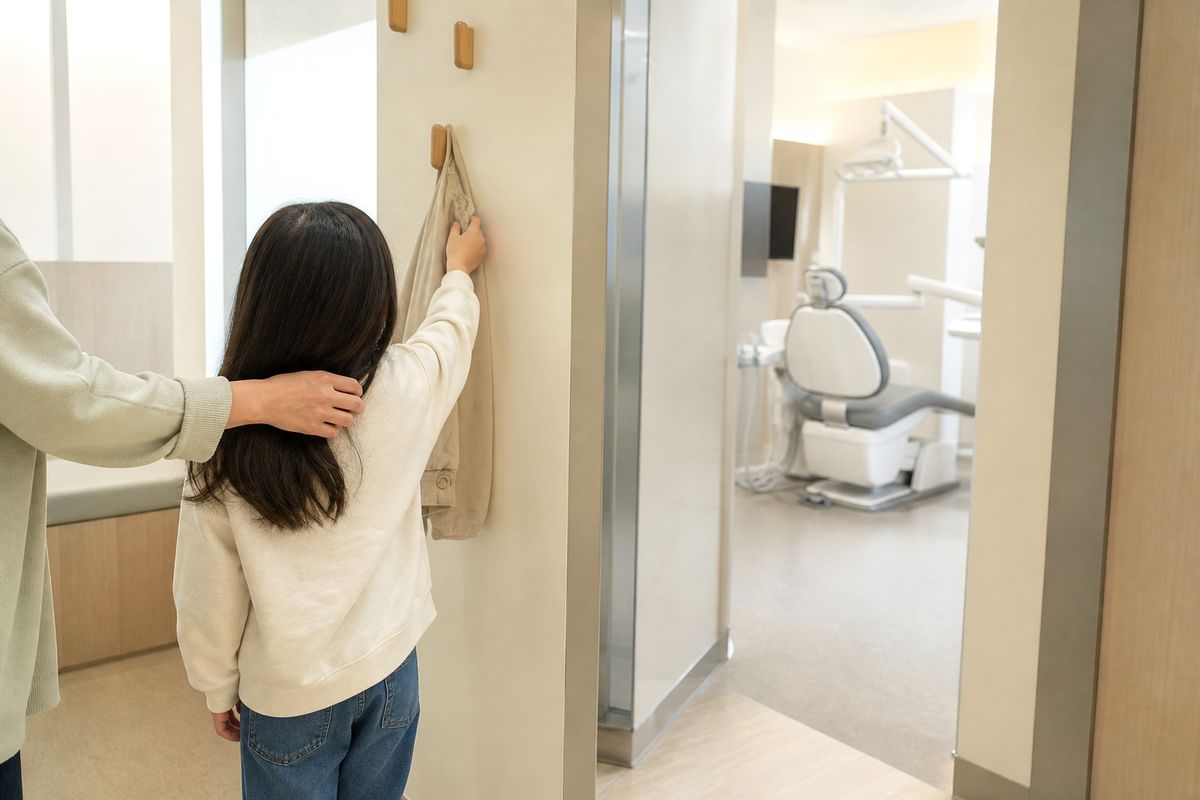
Questions I'm often asked
Q. Isn't a clinic that treats on day one the more skilled one? A. That's hard to conclude. Whether treatment happens that day is set by scope and the child's state, not skill. One small cavity with a comfortable child — going ahead is sensible. A wide scope, or a child who has frozen up — splitting it gives a better result. If the child is in pain, though, that's a different matter, and doing something to reduce the pain on day one is right.
Q. If my child cries, does it end with them being held down? A. Holding a child is the last option, and there are several steps before it: working in short blocks, changing the order, examining only and going home that day. When there's severe pain or a spreading infection, we can't buy time, so we decide the approach together with the guardian. What matters is whether the options get explained to you.
Q. Should I go into the treatment room with my child? A. It depends on age. Under roughly age three or four, having a parent in sight often steadies them. From primary school up, plenty of children do better when a parent isn't there. There's no single right answer, so go in the first time and adjust based on how your child reacts.
Q. Is it safe to take X-rays of a child? A. Dental X-rays cover a narrow field and use a protective apron to limit exposure. Still, the answer shouldn't be "it's fine, let's just take one" — you should hear why this image is needed now. Not taking unnecessary images is the principle.
Q. My child already sees another dentist. Can we switch? A. You can. It's common for care to break off after a move, or because the opening hours stopped fitting. If you have earlier images or a treatment plan you were given, bringing them helps. If you don't, it's fine — we check again and carry on. Wherever the treatment was done, that isn't something I'll pass judgment on. The job is to set the next step from where things stand now.
With the sequence clear, here's the part parents search for most.
How far does health insurance go for children's dental care
Insurance coverage is broader for children than for adults, and the notable difference is that some preventive procedures are covered.
Here's the broad shape. Rules do change, so it's safer to confirm before your visit.
| Item | Health insurance | Conditions |
|---|---|---|
| Molar sealants | Covered | Age 18 and under, first and second molars without decay. The patient share is set low |
| Light-cured composite resin filling | Covered | Age 12 and under, permanent teeth. Baby teeth and older ages are not eligible |
| Baby-tooth pulp treatment and stainless steel crowns | Covered | When the conditions are met |
| Fluoride application | Not covered | Sometimes provided free through public health centre programmes |
| Infant and toddler oral check-ups | National screening | Several times from 18 months, free during eligible periods |
| Student dental screening | School screening | Eligibility set by school year |
| Space maintainers | Depends on the case | A device that holds the space where a baby tooth came out early |
For items insurance doesn't cover, prices differ between clinics. For reference, our posted in-clinic fees are around 80,000 KRW for a paediatric resin filling, 150,000 KRW for a stainless steel crown, 150,000 KRW for a space maintainer, 40,000 KRW for a sealant on a non-covered tooth, and 40,000 KRW for a fluoride application. The full list is on our fees page, and period-specific notices are posted inside the clinic.
What actually moves the cost is scope, not unit price. The same child seen every six months gets one small filling; seen after two years, the same tooth can end up needing pulp treatment and a crown. That's less about picking the right clinic and more about keeping the interval — which is why whether a clinic keeps track of your check-up schedule ends up affecting cost too.
One more thing: a recommendation for preventive care isn't automatically over-treatment. What's worth questioning is a procedure recommended without any examination behind it. The test is whether they show you the basis for the judgment.
Sealants and fluoride — are they actually necessary?
Both are preventive, but they work in different ways, and blending them together makes the decision harder.
A sealant fills the deep grooves on the chewing surface of a molar so food can't lodge in them. No tooth structure is cut away, and it does the most good when a newly erupted permanent molar has narrow, deep grooves. A child whose grooves are shallow and open may not need one, and a groove where decay has already started must not be sealed over. So the reasoning shouldn't be "she's six, so sealants" — it should be the shape of that child's grooves.
Fluoride makes the tooth surface less soluble in acid. Rather than blocking a groove, it raises the resistance of the whole surface, which is especially meaningful when early decay hasn't yet become a hole. One application doesn't hold for years, though, so it's usually repeated every few months.
Put simply: sealants protect a specific spot, fluoride protects the whole surface. Neither replaces brushing. What I see more often is home care loosening after a preventive procedure, which quietly cancels out the benefit. How much of each a child needs varies, so listen to what's being recommended and why, then decide.
Since we're on the subject of money, let's talk about what comes after treatment.
What happens after treatment is the real part
What separates outcomes in children's dentistry isn't how well the treatment day went — it's how the next six months go.
Here's what's worth keeping an eye on, by stage.
| Stage | What to keep up |
|---|---|
| Around age 1 | Once the first tooth appears, start wiping with gauze or a silicone brush. Decide when the first visit will be |
| Around age 3 | Baby teeth are all in. If the teeth touch each other, start flossing |
| Ages 6–7 | The first permanent molars come in. Consider sealants |
| Mid primary school | Baby and permanent teeth are mixed. Watch the order and position of what falls out |
| Upper primary and beyond | Independent brushing habits settle in. A parent's final check is still needed |
What to keep up at home is honestly a short list. A parent finishing the bedtime brushing, flossing for children whose teeth touch, and setting snack times instead of grazing all day. Those three do more than everything else combined. The third one slips most often — even with the same total amount, a longer stretch of acid exposure inside the mouth changes the outcome.
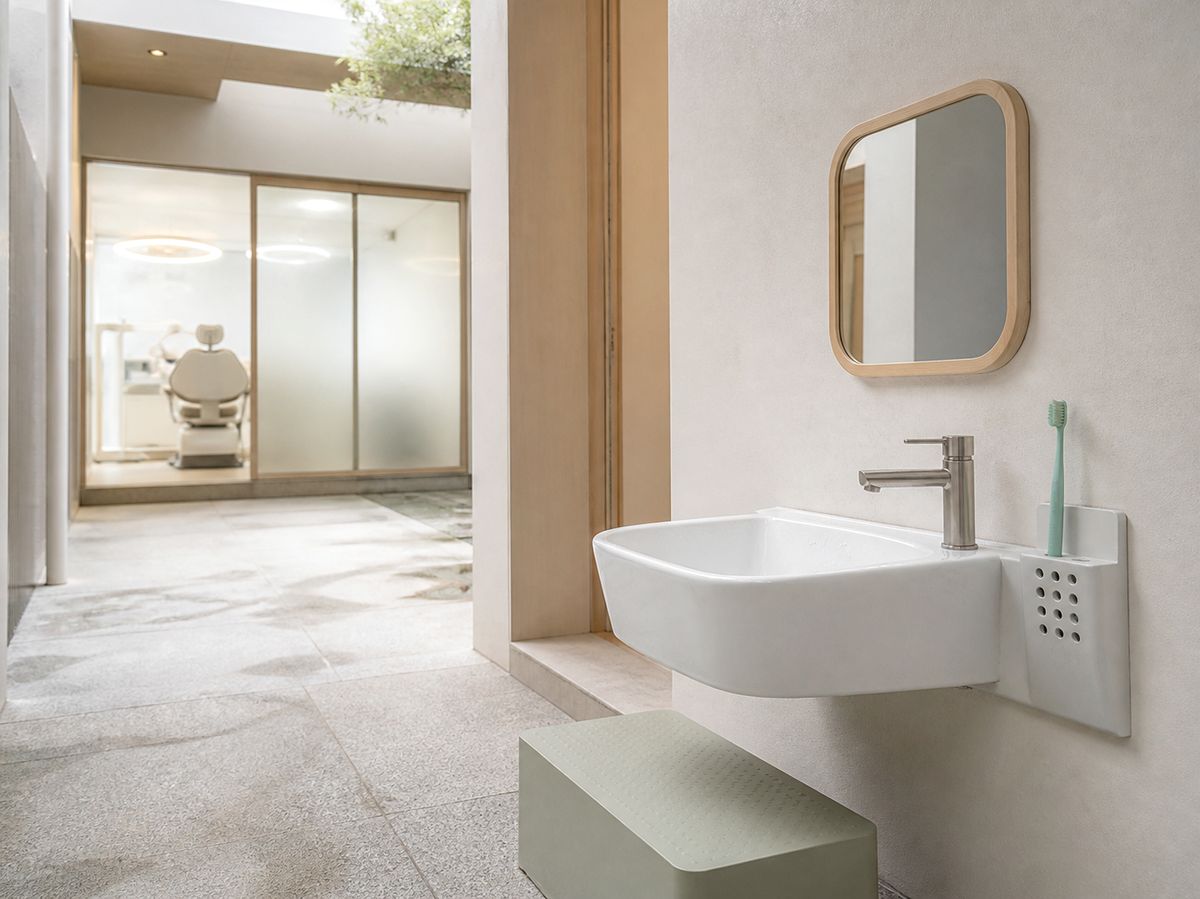
If this happens
My child fell and chipped or loosened a front tooth. Have it looked at right away. If a tooth has come out whole, don't touch the root — put it in milk or saline and come in as fast as you can. The response differs depending on whether it's a baby tooth or a permanent one. If it's late in the day, check our evening hours or Sunday hours first.
A filling came out. Even if it doesn't hurt yet, that spot is now easy to decay again. Best seen within a few days, and in the meantime keep hard foods off that side.
It only hurts at night. Pain that grows when lying down is a pattern we often see with inflammation around the nerve. Riding it out with painkillers usually means it comes back with a wider scope.
A permanent tooth is coming up behind a baby tooth that hasn't fallen out. Common enough that time usually sorts it, but when the position is well off, removing the baby tooth can be the better move. An image makes the call faster.
That's the wide view of children's care. Back to the first question.
So what should you check?
What to check isn't the wording on a website. It's the conversation in the consultation room, and records you can verify publicly.
One, do they examine before they explain? A place where a treatment plan arrives before anyone has looked inside the mouth is worth reconsidering. A place that shows you the current state on an image or screen and starts the conversation from there is at least willing to share its reasoning.
Two, do they tell you what doesn't need doing? In children's care there is always a place for "this one's falling out soon, let's watch it." If every line item is something that must happen today, ask once more.
Three, do they give you the order and the reason? Walk out with only a number and you have nothing to judge by later. Hear what comes first and why, and you'll have a standard when you compare elsewhere.
Four, do they speak to the child directly? Care where the conversation is only with the guardian and the child is handled as an object tends to make the next visit harder. Whether someone asks the child "is it okay if I do this?" decides a lot about what comes next.
Five, verify credentials through public records. Specialist status can be checked through open sources such as the Health Insurance Review and Assessment Service's clinic information or Korean Dental Association records, rather than a clinic's own leaflet. I'd suggest checking any clinic the same way.
Six, are the hours ones you can actually make? Children's care doesn't finish in one visit, so if the hours don't fit your household's rhythm, it breaks off partway. I see treatment stop over this far more often than over skill.
Questions you can read out at the consultation
You don't need to be good with words. You can read these five sentences exactly as they are. What matters isn't the question — it's the texture of the answer.
- "Of these, which must be done now and which can we watch?" — If everything comes back as today's work, ask for the reasoning once more.
- "When is this tooth due to come out?" — For a baby tooth, an answer here is what lets you judge whether to treat. A vague answer means the time axis isn't being considered.
- "If my child struggles today, where will you stop?" — Tells you whether the clinic sets a stopping point in advance.
- "When should we come back, and what will you look at then?" — Clinics with a check-up plan and clinics without one part ways here.
- "What happens if we don't do this procedure?" — A place that can describe the course without treatment usually has clear reasons for recommending it.
You don't have to ask all five. Even one tends to reveal how a clinic looks at children.
Where things commonly go wrong
- Deciding on a clinic purely because there were no tears on day one — the child may simply have been having a good day. Waiting until the second visit to judge costs nothing.
- Skipping check-ups once treatment is finished — a child's mouth changes shape within six months. This is where most retreatment comes from.
- Postponing for years because the child refuses — every delay raises the difficulty of the next visit. Even without treatment, keeping the check-ups going is better.
- Collecting plans from clinic after clinic — a second opinion helps; beyond that, the start itself gets pushed back.
Checking us by the same standard
So you can apply the same yardstick to us, here are verifiable facts only. I am a specialist in prosthodontics and in integrated dentistry, and I hold a doctorate in dental science. I have been appointed a clinical instructor at the Yonsei University College of Dentistry each year (current term 1 Mar 2026 – 28 Feb 2027). Our clinic has specialists in prosthodontics, conservative dentistry and integrated dentistry working together, so when a judgment call splits during a child's treatment we settle it by discussing it. Details are on our dental team page.
We're open until 9 p.m. on weekdays, until 2 p.m. on Saturdays, from 2 p.m. to 6 p.m. on Sundays, and on public holidays. Why that matters for children's care is what I described above. We're about a five-minute walk from Exit 1 of Dobong Station, heading toward the Dobong 1-dong post office, and there's a parking guide for visits with a stroller or small children. Directions are on our how to find us page.
To sum up
Three things are enough to remember.
One, choose the clinic you'll be looking at six months from now, not the one that ended smoothly today. Whether the next visit is possible outlasts today's result.
Two, listen for whether "what doesn't need doing" comes up at the consultation. A place that shows its basis and explains the order gives you a standard for comparison later.
Three, check the hours first. Children's treatment is only complete if it continues, and continuing means it has to fit inside your family's schedule.
A child's condition and the right timing vary from person to person, so an article can only take you so far. If you're holding a screening form and don't know where to start, taking one image and talking it through is a fine place to begin. Inside Dobong-gu or outside it, what matters first is finding somewhere your child is willing to return to. Any questions, feel free to call us at 02-954-2080.
Choose a children's dentist not for how well they soothe, but for whether your child can walk back in next time. Yonsei The Strong Dental Clinic is about a five-minute walk from Exit 1 of Dobong Station, open until 9 p.m. on weekdays and on weekends and public holidays.