"Getting My First Partial Denture — How Does It Work? A Mangwolsa Station Dentist's A-to-Z on Types, the Making Process, and Settling In"
Key takeaway A partial denture fills the gaps by anchoring to your remaining teeth. From impressions to delivery it usually takes 4–6 visits over 3–5 weeks; the first week or two feels strange with speech and saliva, and it becomes familiar over one to two months. Types, comparison with bridges and implants, the step-by-step process, the settling-in period, and insurance for those 65 and over.
Hello. I am Dr. Oh Ji-hwan of Yonsei The Strong Dental Clinic.
Let me begin with the conclusion. A partial denture fills the spaces left by missing teeth by anchoring to the teeth you still have, and from impressions to completion it usually takes 4–6 visits over 3–5 weeks. The first week or two feels strange for everyone, and it becomes familiar over one to two months. Knowing this timetable in advance makes starting far easier.
With Chuseok approaching, more people are coming in saying they'd like their teeth "put back in before the holiday." An elderly patient who came with her daughter from Singok-dong, and people riding down on Line 1 from Mangwolsa Station, ask similar questions: "It's my first denture — how many visits, and when can I chew?" And then, a little more quietly: "Will it show?"
Today I'll answer those from the beginning: what a partial denture is and how the types differ, where it sits compared with bridges and implants, how the making actually proceeds and how long it takes, what feels strange at first and when it settles, and how national insurance applies at 65 and over. I've written this with first-time denture wearers and their families in mind.
What a partial denture is — your remaining teeth are the foundation
A partial denture replaces missing teeth with artificial ones and holds that appliance in place by anchoring to the natural teeth you still have. It is removable.
A complete denture rests on the whole gum ridge and stays put through suction and muscle control; a partial denture depends chiefly on clasps — small hooks — or similar devices that grip the remaining teeth. So where those teeth are, how many there are, and how sound they are is the starting point of the design.
This is where the first misunderstanding arises. It's not "I have this many teeth left, so partial denture" — it's "which teeth remain, where, and in what condition" that decides whether a partial is possible and what form it takes. Sound teeth at both ends of a gap allow a stable design; teeth at one end only call for a different design so the far end doesn't lift.
Types of partial denture
| Type | Framework material | Character | Suits |
|---|---|---|---|
| Metal-framework partial | Thin metal frame + artificial teeth | Thin and strong, less bulk, conducts warmth | The standard long-term option when remaining teeth are sound |
| Acrylic (resin) partial | Plastic base | Light, easy to repair and add to, bulkier | Interim use, or when more teeth will be extracted |
| Esthetic clasp (non-metal) | Gum-colored flexible material | Clasps don't show | When a visible clasp at the front is a concern |
| Implant-supported partial | Metal frame + implant connectors | Greatly improved retention | When remaining teeth alone can't hold it |
Most "properly made first partials" are metal-framework. Acrylic is light and easy to modify but bulky, so it's chosen mainly for interim use or when further extractions are planned. If a visible clasp worries you, the front clasps alone can be switched to gum-colored material.
Compared with bridges and implants
| Aspect | Partial denture | Bridge | Implant |
|---|---|---|---|
| Method | Removable, hooks onto remaining teeth | Fixed by reducing neighboring teeth | Artificial root placed in bone |
| Load on remaining teeth | Clasped teeth bear load | Neighbors must be reduced | None |
| Number of missing teeth | Several, wide spans possible | 1–2, needs support both sides | Any number |
| Surgery | None | None | Yes |
| Duration | About 3–5 weeks | About 2–3 weeks | About 3–6 months |
| Chewing force | A fraction of natural teeth | Close to natural | Closest to natural |
| Insurance at 65+ | Covered (once per 7 years) | Not covered | Covered (two per lifetime) |
When a partial makes sense is clear: several missing teeth or a wide span, when surgery is a burden, or when you want to spread the cost. Conversely, if only one or two teeth are missing and bone is good, an implant may suit better; if the neighboring teeth already have crowns, a bridge may. Which is right depends on the remaining teeth and bone.
Now that you know what it is, here's how it's actually made.
The making process — usually 4–6 visits, 3–5 weeks
A partial denture isn't made in one go; it's fitted to your mouth through repeated cycles of impression, try-in, and adjustment.
- Diagnosis and design (visit 1, about 30–40 min) — We examine the remaining teeth and X-ray the roots and bone, checking whether the teeth that will carry clasps are sound and whether decay or gum disease needs treating first. This is where which teeth get clasps and which type are decided.
- Preparation (if needed) — Small rests are cut into clasp teeth, loose teeth are dealt with, gum treatment is finished. Days to weeks can be added here.
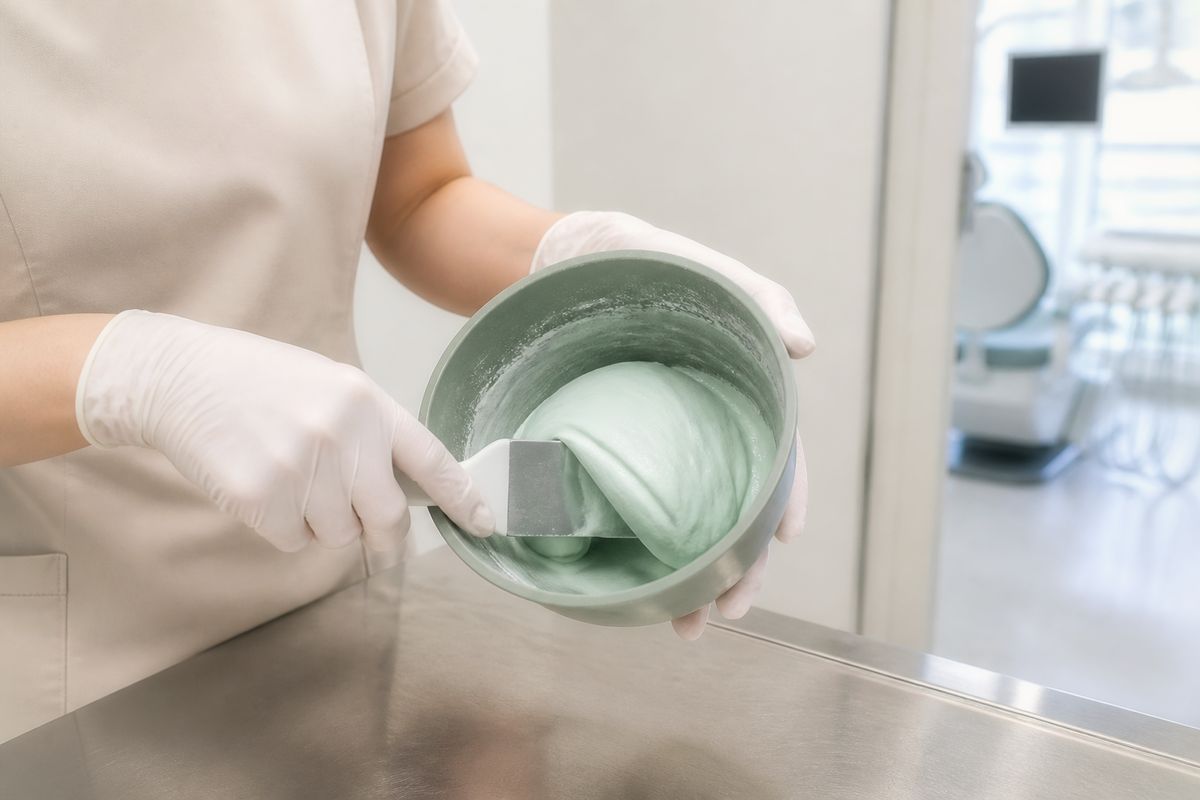
- Impressions (visit 2, about 20–30 min) — A soft material records the whole mouth. Often a first impression makes a custom tray, which is then used for a more precise second impression. If you gag easily, tell us in advance — we adjust posture and quantity.
- Framework try-in (visit 3) — The metal skeleton alone is tried to check the clasps engage properly and nothing catches.
- Bite registration and tooth arrangement (visit 4) — We record how upper and lower meet, set the artificial teeth in wax, and try it in. This is when tooth color, shape and length are decided together. Look in the mirror and say anything you dislike now — it's hard to change after completion.
- Delivery (visit 5) — The finished denture goes in; height and contact points are trimmed. You learn to insert and remove it that day.
- Adjustments (visit 6 onward, 1–3 times) — Wear it a few days, mark sore spots, come back and we relieve them. These adjustments are the normal process, not failure. Two or three usually settle it.
Plan on about 3–5 weeks and 4–6 visits. Preparatory treatment adds to that; an acrylic interim denture is quicker. If you want it in place before a holiday or event, start at least 6 weeks ahead to be safe.
Questions that come up in the chair
Q. Can I get the denture right after extraction? A. There's a method called an immediate denture, made beforehand and placed straight after extraction. Because the gum changes shape as it heals, it needs relining or remaking a few months later. It removes the gap period at the cost of that extra step — choose knowing that.
Q. I'm worried the clasps will make my front teeth look bad. A. The design can push clasps further back, switch front clasps to gum-colored material, or use other retention devices instead. You'll check in the mirror at try-in and it can be adjusted, so say so from the start.
Q. A remaining tooth is loose — can a clasp go on it? A. Clasping a loose tooth makes it fail faster. First see whether gum treatment can save it; if not, remove it and design around what's left — that lasts longer. Getting this call right in the initial design determines the denture's lifespan.
Q. Do I need upper and lower both? A. Only the side that needs it. But doing one side alone sometimes lets the opposing teeth drift into the space, so it's worth having the other side checked.
With the process covered, here's what most people want to know: what it's like at first.
The first month — strange is normal
A new partial denture is a foreign object in your mouth, so the first days are awkward for everyone. Knowing when and how that awkwardness fades keeps people from giving up midway.
| Period | Common experience | What to do |
|---|---|---|
| Days 1–3 | Lots of saliva, speech feels off, foreign-body sensation | Normal. Read aloud, swallow water often |
| Days 3–7 | A spot pressing and hurting, a red mark on the gum | Mark it and get it adjusted. Don't tough it out |
| Weeks 1–2 | Soft food chews fine, tough food not yet | Cut small, chew both sides |
| Weeks 2–4 | Speech natural, sensation fading | Widen the diet gradually |
| Months 1–2 | Most everyday eating possible | Check-up, gum review |
Speech: s, j and ch sounds leak at first. The tongue needs time to learn its new position; reading a newspaper aloud or singing speeds it up. Excess saliva is the mouth reacting to a new object and settles within days.
Sore spots are fixed by adjustment. Usually a point on the gum gets pressed and reddens; relieving that area a little resolves it. Important — if you leave the denture out for days because it hurts, we can't find the sore spot. Wear it for a few hours before your visit so the mark shows.
Eating: start soft, and practise cutting small and chewing on both sides at once. Chewing on one side lifts the denture. Tough meat, hard nuts and sticky rice cake are better tried a month or so in.
Settling-in Q&A
Q. Should I sleep with it in? A. The rule is take it out at night. The gum needs rest, and sleeping with it in breeds bacteria, causing gum inflammation and odor. Some people are advised to wear it the first night or two to adapt, but after that, remove it and keep it in water.
Q. Can I use denture adhesive? A. A well-fitting partial should stay in without adhesive. If you keep needing it, that's a sign of a poor fit — get it adjusted instead.
Q. What if it gets loose or breaks? A. As remaining teeth and gums change, the denture stops fitting. A reline (refilling the inside) or a repair solves most cases. Never glue it at home with superglue — it becomes impossible to restore the original shape.
Q. Will the denture wear out my remaining teeth faster? A. Clasped teeth do bear extra load, so cleaning those teeth especially well and keeping regular check-ups matters. Care, more than the denture itself, sets its lifespan.
Inserting and removing — what you learn on day one
This is where people struggle most in the first days, so it gets its own note.
- Inserting: seat it by hand, then press down with fingers on both sides at once. Never bite it into place — that's the most common way clasps bend or break.
- Removing: hook fingernails near the clasps and lift both sides together. Pulling one side spreads the clasp.
- At the mirror: use a mirror the first week, and fill the basin with water or lay a towel so a dropped denture doesn't break.
- If your hands are unsteady: clasp shape or retention devices can be designed for easier handling — mention it at consultation.
Care essentials (full details are in our denture care guide)
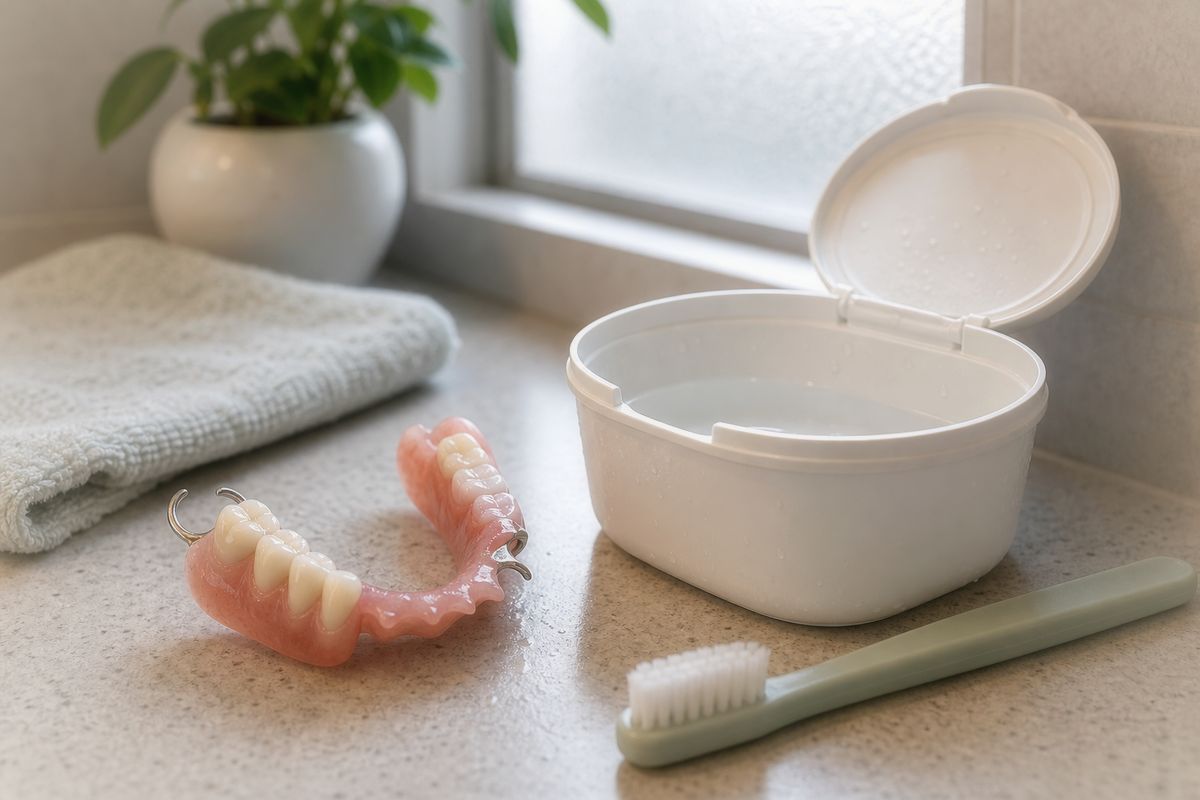
- Rinse under running water after meals and brush once daily with a denture brush — toothpaste scratches the surface, so don't use it
- At night, remove and keep in water or cleanser (it warps if it dries)
- Clean the clasped natural teeth especially thoroughly — they set the denture's lifespan
- No hot water, rubbing alcohol or bleach (warping, discoloration)
- Have the fit checked every 6–12 months
Once you've settled in, the next question is cost and insurance.
Cost and insurance — covered dentures at 65 and over
A partial denture is covered by national health insurance at age 65 and over; below that it isn't.
| Item | Coverage | Notes |
|---|---|---|
| Partial denture (65+) | Covered | Once per 7 years, 30% co-payment |
| Complete denture (65+) | Covered | Once per 7 years, 30% co-payment |
| Partial denture (under 65) | Not covered | — |
| Interim denture (65+) | Covered | Conditions apply |
| Repairs and relines (65+) | Covered | Limited number |
| Preparatory treatment of clasp teeth | By item | Decay and gum treatment covered |
| Implants for an implant-supported partial | Conditional | Two per lifetime at 65+ |
A covered partial at 65+ commonly runs about ₩300,000–400,000 out of pocket, while a non-covered metal-framework partial spans roughly ₩800,000–2,000,000 depending on extent and materials. Acrylic interim dentures cost less. Standards and designs vary by clinic, so treat these as reference ranges and confirm after examination.
⚠️ One common misunderstanding about covered dentures. "Once per 7 years" applies to making a new one; repairs and relines are covered separately within set limits. And if your 65th birthday is a few months away, waiting for it can cut the cost substantially — tell us your date of birth at consultation.
I mentioned this in an interview with Vegan News about prosthodontic specialists: among prosthetic treatments, dentures are the field where design most decides the outcome.
Where costs actually come down
- Check the age-65 cut-off date. A few months can change the co-payment dramatically.
- Save the clasp teeth first. Clasp a loose tooth, lose it, and the denture has to be remade.
- Decide at the start whether to begin with an interim or go straight to the final. If more extractions are planned, starting with an acrylic interim avoids paying twice.
- Don't miss reline timing at check-ups. Wearing an ill-fitting denture accelerates bone loss, making the next denture harder.
What to check when choosing where to have it made
A partial denture is half design, and the other half is how carefully you can get adjustments after delivery.
- Do they examine the remaining teeth first and explain the design? There should be an explanation of which teeth get clasps and why.
- Do they show the pros and cons of each type? You should hear the differences between metal, acrylic and esthetic clasps before choosing.
- Do they decide color and shape with you at try-in? That step is what prevents "this isn't what I expected" afterward.
- Are adjustment visits in the plan? Delivery isn't the end; two or three adjustments complete the set.
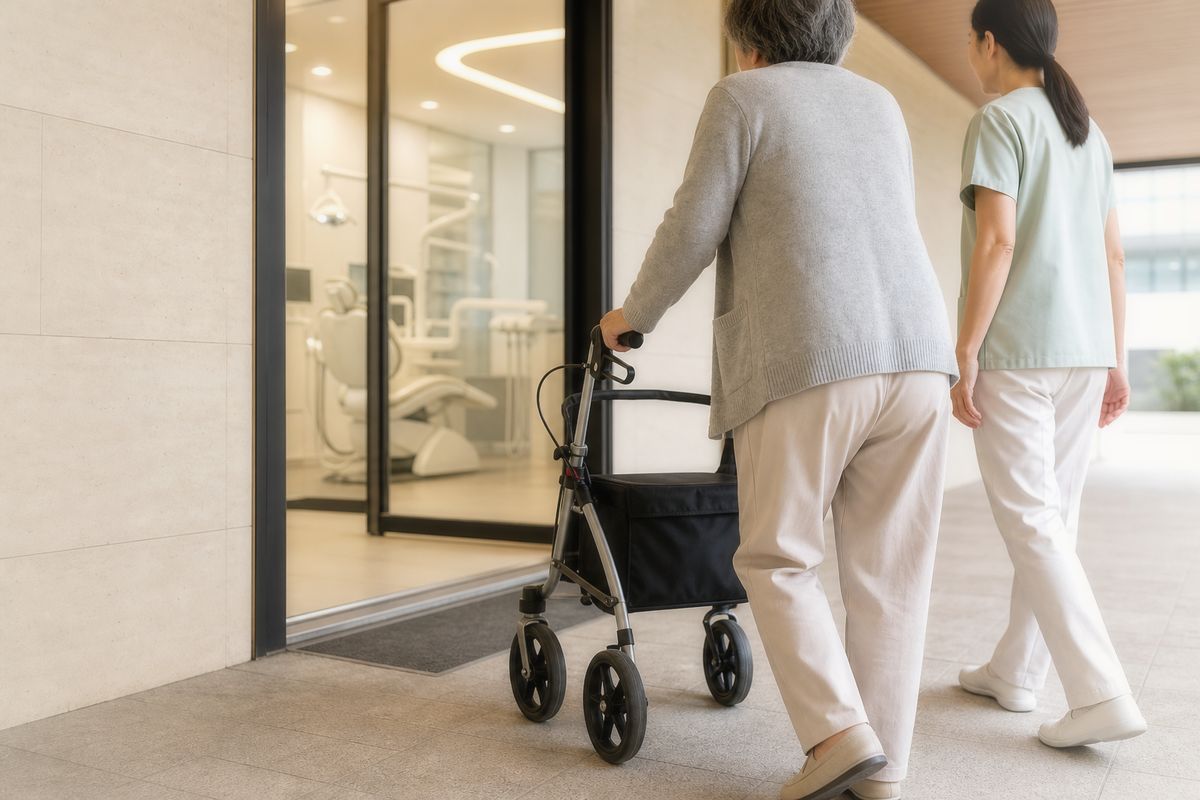
- Is access considered for people with limited mobility? With multiple visits, it makes a real difference.
- Is there a prosthodontist? Denture design is the specialty's core. Credentials can be verified in public records, and our team is on the doctors page for the same comparison.
Common failure patterns
First, toughing out a sore spot. What one adjustment would fix becomes a gum wound and a denture left in the drawer.
Second, sleeping with it in. The most common cause of gum inflammation and odor.
Third, staying silent at try-in. Color and shape waved through with "it's fine" are hard to change after completion.
Fourth, not returning after delivery. Gums keep changing. Fit checks every 6–12 months are what keep the remaining teeth and bone going.
When family are doing the research
Often it's a son or daughter looking into a parent's denture and bringing them in. A few things to have ready that speed everything up:
- A list of current medications — osteoporosis drugs, anticoagulants and blood-pressure medication affect preparatory treatment (extractions, gum work). A photo of the pharmacy bag is enough.
- Date of birth — to confirm the age-65 insurance cut-off. Months can make a large difference.
- Bring any old denture — even one that no longer fits informs the design.
- Confirm the wearer's own wishes — "is a visible clasp acceptable," "start with an interim" are the wearer's decisions. Dentures chosen on someone's behalf often end up unworn.
- Dates you can accompany them — with 4–6 visits, telling us workable days and times at the first visit lets us book the whole schedule at once.
If mobility is limited or a hearing aid is used, mention it and we'll adapt the route and how we explain things. Details are in our accessible care guide.
In closing
Three things to take away. First, a partial denture uses your remaining teeth as its foundation, so which teeth remain decides the design and the lifespan — save or remove loose teeth before you start. Second, making takes 4–6 visits over 3–5 weeks, settling in takes one to two months, and adjustments are the process, not failure — before a holiday, start six weeks ahead. Third, at 65 and over there is a covered partial once every 7 years, so check the cut-off date — and whether it stays in without adhesive, comes out at night and gets regular checks decides how long it lasts.
One more thing, for those who ask quietly whether it shows. A well-designed metal-framework partial barely shows its clasps when you speak, and front clasps can be switched to gum-colored material. And in truth, a gap where a tooth is missing shows far more than a denture ever does. The waiting is what shows.
A first denture is a first for everyone. Strange is normal, and most people are back to everyday life within a month or two. Remaining teeth and adaptation speed vary greatly, so we'll give you a precise design and schedule after examination.
One-line summary: A partial denture hooks onto the teeth you have. Design is half; adjustment and care are the other half.
We are open until 9 p.m. on weekdays and 365 days a year, so the multiple visits a denture needs can be spread to suit family schedules. After hours, our clinic's AI phone guidance runs 24 hours. We are about a 5-minute walk from Exit 1 of Dobong Station (toward the Dobong 1-dong post office), two stops from Mangwolsa Station on Line 1, so many families bring parents from Singok-dong and Howon-dong in Uijeongbu. If you are driving, see our parking guide.