Food Gets Stuck Between My Molars at Every Meal — A Dobongsan Station Dentist's A-to-Z on Food Impaction and Fixing It
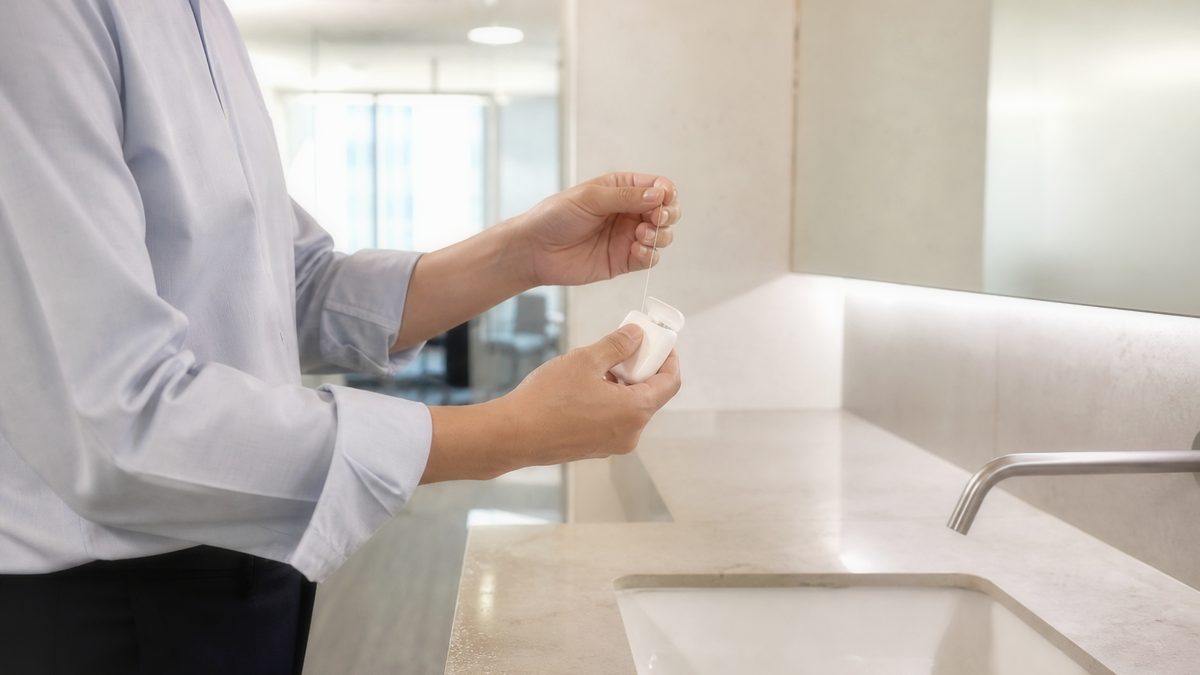
Key takeaway Food packing into the same spot at every meal is more than a nuisance — it is a signal something has gone wrong there. Interproximal decay, a loosened restoration contact, gum recession and tooth drift are the main causes, and while you cope with toothpicks, decay and gum disease grow. Telling the causes apart, examination and treatment, costs and insurance.
Hello. I am Dr. Oh Ji-hwan of Yonsei The Strong Dental Clinic.
There is a quietly nagging moment at mealtimes: with every bite of meat or greens, something lodges in that one spot between your molars. The tongue cannot dislodge it, and you end up wrestling in front of a washroom mirror. A patient from Wolgye-dong told me she had "kept toothpicks in her bag for two years," and a member of a hiking group that meets near Dobongsan Station laughed that "lunchboxes on the mountain are the real problem." Yet neither had ever once checked why it always sticks in that same place.
The conclusion first: food does not readily lodge between healthy teeth. Adjacent teeth meet firmly at what is called the contact point, engineered so that food struggles to force its way through. So when the same spot starts trapping food at every meal, that design has broken down somewhere. Dentistry calls this food impaction, but more important than the name is this: it is both a result and a cause — the trapped food goes on to feed decay and gum disease, opening a vicious circle. Today: why it starts, how the causes differ, why the toothpick is not a solution, and how examination, treatment and costs work.
Why did it start — four ways a contact point breaks down
For food to slip between teeth, a gap must open somewhere in the contact. Four routes create that gap.
First, interproximal decay. The most common and most missed cause. Decay on the surfaces where teeth meet pits the surface, collapses the contact, and turns the spot into a food pocket. The catch: this decay is invisible from outside. "It started trapping food" is often the first symptom there is.
Second, restoration contact problems. Years after a crown or inlay is placed, its contact with the neighbouring tooth can loosen — or it may have been made slightly loose from the start — and food begins slipping through. "It started after the crown," or "it packs beside the filled tooth," raises this suspect.
Third, gum recession. When the triangular gum that fills the space between teeth settles down through gum disease or age, an empty space (a black triangle) opens beneath the contact point. The contact itself may be sound while food snags in the space below. Recession in general is covered in the gum recession guide.
Fourth, tooth drift. A tooth tilting into a long-unfilled gap, or teeth shifting little by little through grinding or gum disease, throws contact relationships off. It is the same family of change as front teeth drifting apart — that story is in the front-teeth gap guide.
And in the gap these four create, the vicious circle begins. Trapped food feeds bacteria that enlarge the decay; the pressed gum inflames and settles further; the space grows, and trapping worsens. I have discussed how quietly gum disease advances in a Medical Today article (in Korean). This is why "it just traps food" must not be filed under mere nuisance.
Causes compared
| Category | Interproximal decay | Restoration contact | Gum recession | Tooth drift |
|---|---|---|---|---|
| Typical clue | Floss catches or shreds; sweet sensitivity | Trapping since crown/filling | Black triangles, teeth look longer | Neglected gap, bite change |
| Where it packs | Inside the contact | Beside the restoration | Space below the contact | At the shifted contact |
| Companions | Sensitivity, odour | Floss passes loosely | Exposed, sensitive roots | Changed chewing position |
| Core fix | Treat decay, restore contact | Adjust or remake restoration | Gum care + right tools | Cause-specific restoration/orthodontics |
| If neglected | Decay grows → root canal | Secondary decay, gum inflammation | Recession accelerates | Drift accelerates |
Checklist — where you stand
- It packs in the same place every time (not randomly here and there)
- Floss shreds there — or slips through loosely
- What you remove smells
- Pressing the gum there hurts or bleeds
- After meals the area feels wedged and pressured — relieved once cleared
- The spot has a crown or filling history
- A black triangle shows between the teeth
- You cannot finish a meal without a toothpick
Three or more suggests a cause at the contact point. The fifth item — pressure relieved on clearing — is the classic sign of food compressing the gum, and gum damage may already be under way.
We need to talk about the toothpick first
Before cause and treatment, here is what I told the patient with the two-year toothpick habit.
A toothpick succeeds at removing — and equally succeeds at widening. Its sharp tip, pressed repeatedly into the triangular gum, pushes the gum back; the space grows; the next meal packs more easily. Packing more, you pick more — a tool that feeds its own cause. Broken toothpick tips embedded in the gum are not a rare sight either.
The right order of removal tools:
- Floss — saw it in gently rather than pressing from above, hug the tooth and sweep upward. Safest and most reliable for trapped food.
- Interdental brush — more efficient than floss where the space has already opened. Use a size that fits; never force a large one.
- Water rinse or irrigator — an aid for washing out loose debris.
- Toothpick — a stopgap only when nothing above is at hand, angled away from the gum.
Tools in general are covered in the floss and interdental brush guide. But today's key sentence comes next: getting better at removal is not a solution. If it packs in the same place every time, it is time to find the reason, not another removal method.
How we find the cause in the clinic
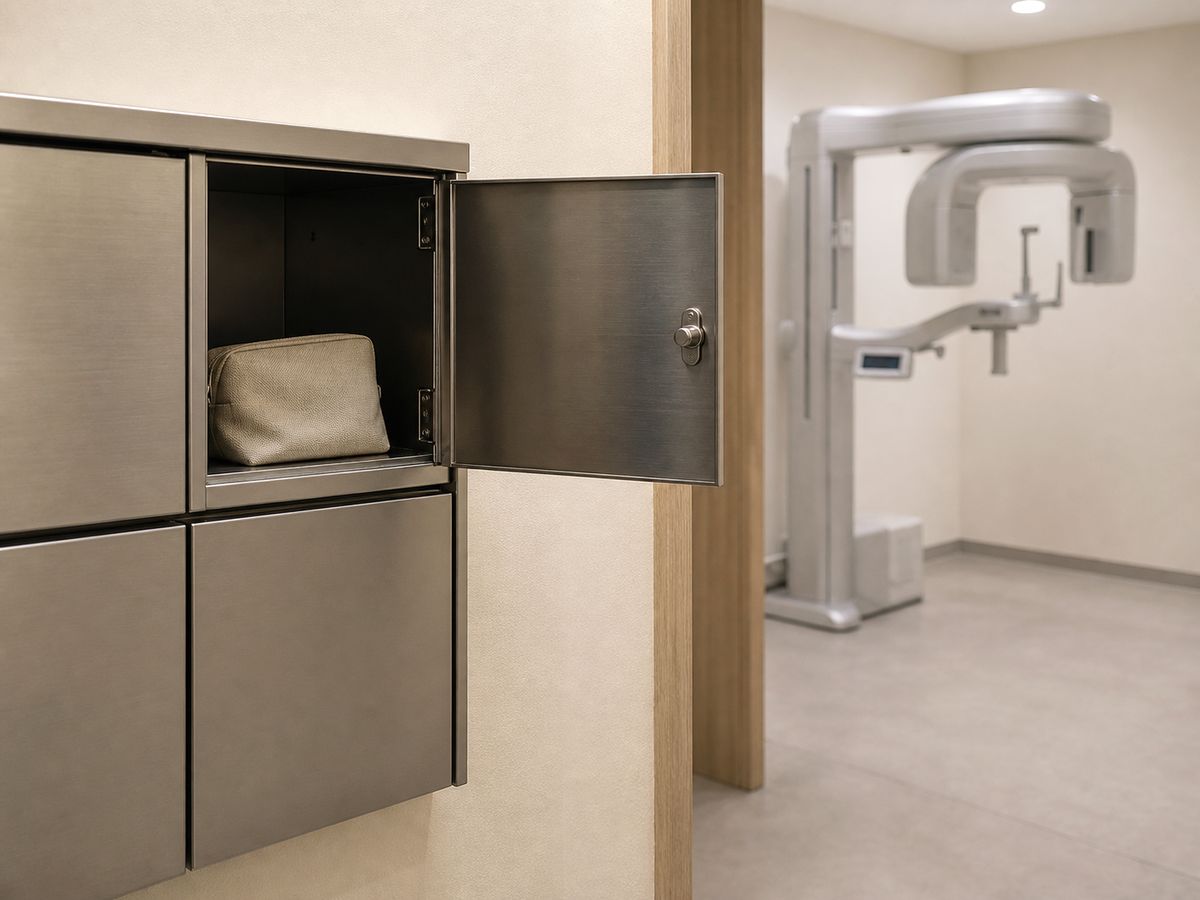
- Pinpointing. Which spot, since when, which foods. Fibrous food (meat, greens) wedging and small particles (rice grains) pooling point to different causes.
- Contact testing. Floss is passed to gauge resistance. A healthy contact gives a snap before letting floss through. Slipping loosely means a lost contact; catching and shredding suggests decay or a restoration step.
- X-ray. Interproximal decay, secondary decay beneath fillings, bone height. Half of all food-trap causes reveal themselves on this film.
- Gum check. Pocket depth and bleeding at the site. A gum long pressed by food usually carries the marks.
- Bite check. Whether chewing force acts to wedge the teeth apart — sometimes a sharp opposing cusp drives food in like a wedge.
The examination usually ends within 20–30 minutes, and the treatment direction is settled on the spot by cause.
Questions we are often asked
Q. It doesn't hurt — do I still need treatment? A. That is exactly the trouble with food impaction. Pain comes late and you grow used to coping. Meanwhile, interproximal decay and gum inflammation advance quietly. "It packs but doesn't hurt" — right now — is when treatment ends smallest.
Q. Will scaling fix it? A. If tartar was making the space, it helps. If the cause is decay or a restoration contact, scaling alone will not resolve it. Cause first; scaling comes along as a basic in every case.
Q. Food started packing beside a five-year-old crown. Does the crown need redoing? A. Not necessarily. A slightly loosened contact can sometimes be repaired or adjusted; a large contact loss or decay beneath calls for a remake. An X-ray narrows the branches before anything is opened — start with the check.
Q. Isn't trapping just part of getting older? A. Gums do settle with age and trapping does get easier — but that is not a licence to leave it. Age-related spaces are managed with the right tools, and any decay or restoration problem layered on top is a treatment matter regardless of age. The two need separating.
Q. It keeps packing beside my implant. A. Unlike natural teeth, implants do not drift microscopically, and contacts between an implant and its natural neighbour are known to open over the years. Implant surroundings tolerate food stagnation poorly, so have the contact checked without delay.
Treatment and cost by cause — what insurance covers
The goal is single: restore the broken contact, or turn an unrestorable space into a manageable one.
| Cause | Treatment | Insurance | Out-of-pocket guide |
|---|---|---|---|
| Interproximal decay (shallow) | Resin filling restoring the contact | Conditional | About KRW 80,000–200,000 if uncovered |
| Interproximal decay (moderate+) | Inlay or crown | Not covered | About KRW 300,000–600,000 |
| Loosened restoration contact | Adjustment, contact repair | Varies by item | Tens of thousands of won |
| Lost contact / decay beneath | Remake restoration | Not covered | About KRW 300,000–600,000 |
| Tartar, gum inflammation | Scaling, gum treatment | Covered | About KRW 10,000–50,000 |
| Recession space | Gum care + prescribed tools | Gum treatment covered | About KRW 10,000–50,000 |
| Tooth drift | Cause-specific restoration or orthodontic consult | Varies | Depends on condition |
These figures are orientation ranges, varying with site, material and co-payment. The point to notice: caught early, most cases end in the upper-left cells (filling, adjustment, scaling). Arrive after years of toothpick coping and the case more often lands in root canal and remake territory. The length of time you endure the nuisance sets the digits of the bill.
Cost-saving checkpoints
- Say "it always packs in the same place" at your check-up. That one sentence leads to interproximal imaging and catches hidden decay early.
- Bundle the check with your yearly insured scaling — one visit settles both.
- Speak up right away if a new restoration's contact feels loose. Early adjustment is simple; options shrink with time.
- Regular flossing is itself an early-warning system. The day it starts catching at one spot is your earliest signal.
After treatment — so it doesn't pack again, and stays safe if it does
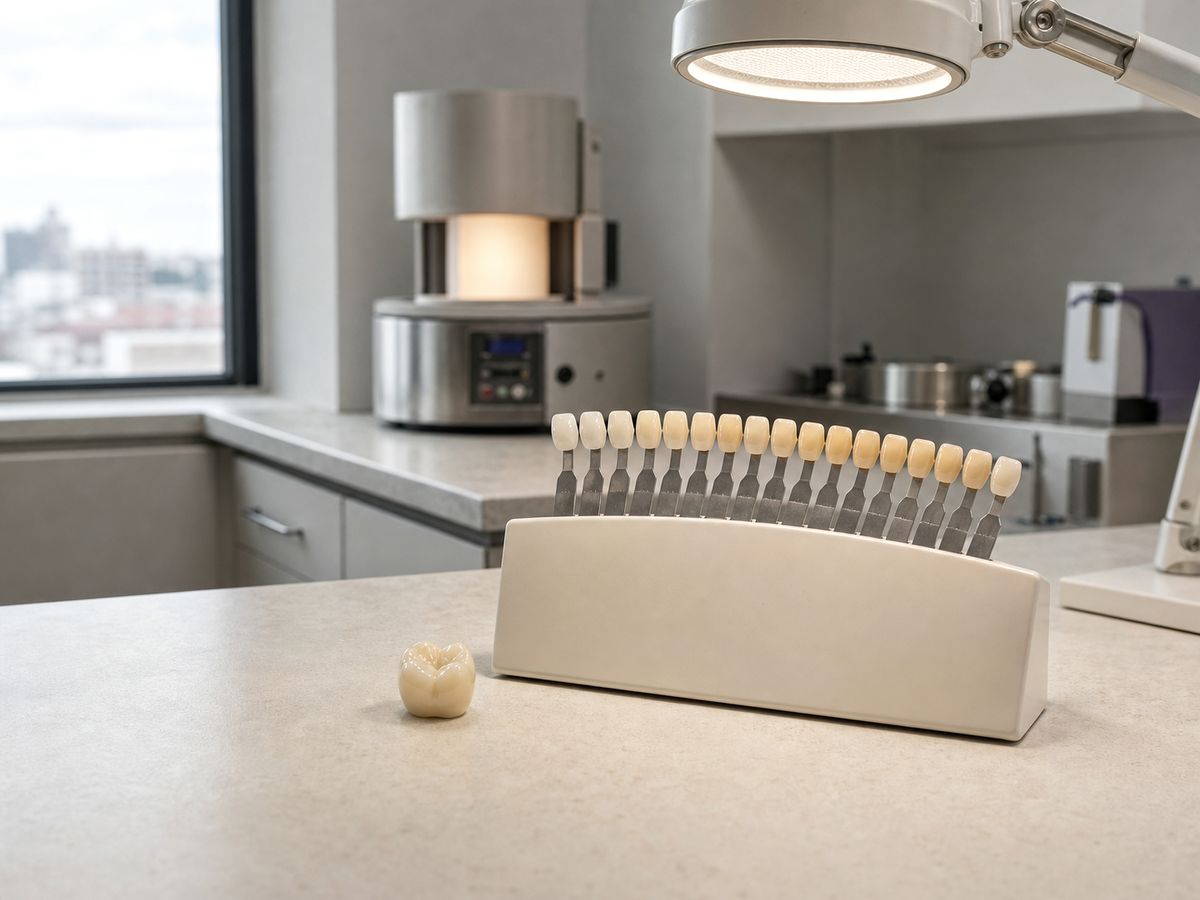
If the contact was restored, the habits that guard it follow; if a space was deliberately left for management, keeping it clean becomes the routine.
- On restored contacts, slide floss out sideways. Yanking upward strains a freshly built contact.
- For managed spaces, a correctly sized interdental brush once daily. Forcing an oversized brush enlarges the space.
- A water rinse after meals is the minimum care available anywhere — especially useful if you eat out often.
- Put portable floss where the toothpicks used to live. Swapping the bag's staple is this article's easiest prescription.
- Re-check at 3–6 months: confirming the contact holds and the gum has recovered catches any relapse early.
Call us again if
- The treated spot starts packing again
- Floss shreds at the newly built contact
- The gum there swells again or smells
- A new spot starts trapping food
Choosing where to be seen
- Do they ask "why does it pack?" first — with contact testing and imaging — rather than stopping at removal or scaling?
- Do they separate adjustment from remake? A clinic that judges whether adjustment suffices, instead of defaulting to remake.
- Are tool prescriptions specific? Not "use floss," but the right tool and size for your particular space.
- Is a re-check scheduled? A plan to confirm the restored contact holds.
- Is it easy to keep visiting? Half of impaction management is continuity of check-ups.
Three common failure patterns
First, coping with toothpicks for years. If one line stays with you from this article: the better you get at removal, the bigger the cause grows.
Second, repeating scaling alone. The relief feels like a fix, but if the cause is a contact problem, the same spot packs again within weeks. When it recurs, the next step is a cause examination.
Third, labelling it "just age" and closing the file. Age-made spaces and disease-made spaces are managed differently. Cover both with one label, and the disease side grows.
In closing
Three things, in summary. First, food does not readily lodge between healthy teeth; the same spot trapping food at every meal means a contact point has broken down — with interproximal decay, a restoration contact, gum recession or tooth drift behind it. Second, the toothpick widens the space exactly as well as it clears it, feeding its own cause. Switching to floss and a properly sized interdental brush is the starting move. Third, "it packs but doesn't hurt" — right now — is when treatment ends smallest; the longer the coping, the more a filling's worth of work grows into root canals and remakes. If the toothpicks in your bag have become familiar, have the reason behind that one spot checked. Causes and conditions vary between individuals — the precise answer follows the examination.
Today in one line: food that packs into the same spot at every meal is a signal, not a nuisance. Don't collect removal techniques — find out why it packs.
Our clinic sees patients until 9 p.m. on weekdays and opens 365 days a year, so a lunchtime nuisance can be checked comfortably on the way home from work. Our clinic's AI phone guidance also runs 24 hours a day after closing. We are about a five-minute walk from Exit 1 of Dobong Station, Seoul (towards Dobong 1-dong Post Office), one stop from Dobongsan Station — handy before or after a hike, and an easy train ride from Wolgye-dong. If you are driving, please see our parking guide.