"They Told Me I Don't Have Enough Bone for an Implant — A Banghak Station Dentist's A-to-Z on Bone Grafting"
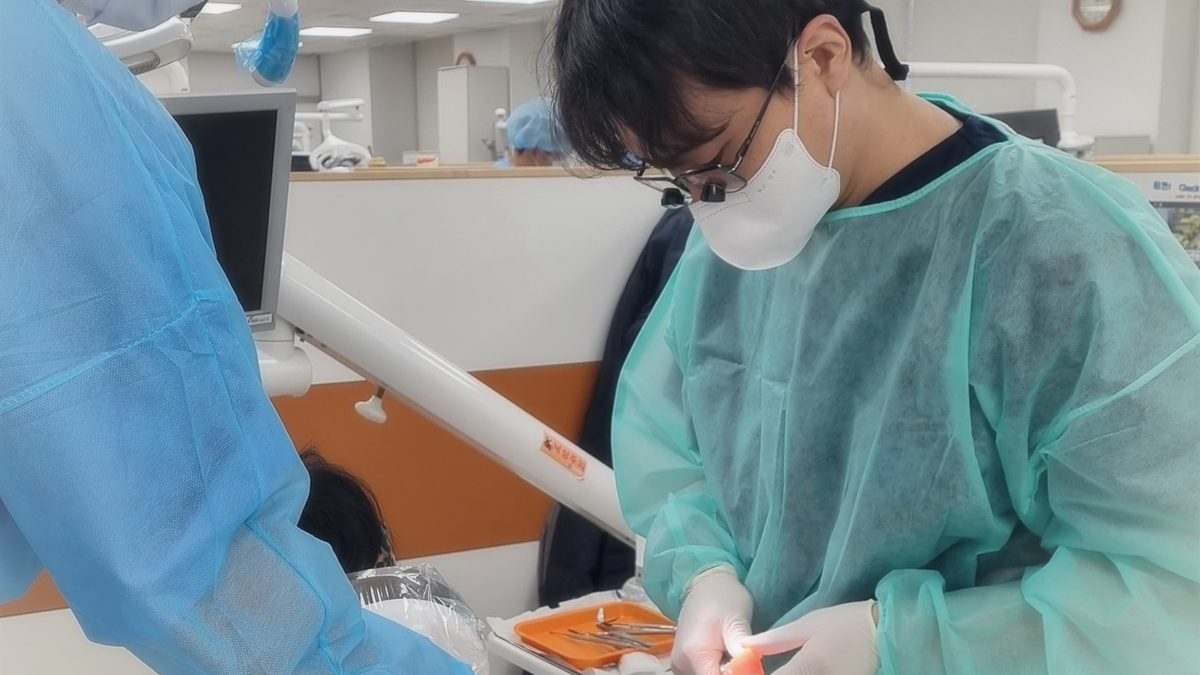
Key takeaway An implant bone graft is not an upsell. It builds the foundation when there isn't enough bone to hold an implant. Why bone disappears, how graft materials differ, what a sinus lift is, how long it takes and how much it hurts, costs and coverage, and the conditions that lower success rates.
Hello. I am Dr. Oh Ji-hwan of Yonsei The Strong Dental Clinic.
Straight to the conclusion. An implant bone graft is not an extra procedure slipped into the plan — it builds the site first, when there isn't enough bone to hold the implant. If there is enough bone, we don't do it; if there isn't, we do. And that decision doesn't come from a conversation — it comes from the imaging.
One of the reactions I hear most often in the consultation room is this: "I came in for one implant, and now they're telling me I need a bone graft too… do I really have to?" That is a fair question. It is the point where an estimate suddenly grows, and the internet is full of people saying bone grafts aren't necessary. A patient who walked over from Dobong-dong asked it, and so do people who ride down one stop from Banghak Station.
Today I want to answer it head-on: why bone runs short, what graft materials exist and how they differ, what that "sinus lift" term means when it comes up for upper molars, how long it takes and how much it hurts, how cost and insurance work — and what happens if you skip it. If you have been putting off a decision after seeing this line on an estimate, this should give you the grounds to decide.
Why does bone run short? Usually, time is the cause
To place an implant you need both height and thickness of bone to wrap around the fixture, and bone in the space left by a missing tooth shrinks when it isn't used.
A tooth root transmits stimulus to the jawbone every time you chew. Bone is tissue that maintains itself in proportion to that stimulus, so when a tooth is lost and the stimulus stops, that site begins to resorb. The loss is fastest right after extraction and continues gently afterward. So "it's been missing a long while" translates, in an implant consultation, into "there is probably less bone there now."
Time isn't the only cause.
- Lost to gum disease — If a tooth was loose enough to fall out, the bone around it had already dissolved. The starting point is lower.
- A tooth that carried inflammation for years — Where a root-tip lesion ate into the bone, a defect remains even after extraction.
- Upper molar sites — Above the upper molars sits an air space called the maxillary sinus, so bone height there tends to be limited to begin with. This is where bone grafting comes up most often.
- Long-term denture wear — Pressure transmitted through the gum can accelerate resorption in some cases.
In short, insufficient bone is less about unusual physiology or failed care than about how long the space has been empty and why the tooth was lost. I have discussed the best timing for implants after extraction in an interview with Vegan News; the longer that timing slips, the larger both the need for grafting and its scope become.
A checklist for gauging whether you'll need a graft
- The tooth has been missing for more than a year
- It fell out or was extracted after loosening from gum disease
- That tooth hurt or swelled for a long time before it came out
- The gum at the site looks visibly sunken compared with its neighbours
- It is an upper molar site
- You have worn a denture for a long time
- Another clinic has told you your bone is thin
The more that apply, the higher the likelihood. But a checklist cannot settle the question. The actual judgment comes from measuring remaining bone height and thickness in millimetres on three-dimensional imaging. The shape of the gum you can see and the state of the bone underneath frequently differ.
Let me also take the opposite question here. "What if I don't have the graft?" With insufficient bone, you have three options: ① give up on the implant and go with a bridge or denture, ② try a shorter, narrower implant to fit the conditions, or ③ leave the space as it is. Options ① and ② can both be perfectly reasonable depending on the situation. Option ③ is the one where bone keeps shrinking, until eventually even ① and ② become difficult. That is why doing nothing often turns out to be the most expensive choice.
Now let's look at what a bone graft actually does.
What a bone graft does — and how materials differ
A bone graft fills the deficient site with graft material, creating a scaffold into which your own bone can grow.

One misunderstanding comes up often here. The graft material does not itself become your bone. It acts as a framework holding the space open, and your blood vessels and cells move into its gaps and build bone. That takes time — and that time is the waiting period I'll describe below.
| Material | Where it comes from | Character | Typically used when |
|---|---|---|---|
| Autograft | Your own body (jaw, etc.) | Best bone-forming capacity | Large defects or demanding conditions |
| Allograft | Donated human tissue (processed, sterilised) | Close to autograft, no harvest site | A wide area needs filling |
| Xenograft | Animal-derived (processed, sterilised) | Resorbs slowly, holds volume long | Sites where keeping shape matters |
| Synthetic | Manufactured material | Consistent supply, low infection concern | Small defects, as a supplement |
In practice we often mix materials with different properties rather than using just one — combining something that turns to bone quickly with something that holds volume over time. A barrier membrane is sometimes placed over the graft so the material doesn't scatter; that procedure is called guided bone regeneration.
All graft materials are medical-grade, processed and sterilised to standard. Apart from autografts, no bone is taken from your own body, so there is no additional pain from a harvest site — which, in practice, is what patients ask about most.
For upper molars — the sinus lift
Upper molar sites work a little differently. Above them lies the maxillary sinus, an air space beside the nose, so when bone height is insufficient we gently raise the floor membrane of that space and pack bone beneath it. That is a sinus lift.
There are broadly two approaches.
- Crestal approach — Lifting slightly through the hole prepared for the implant. Chosen when a reasonable amount of bone height remains, and often done at the same time as implant placement.
- Lateral approach — Opening a window from the side of the gum to lift more broadly. Used when bone is markedly deficient; the site is usually left to heal and the implant placed later.
The name sounds alarming, but which one applies is decided by the bone height that remains. If "sinus lift" came up in your consultation, it simply means an upper molar site — and there, it is not unusual.
Time and pain — honestly
The two most common questions. In short: the graft needs time to take, and the discomfort is closer to a badly swollen wisdom tooth extraction.
| When | What you actually feel | What helps |
|---|---|---|
| During surgery | Pain controlled by anesthesia; a sense of pressure | Agree on a hand signal to stop |
| Day of – day 2 | Swelling building (worst around days 2–3) | Cold compress, medication on schedule |
| Days 3–5 | Swelling and bruising gradually subside | Switch to warm compresses now |
| Weeks 1–2 | Discomfort drops sharply; sutures out | Don't chew on that side |
| Months 1–3 | Comfortable outwardly, bone forming inside | Regular checks |
| About 3–6 months | Maturity confirmed, next step planned | Radiographic review |
The overall timeline depends heavily on the scope of the graft. If a small amount is packed in alongside implant placement, the schedule is nearly the same as a standard implant. If a wide area has to be filled and left to heal first, plan on about 3–6 months before the implant goes in, with more time after that for the crown. Knowing this schedule from the start makes it much easier to sit with.
On pain, I put it this way: during the procedure you are anesthetised, so pressure and vibration register more than pain. What is genuinely uncomfortable is the swelling over the following two to three days — which is also a sign of normal healing. But if swelling worsens from day four or five, or you develop a fever, that is a different signal and we need to hear about it right away. Recovery speed varies considerably from person to person.
Questions that come up in the chair
Q. Can't we just place the implant without a graft? A. Placed into insufficient bone, the fixture doesn't get enough grip. It may look stable at first, but under chewing forces it can loosen or the surrounding bone can resorb further. It is more accurate to see grafting as building the conditions for the implant to last.
Q. Does grafting lower implant success rates? A. What shapes the outcome is less the fact of a graft than why it was needed and how the site is maintained afterward. Since we are turning unfavorable conditions into workable ones before starting, it is the better option compared with forcing an implant in without it.
Q. Can the grafted bone fail to take? A. If resorption is greater than expected or an infection develops, additional treatment may be needed. Smoking, poorly controlled diabetes and neglected post-operative care all raise that risk noticeably. These are adjustable factors, so please tell us about them at consultation.
Q. When can I smoke again? A. Smoking is the clearest obstacle to bone grafting. I recommend stopping for at least several weeks around surgery, and cutting down through the whole period while the bone establishes itself if you can.
Q. Another clinic said I don't need a graft. A. This is an area where judgments can legitimately differ. When remaining bone is borderline, whether a graft is needed changes with the implant diameter and length chosen. In that case, ask to see the imaging and hear why it is or isn't needed — and if it doesn't add up, a second opinion is reasonable.
Q. Could I end up unable to have an implant after all? A. If the grafted bone doesn't establish as expected, sometimes we fill again and wait. Rarely, the position or conditions lead to the conclusion that something other than an implant is the better answer. That is why the plan should include a point at which the graft result is reviewed.
Q. I take osteoporosis medication — is that a problem? A. This is something we must know in advance. The judgment changes with the drug type, route and duration, and sometimes requires discussion with your prescribing physician. Do not stop the medication on your own — just tell us its name.
With time and pain covered, on to cost.
Cost and insurance — mostly not covered
Like implants themselves, bone grafting is generally outside national health insurance, which is why it stands out on an estimate.
| Item | Coverage | Notes |
|---|---|---|
| Implant (age 65+) | Conditional | Partial edentulism, two per lifetime, 30% co-payment |
| Implant (other ages) | Not covered | — |
| Graft material | Generally not covered | Varies by type and volume |
| Sinus lift | Generally not covered | Varies by approach |
| Barrier membrane | Generally not covered | Used depending on the site |
| Three-dimensional imaging | Conditional | Where necessity is recognised |
| Extraction | Covered | Calculated by difficulty |
⚠️ A misunderstanding arises here often. Even when implant coverage applies at age 65 and over, bone grafting is generally not included within it. Confirming this in advance keeps expectations from going wrong.
Cost ranges depend on material type and volume and on whether a sinus lift is involved. Broadly, a small amount packed alongside placement often runs about ₩200,000–500,000, while a wide area or a sinus lift often runs about ₩500,000–1,500,000, with the implant billed separately. These figures shift with material, scope, difficulty and each clinic's standards, so treat them as reference ranges and confirm the actual amount after an examination.
Where saving money costs more
- Leaving the space empty for years. Bone keeps shrinking, so a graft you wouldn't have needed becomes necessary — and larger.
- Forcing an implant in without the graft. If it fails and has to be removed, you restart with even less bone than before.
- Not asking for an itemised estimate. Hearing only "the implant costs X" means grafting and sinus lifts get added later. Ask for line items from the start.
- Continuing to smoke through treatment. Failure risk rises, and re-operation costs more than anything you saved.
- Being 65+ without deciding where the two insured implants go. Which teeth they're used on changes the whole plan.
Aftercare and choosing a clinic
The result of a bone graft is decided not on the day of surgery but by how the site is protected over the following months.
Care by stage
- Day of surgery — Cold compress. No spitting or suction (no straws, no vigorous rinsing). A slight tinge of blood is normal.
- Days 1–3 — Swelling at its worst. Don't skip prescribed medication; soft food, chewed on the other side.
- Days 4–7 — Once swelling recedes, switch to warm compresses. Leave the surgical site alone and brush everywhere else as usual.
- Weeks 1–2 — Sutures out. Avoid hard and chewy food until then.
- Months 1–3 — Comfortable on the surface, but bone is forming underneath. Don't overload that side.
- Months 3–6 — Radiographic confirmation of maturity, then the next step.
Care checklist
- Finish the full course of prescribed antibiotics even once symptoms ease
- Don't check the surgical site with your tongue or fingers (it reopens healing tissue)
- Postpone hot soups, saunas and vigorous exercise until swelling settles
- Avoid alcohol for at least several days — it hinders clotting and healing
- Stop smoking at least for this period; it directly raises graft failure risk
- Chew on the other side, but keep brushing that other side as normal
Blowing your nose hard is something to avoid for a while, especially after a sinus lift, because the pressure transmits directly to the grafted site. If you have to sneeze, doing it with your mouth open is safer.
What to check when choosing a clinic
- Do they measure and show you the remaining bone on 3D imaging? The standard is seeing where and how much is lacking together, not just hearing "you don't have enough bone."
- Do they explain both why it's needed and what happens without it? One side alone leaves you unable to judge.
- Do they give an itemised estimate up front? Check that implant, graft, membrane and crown are broken out.
- Do they lay out the full timeline in advance? Grafting is treatment with waiting built in, and knowing the total duration keeps you from giving up midway.
- Is a follow-up review in the plan? Placement isn't the end; the check months later is part of the same set.
- Do they ask about medical conditions and medications first? Some drugs, osteoporosis medication among them, affect bone metabolism — starting without asking is risky.
The evidence base we plan implants against is a follow-up study I took part in as first author: 804 patients and 1,780 implants tracked for up to 15 years, reporting a 15-year survival rate of 98.8% (J Clin Med 2023;12(6):2425, DOI; not our clinic's own statistics). The process from diagnosis to final restoration is set out in our implant guide, and our team on the doctors page.
Three common misconceptions
"Bone grafting is something clinics add to make money." Because necessity shows up in millimetres on imaging, it is actually one of the easier items to verify. Look at the 3D images together, hear where and how much is lacking, and if it still doesn't convince you, take copies of your records and get another opinion. You are entitled to copies of your chart and images on request.
"I'm uneasy about putting someone else's — or an animal's — bone in." Allograft and xenograft materials have had cells and proteins removed, leaving only a processed, sterilised mineral framework. What grows on that framework is your own bone, and much of the material is replaced by your tissue over time. If the material type concerns you, ask what will be used — raising the proportion of synthetic material is something we can discuss.
"Once grafted, it lasts forever." A grafted site can shrink again depending on care. In particular, peri-implantitis after placement takes the bone you worked to build first. A graft isn't an ending — it is closer to one more thing to maintain.
In closing
Three things to take away. First, a bone graft isn't an option bolted onto an implant; it builds the conditions for the implant to last, and whether it's needed is settled in millimetres on 3D imaging, not in conversation. Second, the pain is at the level of a swollen extraction, and the real variable is the waiting, not the pain — a wide graft adds roughly 3–6 months before the implant. Third, most of it is not covered, and it is generally not included even in the age-65+ implant benefit, so an itemised estimate up front is the surest step.
One more thing: if the graft line on an estimate took you by surprise, you don't have to decide on the spot. Seeing on the images why it's needed, hearing what changes without it, taking an itemised figure home and sleeping on it — all of that is a normal part of the process. Waiting a day costs you nothing.
The longer a space stays empty, the greater both the need and the scope of grafting become. Even if you aren't ready for an implant now, simply finding out how much bone remains will stop your options from narrowing. Bone condition and healing vary considerably between people, so we will give you a precise plan after an examination.
One-line summary: A bone graft isn't an add-on to an implant — it's building the foundation that will hold it.
We are open until 9 p.m. on weekdays and 365 days a year, so an implant schedule with follow-up reviews can be spread across evenings and weekends. After hours, our clinic's AI phone guidance runs 24 hours. We are about a 5-minute walk from Exit 1 of Dobong Station (toward the Dobong 1-dong post office), one stop from Banghak Station, so patients from Dobong-dong and Banghak-dong in Dobong-gu come without difficulty. If you are driving, see our parking guide.