Can Implants Fail? A Banghak Station Dentist's Honest Guide to Why Implants Fail and How to Reduce the Risk

Key takeaway Implant failure is rare but real, and it almost always has a cause. Early failure means the implant never bonded with bone; late failure is mostly peri-implantitis and overload. The conditions that lead to failure, the planning and maintenance that reduce the risk, and what re-implantation looks like — written head-on for everyone who has typed "implant failure" into a search bar.
Hello. I am Dr. Oh Ji-hwan of Yonsei The Strong Dental Clinic.
During consultations, after listening to a long explanation, some patients cautiously ask: "But… I read online that implants sometimes fail." In an age when typing "implant" into a search bar auto-completes to "failure," the worry is natural. A patient from Sanggye-dong came in after hearing an acquaintance had needed a redo, and someone researching implant dentists near Banghak Station told me they were "looking for a clinic that talks about the failure rate honestly, up front."
Today I will answer that question head-on. The fact first: implants can fail. It is rare, but it exists — and I believe explaining it serves patients better than hiding it. And there is a more important fact: most implant failures are a matter of cause, not luck, and a large share of those causes can be reduced through planning and maintenance. Today I will cover what failure actually looks like, how early and late failure differ, which conditions raise the risk, what planning and care reduce it, and what happens next if a failure does occur.
What exactly counts as implant failure
Terminology first. "Failure" in implant treatment falls into two broad branches.
Early failure means the placed implant never bonds with the bone. An implant becomes a working tooth only when osseointegration — firm fusion with bone — completes; if that bond does not form, the implant loosens or comes out. This usually shows itself within weeks to months of surgery, before the crown ever goes on.
Late failure is trouble in an implant that worked well for years. Two culprits dominate. One is peri-implantitis — inflammation of the gum and bone around the implant, the implant's equivalent of gum disease. The other is overload — grinding or a misaligned bite pouring excess force into the implant, so screws loosen repeatedly, components fracture, and in severe cases the surrounding bone gives way.
One distinction worth keeping: screw loosening and broken crowns are mostly "repair," not "failure." Tighten or replace the part and the implant body itself often continues to serve. The word failure properly applies only when the implant body must be removed — and that situation is rarer than people fear.
On how rare, I can speak from research I took part in as first author: following 804 patients and 1,780 implants for up to 15 years, the reported 15-year survival rate was 98.8% (J Clin Med 2023;12(6):2425, doi:10.3390/jcm12062425). Turned around, that also means one or two in a hundred ran into trouble within 15 years. I think it is right to present both faces of that number. Most implants last a long time; failure is real; and that is exactly why knowing the causes matters.
Early vs late failure
| Category | Early failure | Late failure (peri-implantitis) | Late failure (overload) |
|---|---|---|---|
| When | Weeks–months after surgery | After years of use | After years of use |
| Core cause | No osseointegration | Inflammation of surrounding gum and bone | Excessive force |
| Common background | Insufficient bone, infection, early loading, smoking | Poor hygiene, periodontitis history, smoking, diabetes | Grinding, bite problems, overambitious design |
| First sign | Mobility, persistent pain | Gum bleeding, swelling, odour | Repeated screw loosening, broken crowns |
| Pain | Usually present | Almost none at first | Often none |
| Response | Removal, then re-implantation | Staged peri-implantitis treatment | Bite adjustment, night guard, repair |
Note that late failure's first signs come without pain. Implants have no nerve of their own, so peri-implantitis can progress considerably before anything hurts. The key to preventing late failure is therefore not pain but routine check-ups.
Risk factors — a self-check list
- Smoking — reduces gum blood flow; the single most unfavourable lifestyle factor for both early bonding and long-term survival
- Poorly controlled diabetes — greater vulnerability to infection, slower bone healing
- A history of losing teeth to periodontitis — the same bacterial environment can re-form around implants
- Grinding and clenching — an implant has no shock absorber; the force lands directly
- Rushing the schedule where bone is scarce — skipping needed grafting or waiting periods
- Conditions that make hygiene hard — no interdental-brush habit, designs that are difficult to clean
- Long-term osteoporosis medication — less a failure factor than a condition that must be built into the plan
Having items on this list does not rule out implants. Known in advance and built into the plan, most are manageable; hidden or missed, they grow the risk. Conditions checked — now the process that reduces the risk, step by step.
Reducing failure — planning is half the battle
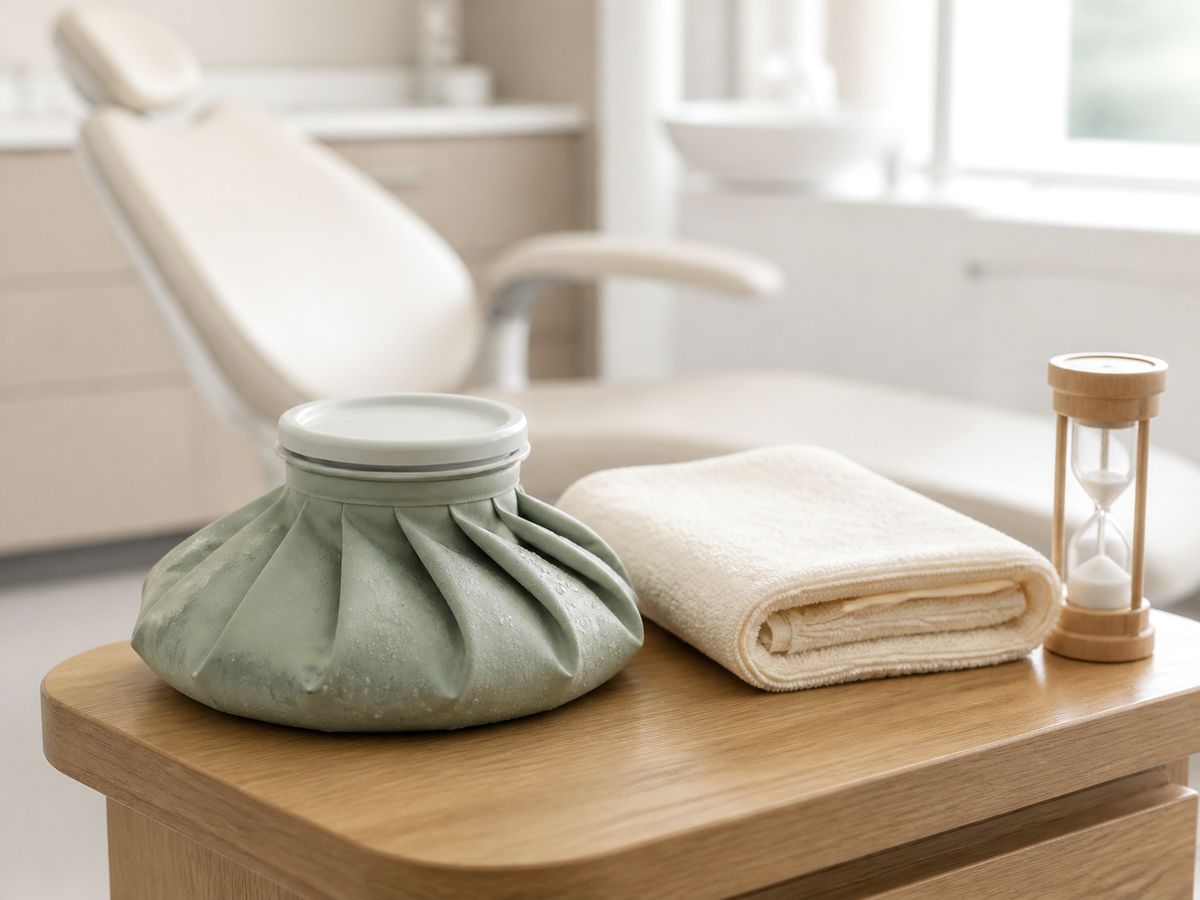
The seeds of implant failure are mostly planted — or removed — at the planning stage, not on the operating table. I have said in a Medical Today article (in Korean) that in demanding cases the planning takes longer than the surgery itself. The process runs like this.
- Systemic conditions and habits. Diabetes, medications, smoking, grinding — checked first, because everything downstream is conditioned on it.
- CT-based diagnosis. Bone volume and quality, the nerve canal, the sinus — in three dimensions. This is the stage that filters out the classic early-failure move: forcing an implant into a site with too little bone.
- Placement planned backwards from the bite. Position and angle are calculated from where the final tooth must chew. A misangled implant takes force obliquely — the background of overload failures.
- Grafting and waiting where needed. Deficient bone is reinforced and given time to heal. The longer timeline is frustrating, but skipping this step is the express lane to early failure.
- Surgery under sterile control. The procedure itself is done in an infection-minimising environment. Taking prescribed medication and observing the no-smoking, no-alcohol guidance is the patient's half of the bargain.
- Protecting the bonding period. Two to six months while bone and implant fuse — no heavy chewing on the site, no excess force on temporaries.
- Crown connection and bite adjustment. Height and contact tuned precisely. A tiny discrepancy here becomes screw loosening and overload years later.
- A check-up system begins. Fitting day is day one of maintenance. Screws, gums and bone height reviewed roughly every six to twelve months.
Questions we are often asked
Q. Just tell me the failure rate in percent. A. One number cannot honestly answer that: the probability differs with bone condition, site, systemic factors and maintenance. What I can cite with evidence is our study's 15-year survival of 98.8% — with the condition attached that those were patients under regular maintenance. The real answer to the probability question is: "what are your risk factors, and how will we reduce them?"
Q. Two months in, it still aches sometimes. Is that failure? A. It depends on timing and pattern. Healing discomfort trends downward. Pain that fails to fade or worsens, pain on pressure, or a sense of looseness may signal a bonding problem — have it checked without delay. Early failure caught early makes re-implantation planning far easier.
Q. If it fails, can it be redone? A. Usually yes. The problem implant is removed, the site heals (with grafting if needed), and a new one is placed. It often takes longer than the first round, but re-implantation with the cause identified and corrected is a well-established path. What matters is never replanting the same way without establishing why it failed.
Q. My implant was placed elsewhere — will you see it? A. Of course. Wherever it was placed, we continue the care. System records make parts handling easier, so bring old documents if you have them; X-rays often suffice otherwise. Details are in our implant second-opinion guide.
Q. Fear of failure makes me consider a bridge instead. A. Both have trade-offs, and fear alone should not decide. A bridge carries a different kind of cost — grinding down two healthy neighbours. Compare on bone condition, the state of adjacent teeth, and maintainability; the framework is in our implant vs bridge guide.
Stopping the main late killer: peri-implantitis
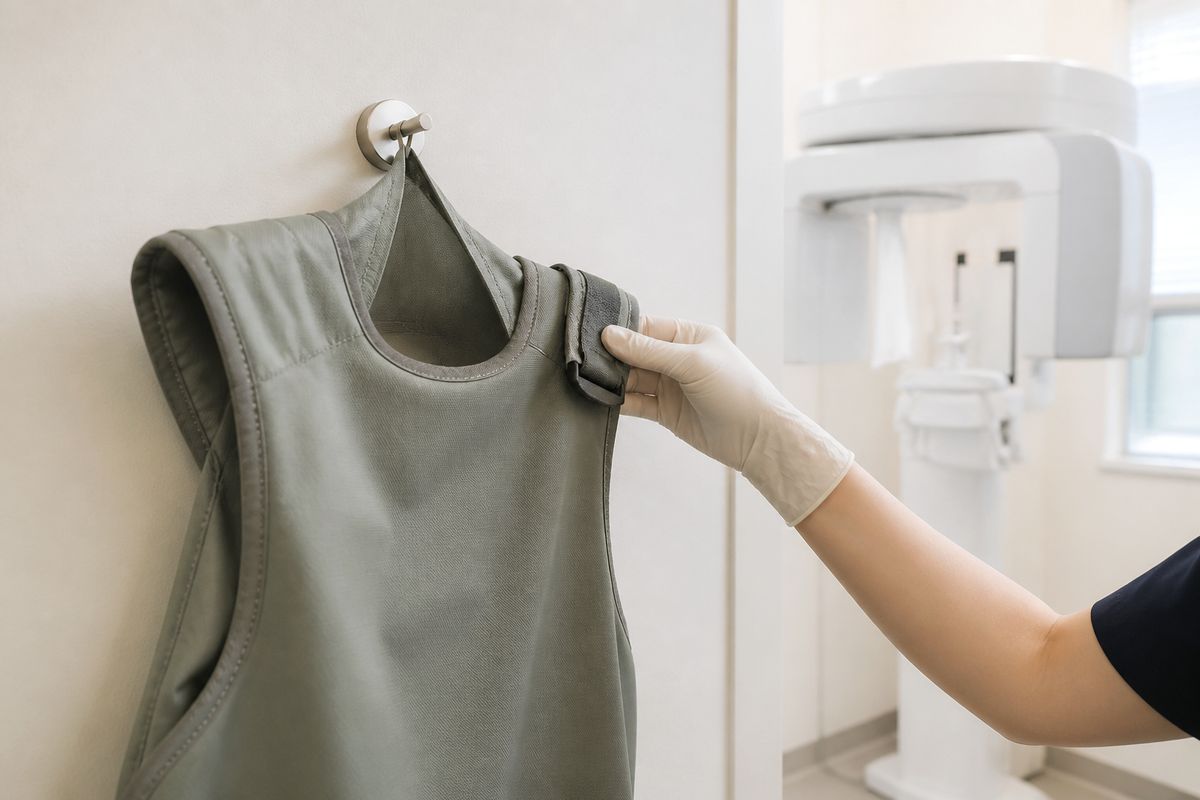
If early failure is a matter of surgery and planning, failure years later mostly begins at the gums. Peri-implantitis can progress faster than gum disease around natural teeth, because the tissue defences that surround a natural tooth are not fully replicated around an implant.
The course usually runs: first only the gum swells and bleeds (peri-implant mucositis) — caught here, it can be reversed with cleaning and care. Left alone, inflammation descends into bone; the bone holding the implant dissolves; and past a threshold, the implant loosens and removal comes onto the table. The stage-by-stage story is in our peri-implantitis guide — recommended reading for anyone living with implants.
Prevention is unglamorous:
- An interdental brush around the implant, daily. Implant crowns need side-surface cleaning even more than natural teeth.
- Never skip check-ups. Early peri-implantitis is symptomless; comparing bone height on X-rays is effectively the only early-detection tool.
- Cut down or quit smoking — the most decisive lifestyle factor.
- If diabetic, treat glucose control as part of implant maintenance.
- Swelling or odour at the gum — check it even without pain.
Preventing overload failure
- A night guard if you grind. With no periodontal ligament to cushion it, night-time force passes straight into screw and bone.
- Do not shrug off a loosened screw as "just tighten it." Repeated loosening signals a bite or design cause; unaddressed, it progresses to fractured parts.
- If that implant touches first when you bite, get it adjusted. Tiny height differences funnel force.
- Ice, dried squid, nut shells — avoid habitually cracking high-impact foods on the implant side.
Money — the honest part about failure and retreatment
A guide about failure should also be frank about cost.
| Situation | Direction | Insurance | Rough reference |
|---|---|---|---|
| Screw loosening | Tighten and inspect | Usually not covered | Tens of thousands of won |
| Crown fracture | Repair or remake | Not covered | About KRW 100,000–600,000 |
| Mucositis stage | Cleaning, hygiene coaching | Varies by item | Tens of thousands of won |
| Peri-implantitis with bone loss | Staged treatment | Varies by item | About KRW 100,000–500,000 |
| Re-implantation after early failure | Remove → heal → replace | Usually not covered | Varies widely with clinic warranty policy |
| Removal of a failed implant | Removal procedure | Varies by item | Tens of thousands to hundreds of thousands |
These figures are orientation ranges; they vary greatly with condition and clinic policy. One thing I actively recommend: before starting, confirm in writing what happens — and to what extent — if problems arise. Many clinics, ours included, issue a warranty certificate after treatment, but scope and conditions (such as keeping check-up appointments) differ by clinic. Advertising contractual guarantee periods is inappropriate; checking the policy before you begin is simply your right as a patient.
And the cheapest choice, in cost terms, never changes: catching trouble at the mucositis stage through routine checks. A check-up costing tens of thousands of won stands in for retreatment costing millions.
A timeline of failure signals
- 1–2 weeks after surgery: swelling and discomfort should be trending down. Worsening pain, pus, or heat — call at once.
- Bonding period (2–6 months): mobility or persistent pain here can signal early failure. This is not a "wait and see" window.
- First year after the crown: watch for screw loosening and bite comfort. Fine-tuning here shapes the long-term outcome.
- Every year after: gum bleeding, odour, swelling; bone height compared on X-ray. Most problems are found quietly here — and solved quietly here.
Call immediately if
- The implant feels loose
- Pus or odour at the surrounding gum
- The same screw has loosened twice or more
- New pain on chewing
- Part of the crown has chipped or come off
Choosing an implant clinic — a failure-minded checklist
To anyone searching "Banghak Station implant," a checklist you can use at any clinic is worth more than self-praise.
- Do they take a CT and explain the plan? An implant plan without bone assessment starts life carrying risk.
- Do they ask about risk factors first? A consultation that skips smoking, diabetes and grinding is half a consultation.
- Can they say "you need grafting and time"? A clinic that explains why things take time beats one that only promises fast and simple.
- Is the trouble policy in writing? Warranty terms and their conditions, available before you start.
- Is there a check-up system? A structure for managing years, not just placing and parting.
- Do they record component details? Repairs anywhere, years later, depend on knowing the system used.
- Can you keep coming? The months of placement are short; the decade of use is long. A reachable location and workable hours are themselves maintenance conditions.
Five common failure paths
First, skipping check-ups because nothing hurts. Most late failures travel this road. An implant is a structure that can deteriorate painlessly.
Second, smoking on while hoping for a good outcome. Bluntly: without quitting, the effect of every other effort is discounted. Even quitting around the surgical period changes results.
Third, begrudging the graft and the wait. Saving months and losing the implant means losing years.
Fourth, treating screw loosening lightly. Repeated loosening is an alarm about force.
Fifth, not checking for grinding. Many grinders do not know they grind — morning jaw stiffness or a family member's testimony belongs in your consultation.
In closing
Three things, in summary. First, implant failure is real but rare, and it almost always has a cause — bone and planning early on, peri-implantitis and overload later — and having a cause means it can be reduced. Second, late failure progresses without pain, so routine check-ups, not symptoms, are the practical guardian of an implant's lifespan; the patients behind our study's 98.8% 15-year survival were exactly those under regular maintenance. Third, failure is not the end. Re-implantation with the cause identified and corrected is entirely feasible. Outcomes vary between individuals, and nothing you read here can substitute for your own bone on a scan. If you have been circling this worry in a search bar, bring the worry in as it is and have it checked. Our general implant guidance is on the implant page.
Today in one line: implant failure is a matter of causes, not luck. Filter the risks at the planning stage, and look in regularly even when nothing hurts — those two things are nearly the whole of prevention.
Our clinic sees patients until 9 p.m. on weekdays and opens 365 days a year, so a months-long implant schedule fits around work and weekends. Our clinic's AI phone guidance also runs 24 hours a day after closing. We are about a five-minute walk from Exit 1 of Dobong Station, Seoul (towards Dobong 1-dong Post Office), one stop from Banghak Station, within easy reach of Banghak-dong and Sanggye-dong. If you are driving, please see our parking guide.