I'm an Adult and My Tooth Is Loose — A Banghak Station Dentist on the Causes of a Wobbly Tooth and the Road to Saving It
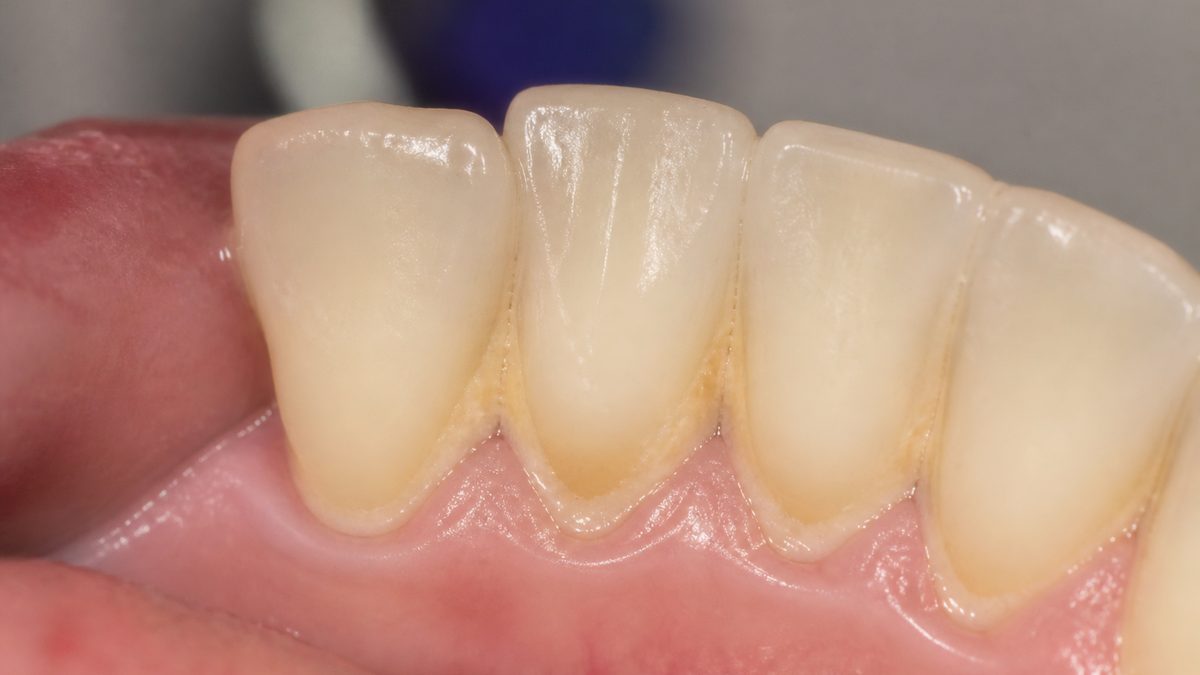
Key takeaway A loose tooth in adulthood is not a tooth whose time has come — it is a signal that the bone holding the root is in trouble, and the most common cause is periodontitis. How looseness is graded, how causes are told apart, the conditions under which splinting and gum treatment can save the tooth, costs and insurance, and when extraction actually protects the neighbours.
Hello. I am Dr. Oh Ji-hwan of Yonsei The Strong Dental Clinic.
It happens over a meal, or while brushing: you suddenly notice that one tooth moves, ever so slightly. Only someone who has felt it knows the chill of that moment. The sensation of a wobbly baby tooth has returned after decades — except this time, you know better than anyone that there is no new tooth waiting underneath. A patient from Jangam-dong told me that pushing it with their tongue had become a habit, and among those who come from the Banghak Station direction, one carried the worry alone for weeks and opened with, "What if it has to come out?"
Let me answer that worry first. Loose does not mean lost. Depending on the cause and the degree, there are absolutely teeth that can be saved — and in early stages, gum treatment and splinting can make a tooth firm again. But I owe you the other half of the truth too: a loose tooth in an adult does not heal on its own, and every week of waiting shrinks the odds of saving it. Today I will cover why teeth loosen, the fact that looseness has grades, how we identify the cause in the clinic, what the tooth-saving treatments and their costs look like, and when extraction is, in fact, the way to protect the teeth next door.
Teeth are meant to move a little — the question is how much
It may surprise you, but even a healthy tooth is not rigidly fixed. Between the root and the jawbone lies a thin tissue called the periodontal ligament, which cushions chewing forces by allowing movement about the width of a hair. That is normal, and you cannot feel it.
The looseness that matters is looseness you can feel. In adults it arises along five main paths.
First, periodontitis (gum disease). The most common cause of adult tooth mobility. Calculus and bacteria below the gumline set off inflammation, and that inflammation slowly dissolves the bone that grips the tooth. Once the bone drops below about half the root, the tooth starts to sway like a post in a shallowed hole. The frightening part is that this process usually advances without pain. By the time you feel movement, the disease has often gone quite far. I have discussed how quietly periodontal disease progresses in a Medical Today article (in Korean).
Second, occlusal trauma. The gums are relatively healthy, but chewing force is piling onto one tooth — from grinding, clenching, or a restoration that sits high. Fix the force problem and these often recover.
Third, injury. Looseness after a knock or biting something hard the wrong way. A stretched ligament can settle with rest, but it must be distinguished from a fractured root.
Fourth, infection at the root tip. When an abscess forms at the tip of a tooth whose nerve has died, the bone there dissolves and the tooth feels raised and mobile. The cause is the nerve, not the gum, so the treatment direction changes entirely.
Fifth, systemic factors. Poorly controlled diabetes accelerates gum disease, and pregnancy hormones affect gum condition. If you take long-term osteoporosis medication, it must be factored into any extraction planning — please always tell us.
Causes compared
| Category | Periodontitis type | Bite/habit type | Injury type | Root-tip infection type |
|---|---|---|---|---|
| Typical background | Bleeding gums, bad breath came first | Grinding, clenching, high restoration | A knock, biting something hard | Old root canal or deep decay |
| How many teeth | Often several | One or two specific teeth | The injured area | A single problem tooth |
| Pain | Absent or late | Discomfort on biting | Sore when pressed | Raised feeling, throbbing on biting |
| Chance of recovery | Large to limited, by stage | Good once cause removed | Depends on severity | Recoverable with root canal in some cases |
| Core treatment | Gum treatment, splinting | Bite adjustment, night guard | Rest, splinting | Root canal (retreatment) |
A rough self-assessment of grade
In the clinic we grade mobility in roughly three steps. You cannot measure precisely at home, but this gives a sense.
- Grade 1 (mild): pushed with a fingertip, the tooth shifts sideways less than 1 mm. Chewing is largely unaffected.
- Grade 2 (moderate): visible sideways movement of 1 mm or more. Chewy food is a burden.
- Grade 3 (severe): movement not only sideways but a pressing feeling up and down. Chewing is difficult.
Signals to check alongside:
- That area bleeds often when you brush
- The gum has receded and the tooth looks longer
- Gaps are opening or teeth have shifted position (including front teeth fanning outward)
- A smell or taste of pus from the area
- The jaw is stiff in the morning with a pressed feeling in the teeth (a grinding signal)
Even grade 1 with any of these signals warrants a check; grade 3 with vertical movement is not a situation to postpone. Causes sorted — here is how we actually tell them apart.
How we examine a loose tooth
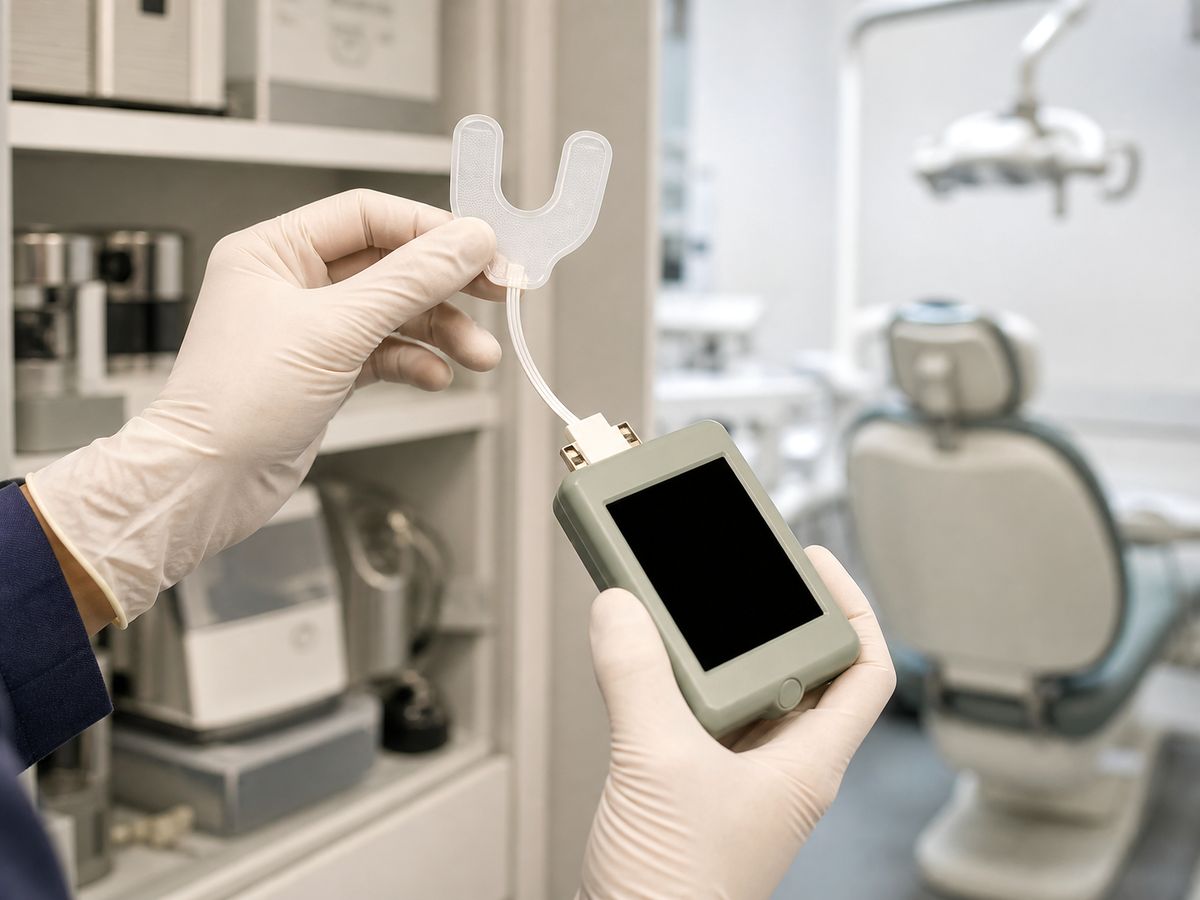
To judge whether a loose tooth can be saved, three things must be known: how much bone remains, what the cause is, and whether that cause can be removed. The examination is the search for those three answers.
- Mobility testing. The tooth is gently pushed with an instrument to record direction and degree. Whether it moves only sideways or also vertically is a decisive fork.
- Periodontal probing. A fine graduated probe measures the depth of the crevice inside the gum: about 1–3 mm when healthy; the deeper it goes, the further inflammation has descended along the root. It stings slightly; it is not a painful test.
- X-rays. How far the bone remains, whether there is infection at the root tip, whether the root is fractured. The invisible half of the diagnosis comes from here.
- Bite check. Articulating paper shows whether force is piling onto specific teeth; a bite-force measurement can be added where needed.
- Synthesis. The results are combined to classify the case — periodontal, occlusal, nerve-related, or mixed. In practice, periodontitis with a bite problem layered on top is quite common.
The examination usually takes about 20–40 minutes, and you can hear the direction of treatment the same day.
Questions we are often asked
Q. I keep pushing the loose tooth with my tongue. Is that all right? A. Better to stop. Repeated force on a loose tooth stretches the ligament further and slows recovery. The curiosity is understandable, but one check in the clinic is enough.
Q. It is loose but does not hurt. Is it urgent? A. The absence of pain is precisely the hallmark of the periodontitis type — pain usually arrives late. Mobility itself means bone loss has already progressed, so it needs checking regardless of pain.
Q. I am pregnant and a tooth feels loose. A. Pregnancy hormones can make gums swell and feel lifted. But genuine periodontitis can progress at the same time, so please have a check during the stable period. Gum care and scaling are treatments that can be done during pregnancy.
Q. One molar is loose, so I stopped chewing on that side entirely. Is that wise? A. Correct in the short term — but kept up, it creates overload on the other side and a new problem: a one-sided chewing habit. Use "not chewing there" only as a stopgap until your visit, and treat the cause promptly.
Cause identified — now the treatments that save teeth, costs included.
How tooth-saving treatment proceeds — with costs and insurance
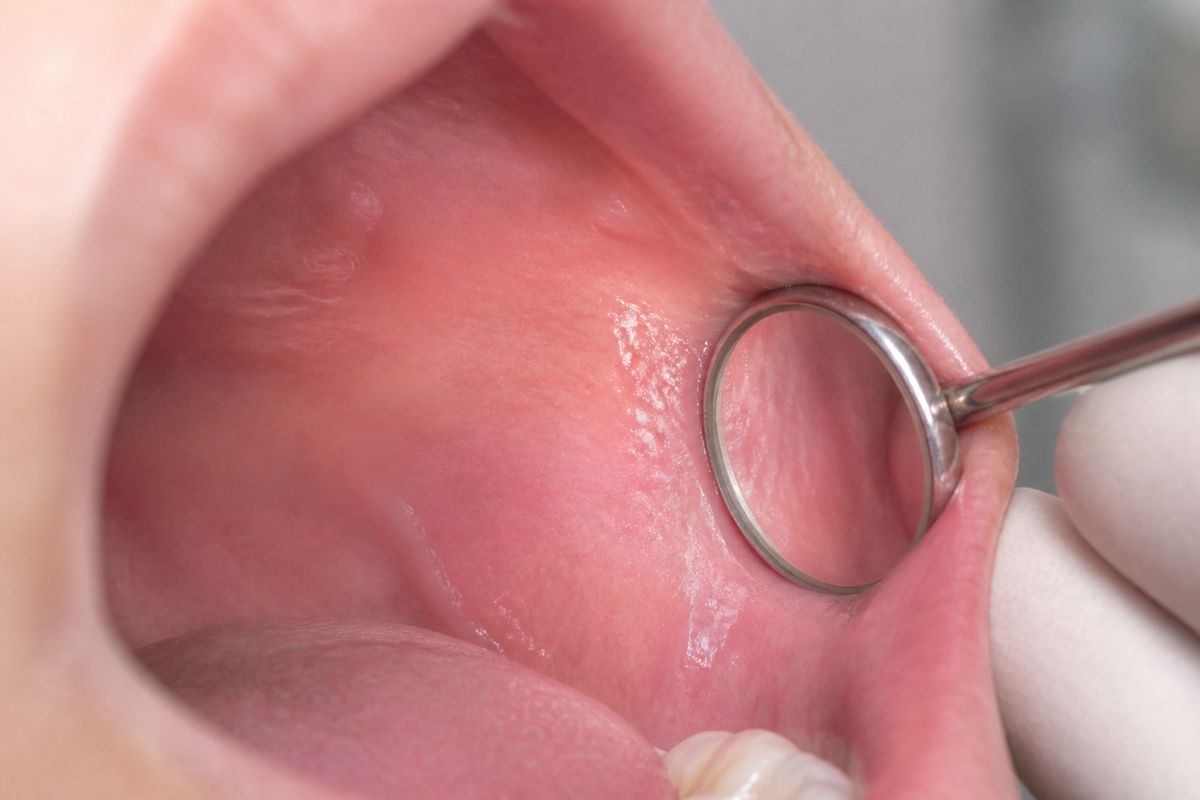
The principle is simple: remove the cause and buy the tooth time to reattach. By cause, it branches like this.
Periodontitis type. The core is clearing calculus and inflamed tissue from within the gum: starting with scaling, moving to root planing and curettage for deep deposits, and where needed periodontal surgery that opens the gum to clean thoroughly. As the inflammation resolves, the gum firms up and mobility often decreases. These treatments are covered by national health insurance.
Splinting for markedly loose teeth. The loose tooth is bonded to its firm neighbours with fine wire or adhesive material so that force is shared while the gum heals — the same logic as a cast on a broken leg. Splinting itself cures nothing, so it always accompanies treatment of the cause.
Bite/habit type. Adjusting high spots on the bite; a night guard if grinding is involved. When the cause is force, reducing force is the treatment.
Root-tip infection type. Root canal treatment (or retreatment) clears the infection inside the root; as the bone heals, mobility can settle.
Injury type. Rest and observation, or splinting, depending on severity. Whether the tooth can be saved depends on where the root fractured.
Reference table by item
| Item | Insurance | Out-of-pocket guide |
|---|---|---|
| Examination, mobility, probing | Covered | Varies by item |
| X-rays | Covered | A few thousand won – 20,000 |
| Scaling (once a year) | Covered | About KRW 10,000–20,000 |
| Root planing / curettage | Covered | About KRW 10,000–50,000 per area |
| Periodontal surgery | Covered | About KRW 50,000–200,000 |
| Splinting | Conditional / varies | About KRW 50,000–200,000 |
| Root canal | Covered | About KRW 50,000–150,000 |
| Bite adjustment | Covered | Varies by item |
| Night guard | Usually not covered | About KRW 200,000–500,000 |
These figures are ranges for orientation and vary with the number of areas, disease stage and co-payment rate. The point worth noticing: the backbone of tooth-saving treatment — gum treatment and root canal — is mostly insured care. Treatment at the stage before implants is far lighter on the wallet too. Saving a saveable tooth is always the most economical path.
Recovery timeline after treatment
- Right after – 1 week. For a few days after gum treatment, teeth may feel sensitive and the gum settles down, making teeth look longer. This is swollen gum returning to its healthy position.
- 2–4 weeks. Bleeding decreases and gum colour returns. Mobility gradually easing is a good sign.
- 1–3 months. Re-evaluation: probing depths are measured again and compared, and if a splint was placed, keeping or removing it is decided.
- Afterwards. A gum that has been through periodontitis lives on recurrence management — typically maintenance visits every 3–6 months.
Speed and extent of recovery vary between individuals. Smoking is the single most reliable factor that slows gum healing by cutting blood flow; even pausing for the treatment period changes outcomes.
When extraction is right — and what comes after
Having argued so hard for saving teeth, here is why the other conversation matters: holding on to an unsavable tooth is not a problem confined to that one tooth.
Extraction comes under serious consideration roughly when:
- Bone is down to a third of root length or less, with grade-3 vertical mobility
- The root has fractured vertically
- Pus keeps returning despite repeated treatment
- The tooth's infection has begun dissolving the bone of the healthy tooth next door
The last point matters most. A severely mobile tooth left in place can spread inflammation into neighbouring bone, turning one extraction into two. In that situation extraction is not surrender — it is the choice that protects the tooth beside it.
If extraction does happen, what to do with the space (implant, bridge, partial denture) is the next chapter, and the comparison is laid out in our implant vs bridge guide. One thing worth saying now: once the decision is made, do not postpone the follow-up plan. An empty space left long lets neighbours tilt and bone shrink, raising the difficulty of the next treatment.
Daily care checklist — for a gum that has known mobility
- Brush the gumline thoroughly with a soft brush. Avoiding a sore spot is how that spot deteriorates again.
- Use an interdental brush and floss daily. Where gums have receded, the interdental brush is the efficient tool.
- Rest from chewy, hard foods during the recovery period.
- Catch yourself clenching. Lips together, upper and lower teeth apart — that is the resting position.
- Cut down or pause smoking. The biggest lifestyle factor in gum-treatment outcomes.
- If you have diabetes, treat blood-sugar control as part of gum treatment. The two influence each other.
- Keep the maintenance schedule. Periodontitis is a disease of management more than of cure.
Move your appointment up if
- Mobility has visibly worsened within a few weeks
- Pus is discharging or the cheek has begun to swell
- The loose tooth gives a pressed up-and-down feeling when chewing
- Front teeth have recently begun drifting apart
- After a knock, a tooth is darkening and loosening
Choosing where to be seen
Clinics can differ in judgement when facing a loose tooth. If you want one that leans towards saving teeth, look for this:
- Do they finish the examination before stating a direction? A clinic that checks probing depths and bone before judging beats one that recommends extraction on sight.
- Do they explain both the saving option and the extraction option, with the conditions and limits of each shown in numbers and images?
- Do they schedule a re-evaluation after gum treatment? Periodontal care is never a single visit.
- Do they look at force problems — grinding, bite — alongside the gums? Treating gums while missing force invites relapse.
- Do they discuss the plan for after extraction, if it comes to that? A clinic that knows extraction is a beginning, not an end.
- Is there a maintenance system? Half of periodontal success is decided in the years of follow-up.
In closing
Three things, in summary. First, a loose tooth in an adult is almost always a bone problem, and it does not heal by itself. The absence of pain is not reassurance — it is the signature of periodontitis. Second, loose does not mean lost. There are stages at which removing the cause — gum treatment, root canal, bite adjustment — plus splinting can save the tooth, and the backbone of that care is insured treatment. Third, the deciding factor is not how much the tooth wobbles but how much bone remains — and only an examination can tell you that. Weeks spent checking with the tip of your tongue can cost a tooth that was still saveable. If a tooth of yours is moving now, find out what stage it is at first. Outcomes vary with condition and individual, but the earlier the check, the wider the choices.
Today in one line: a loose adult tooth is not "a tooth whose time has come" — it is bone asking for help. Whether it can be saved is told by an examination, not by your tongue.
Our clinic sees patients until 9 p.m. on weekdays and opens 365 days a year, so a worry you have been probing with your tongue for weeks can be settled on the way home from work. Our clinic's AI phone guidance also runs 24 hours a day after closing. We are about a five-minute walk from Exit 1 of Dobong Station, Seoul (towards Dobong 1-dong Post Office), and one stop from Banghak Station, within easy reach of the Banghak-dong and Jangam-dong areas. If you are driving, please see our parking guide.