I Always Chew on One Side — A Jangam Station Dentist on the Causes of One-Sided Chewing and How to Undo It
Key takeaway Chewing on one side isn't laziness — there is almost always a reason the other side became uncomfortable to use. Left alone, it leads to wear and cracks on the working side, jaw strain, and more tartar on the idle side. How to find the cause, what the examination involves, and how to retrain both sides.
Hello, I'm Dr. Oh Ji-hwan of Yonsei The Strong Dental Clinic.
When I happen to see people eating at lunchtime, something catches my eye — call it an occupational habit. Food that keeps going to one cheek only. The person usually has no idea, and when I ask at a check-up, only then comes: "Ah, I think I do chew only on the left." A patient from Mia-dong said exactly that, and among those who come from the Jangam Station direction, many first notice it at a check-up too.
If food quietly ends up on the same side at every meal, it is because that side feels easier right now. But when one set of teeth and one side of the jaw carries all the work for months and years, the discomfort repeats and the habit sets harder. And here is what I most want to say first: chewing on one side is not a lazy habit — it is almost always the result of a reason that made the other side unpleasant to use. Today I'll go through why one side takes over, what changes in the mouth and jaw when it continues, how we trace the cause in the clinic, what the costs look like, and how to retrain both sides.
Why one side takes over — it's avoidance, not habit
The body is honest. Given a painful path and an easy one, it takes the easy one. Chewing is no different: if one side stings, catches or hurts, the brain routes food to the other side without asking. What began as conscious avoidance becomes the unconscious default within weeks.
So the advice "chew on both sides" is only half right. The other half is: find out why the other side fell out of use, and fix that. As long as the cause remains, willpower changes the direction for a few days at most before it snaps back.
Comparing the causes — what's on the unused side?
| Category | Tooth type | Gum type | Missing tooth / prosthesis type | Fixed-habit type |
|---|---|---|---|---|
| Why it's avoided | Decay, sensitivity or a crack makes chewing unpleasant | Swollen or pressed gums hurt | A gap, or an ill-fitting prosthesis or denture | The cause is gone; only the habit remains |
| Telltale sign | You can point to a specific tooth | Food traps and gums swell often | No chewing pair exists at all | "This side just feels easier" |
| If neglected | That tooth worsens | Gum disease progresses | Neighbours tilt; the other side overloads | Asymmetric wear and jaw strain build |
| First step | Treat the causal tooth | Gum treatment | Discuss restoring the gap | Retrain two-sided chewing |
In practice the types migrate over time. It starts with avoiding a cavity (tooth type), continues after treatment out of pure habit (fixed-habit type), while tartar builds on the unused side (gum type). The older the one-sided habit, the more layered its causes tend to be.
Self-check list
- You have a fixed comfortable side, and chewing on the other feels awkward or worrying
- There is a spot that stings or catches when you bite
- After chewy food, one jaw and temple feel unusually tired
- There is a molar lost and left unrestored
- You often bite or injure the inside of one cheek
- The two sides of your face look subtly different in the mirror
- You've been told at a scaling that one side carries more tartar
- Some mornings only one side of the jaw feels stiff
Three or more, and it is time to check whether habit retraining alone will do, or whether cause treatment comes first. The next section — what one-sided chewing actually does — shows why that check matters.
What happens in the mouth and jaw
The working side overworks. Force meant to be shared by two sides lands on one. Those teeth wear faster, the margins of old fillings chip first, and as load accumulates, hairline cracks appear. The brief electric jolt on biting — the classic cracked-tooth sign — turns up remarkably often on the working side of long-time one-sided chewers.
The idle side gets dirty. Surprisingly, this is the bigger problem. Chewing has a self-cleaning effect: food sweeps the tooth surfaces and saliva circulates briskly, washing away some of the bacterial film. On the unused side that cleaning has stopped, so plaque and tartar build noticeably faster. This is why the scaling-day comment is so often "there's more tartar on the side you don't use." The resting side seems like it should be cleaner; the reality is the opposite.
The jaw works asymmetrically. The jaw joints and chewing muscles are built to move as a left-right set. Use one side only and its muscles knot and its joint compresses, while the opposite joint plays loose. It shows up as a pulling temple after a chewy meal, or clicking on one side when opening. Where the jaw itself has become the problem, see the TMJ article.
It leaves traces in the face. Chewing muscles also shape the side profile. Trained on one side for years, that cheek and jawline can grow comparatively prominent — some people notice the asymmetry in photographs. Facial asymmetry has many causes, skeletal ones included, so chewing habits never explain it alone; but it is one of the few factors you can change yourself.
Balance does not return by itself. This is the key point. Wear, tartar and muscle asymmetry all stop or recover once that side is used again — but after the habit has set, the direction doesn't switch back on its own even when the cause is gone. That is why treatment and retraining come as a set.
With the principle laid out, here is how we trace the cause.
How we examine it
- History (about 5–10 minutes): since when, which side, and what chewing on the other side feels like. "Awkward", "painful" and "scary" each point to a different cause.
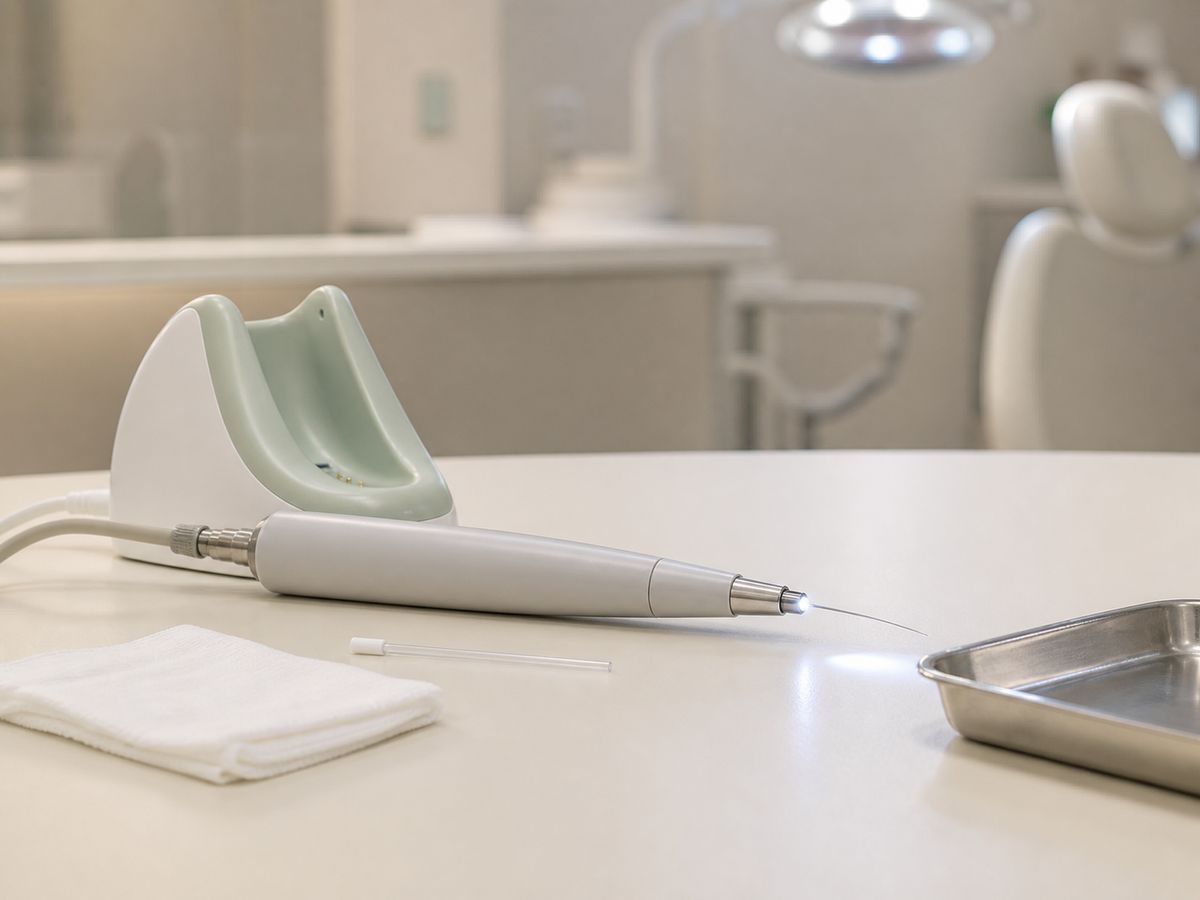
- Searching the unused side: we check its teeth one by one — decay, gaps at old filling margins, sensitivity, mobility, food-trap spots. A tooth that hurts only on biting gets a crack work-up (light transmission, bite test).
- Gums and gaps: we measure the gums, and where a lost tooth was left unrestored, we confirm its effects — tilted neighbours, altered bite — on imaging.
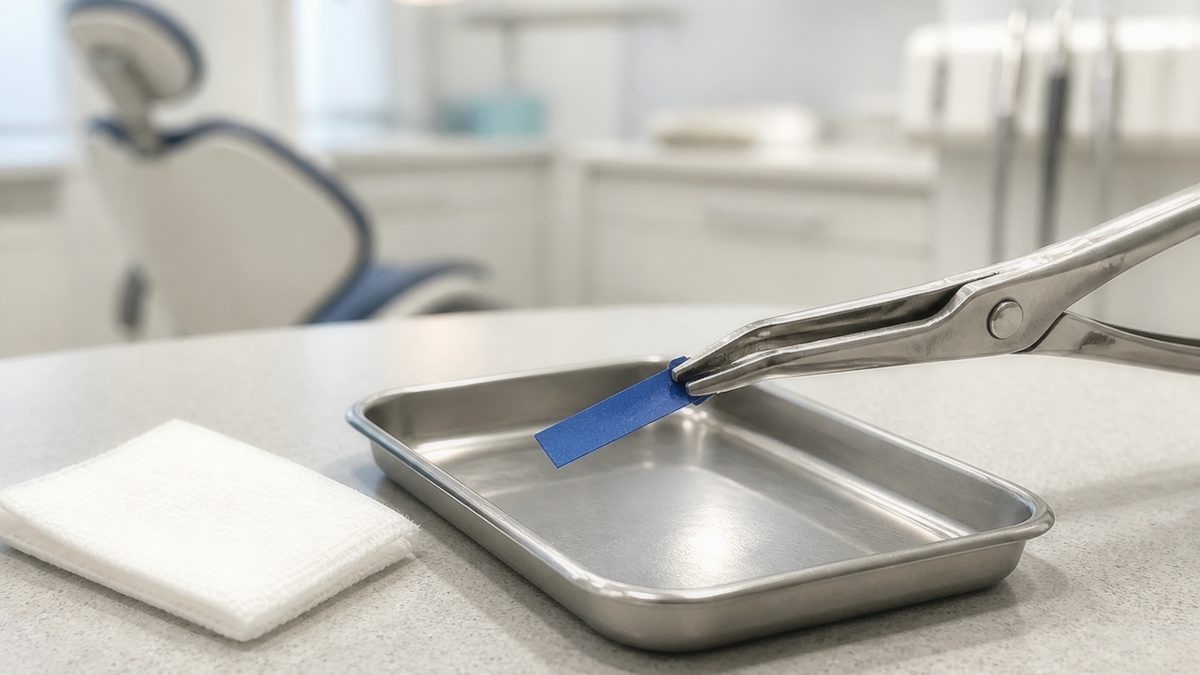
- Bite check: biting on blue articulating paper shows where force lands and how. A high or early contact is sometimes where the avoidance began.
- Planning (about 10–20 minutes): cause treatment first, retraining after. With layered causes, we order them by urgency.
Questions we're often asked
Q. Nothing hurts, yet I chew on one side. Is that still a problem? A. The cause may have passed, leaving only the habit. Then there is little to treat, but wear and tartar asymmetry may be progressing — so confirm the state, then move to retraining. That is different from leaving it unexamined because "it doesn't hurt".
Q. I honestly don't know which side I chew on. A. Very common. For a few days, watch where the first bite of each meal goes — the first bite's direction is your default. Which side feels natural when you close your mouth in front of a mirror is another clue.
Q. My child chews on one side. Same problem as adults? A. In a growing child the effects can be larger, so it deserves more attention, not less. A child's one-sided chewing usually traces to a wobbly baby tooth, a newly erupting molar, or decay — and once the cause is fixed, the habit tends to return to normal quickly.
Q. It started when I got dentures. A. Often the denture lifts or presses on one side and you avoid it. That is an adjustment problem, not a habit problem — fixing the denture comes first. The longer you endure it, the more the gum ridge changes and the bigger the adjustment becomes.
Q. The molar on the other side has been missing for years. Can't I just live like this? A. It means the working side must do double duty for life — and if that side eventually fails, there is nowhere left to chew. See what happens when a gap is left for years, and decide about restoring it after an examination, together.
Costs and health insurance
There is no fee attached to one-sided chewing itself. The cost is decided by what the cause turns out to be.
| Item | Health insurance | Sense of cost |
|---|---|---|
| Examination, bite check, radiographs | Covered | Small out-of-pocket amount |
| Scaling | Covered once a year from age 19 | Small out-of-pocket when covered |
| Gum treatment | Covered | Varies with number of sites |
| Treating the causal cavity | Covered to uncovered by material | Varies with progression |
| Crown for a cracked tooth | Depends on conditions | Roughly KRW 300,000–800,000 |
| Restoring a gap (implant etc.) | Conditionally covered from age 65 | Varies widely by method |
| Denture / prosthesis adjustment | Depends on item | Varies with scope |
Figures are approximate ranges that differ by condition, material and clinic. Confirm details at a consultation after examination.
One thing to remember about money: the causes behind one-sided chewing cluster on the "grows if postponed" side. A small cavity becomes a crack, a crack becomes a crown, and losing the enduring tooth turns into a restoration conversation. Conversely, if only the habit remains, the cost is essentially a check-up and a scaling.
Retraining both sides — the homework after treatment
Once the cause is settled, it is time to turn the direction back. It is a matter of technique, not willpower.
Change only the first bite. Minding every mouthful lasts three days at best. Instead, place just the first bite of each meal deliberately on the unused side. Once the first bite goes there, the next few follow naturally. Repeat for a few weeks and the default drifts back to centre.
Reintroduce soft foods first. Send crunchy radish kimchi to a long-rested side and awkwardness wins, and avoidance returns. Start with rice, steamed egg, cooked vegetables — the easy things — and step up over weeks.
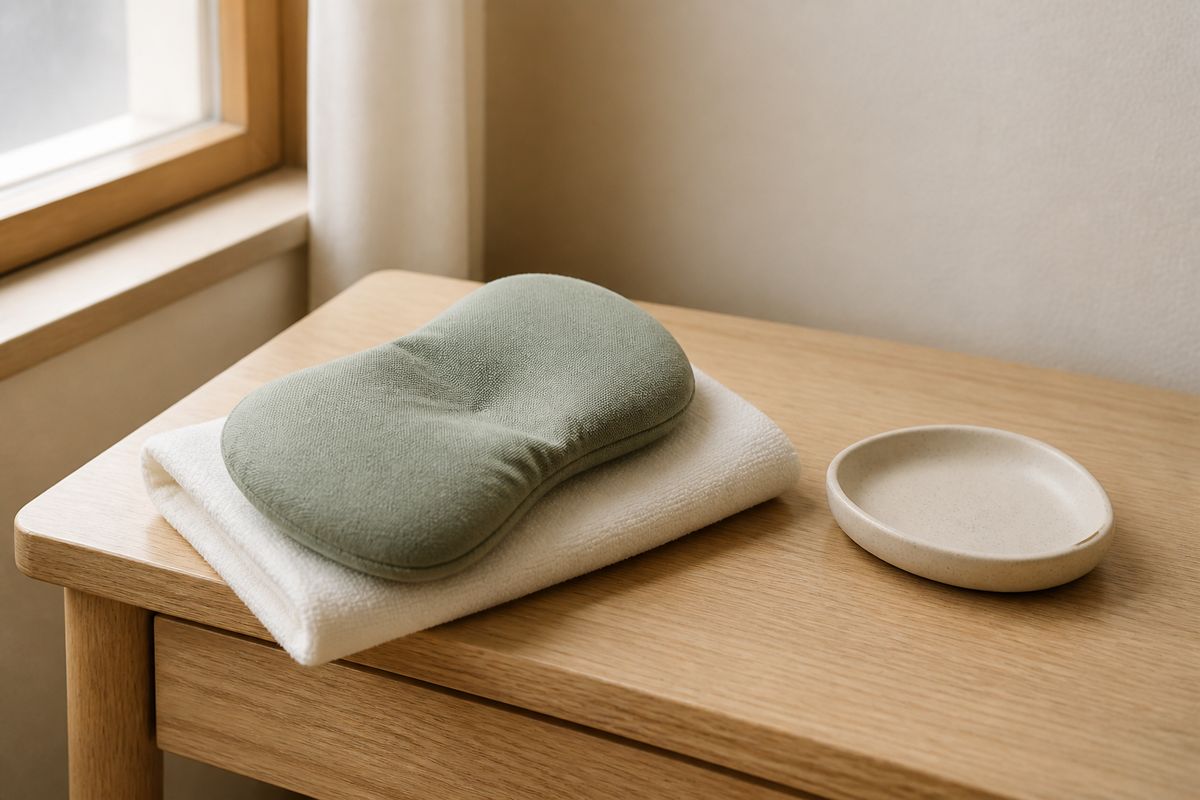
Warm compresses for knotted muscles. If the long-working side's muscles are tight, a warm towel on the cheek and temple for 10–15 minutes helps. Paired with the chewing practice, the two sides' fatigue rebalances.
Upgrade cleaning on the idle side. Clear its accumulated tartar with a scaling, then make a habit of starting floss and interdental brushes from that side. The spot always cleaned last is the spot always cleaned carelessly.
Check yourself after a month. Does the first bite alternate naturally? Is the one-sided fatigue after chewy food fading? If a side still feels awkward and uncomfortable weeks into training, that signals a remaining cause — please tell us.
Situations that differ a little
Right after treatment. After a filling, crown or implant you were told not to chew there — that avoidance is correct and necessary. The problem is avoidance that outlives the treatment. If a settled crown or implant still goes unused months later, getting the "you may use it now" confirmation is itself the start of retraining. When, and up to what foods, depends on your case — ask at review.
During orthodontics. A few sore days after adjustments are natural. But if the same side stays avoided beyond the adjustment period, a bracket or wire may be catching there — share it with your orthodontic clinic first.
Older patients. Aged prostheses, loosened dentures and reduced saliva often stack into layered avoidance. Denture wearers in particular tend to endure, believing dentures are simply uncomfortable — while one gum ridge and the remaining teeth quietly take the load. If the same denture has gone years without adjustment, start there.
When jaw symptoms already exist. With clicking or frequent morning stiffness, don't push chewing practice hard on your own judgement. Have the jaw assessed first, and plan a very gradual return starting from soft foods.
When stress and clenching overlap. Daytime clenchers feel one-sided fatigue more sharply. Alongside training, learn the jaw's rest position — lips closed, upper and lower teeth apart. Grinding and clenching as a whole are covered in the bruxism article.
Retraining timeline — how many weeks until it changes?
Individual variation aside, with the cause resolved the course usually runs like this.
Week one. The only goal: send the first bite to the unused side, soft foods only. People who leave a small note on the table succeed more — habit correction is a memory game.
Weeks two to three. Awkwardness drops noticeably; the first bite sometimes goes there on its own. Step up to soft rice, cooked vegetables, tender meat. Briefly biting that cheek more often is common as coordination returns; tell us if it keeps happening.
One month. A sense of alternating sides appears. Compare for yourself whether the one-sided fatigue after chewy meals has eased. A scaling around now clears the tartar the idle side collected — good timing.
Three months. For most people the new default has settled. At a check-up we re-examine bite and wear to confirm the retraining has landed. Conversely, discomfort persisting past three months means a remaining cause to find.
Everyday maintenance checklist
- Occasionally watch whether the first bite is drifting to one side again
- Never solve a new sting, catch or food-trap by "chewing around it" — the moment avoidance starts is the moment to be seen
- Don't chew tough foods (dried squid, jerky) long on one side; divide them
- Start floss and interdental brushes from the side you used to neglect
- Have wear and bite changes checked at six-monthly visits
- With any new prosthesis or denture, use "am I avoiding it?" as your adaptation gauge
Stop training and contact us if
- A specific tooth hurts repeatedly when chewing on the reintroduced side (a hidden cause signalling)
- Jaw clicking or pain appears or worsens after training
- You keep biting your cheek or tongue
- A side still feels awkward and uncomfortable past three months
Training is not an exercise in enduring discomfort. If pain enters, it is a cause problem, not a training problem — don't push through it.
What to look for when choosing a clinic
- Do they go past "chew on both sides" to why one side became avoided?
- Do they run direct chewing examinations — articulating paper, crack tests?
- Do they check the idle side's tartar and gum state too?
- Do they give concrete retraining methods after treatment?
- Where a denture or prosthesis is the cause, do they try adjustment first?
- With jaw symptoms present, do they look at teeth and jaw together?
Five common reasons things go wrong
First, trying to fix it with willpower alone. With the cause in place, it returns within days. Cause first, training second.
Second, treating without retraining. Fixing the causal tooth doesn't switch the direction back. The day treatment ends is the day training begins.
Third, assuming the idle side is clean. It actually collects more tartar. Start training without a scaling and that side's gums act up next.
Fourth, returning straight to hard foods. A long-rested side starts soft. Skip the steps and awkwardness turns back into avoidance.
Fifth, dismissing a child's one-sided chewing as personality. In a growing child the stakes are higher and the causes (wobbly baby teeth, decay) are usually simple. The sooner it is checked, the sooner it corrects.
In closing
Three things, then. First, one-sided chewing is not a habit of laziness but almost always the result of a reason that made the other side unpleasant, so correction starts with finding the cause, not with willpower. Second, left alone it sends separate invoices — wear and cracks to the working side, tartar and gum trouble to the idle side, asymmetric fatigue to the jaw — and these only stop when balance returns. Third, once the cause is resolved, retraining begins with a trick as small as "first bite to the unused side," and the default returns within weeks. If you're unsure which stage you're at, bring up your chewing direction at a check-up — it is a question we genuinely welcome.
Today in one line: one-sided chewing didn't start because that side was comfortable — it started because the other side wasn't. Finding what made you avoid it is the first step back.
We're open until 9 p.m. on weekdays and 365 days a year, so a consultation that never feels urgent is easy to fit in on the way home. Our clinic's AI phone service also runs 24 hours after treatment hours end. We're about a five-minute walk from Exit 1 of Dobong Station (toward Dobong 1-dong Post Office), near Dobong Station in Seoul, and a few subway stops from Jangam Station — close from the Jangam and Mia-dong areas alike. If you're driving, see our parking guide.