"My Root-Canaled Tooth Hurts Again — A Changdong Station Dentist's A-to-Z on Retreatment vs. Extraction"
Key takeaway A tooth that hurts after root canal treatment is usually not a failure but a sign that bacteria remain inside the root. Whether to save it with retreatment or remove it is decided by the remaining tooth structure and root condition, not by how much it hurts. Causes of recurrence, decision criteria, the retreatment process and pain, costs and coverage, and what comes next if extraction is chosen.
Hello. I am Dr. Oh Ji-hwan of Yonsei The Strong Dental Clinic.
Straight to the conclusion. A tooth that hurts again after root canal treatment is usually not a "failure" but a sign that bacteria remain inside the root. And the fork in the road that follows — retreat and save it, or extract and replace it — is decided not by how badly it hurts but by how much tooth structure is left and what condition the root is in.
Just the other day a patient said this during a consultation: "This tooth had a full root canal and a crown years ago, but lately it stings every time I chew. The nerve was removed — so why does it hurt?" He had come by train from Uijeongbu-dong, and patients who transfer at Changdong Station ask the same thing often. It is a fair question. It feels natural to assume that a tooth with its nerve removed cannot hurt.
Today I will lay this situation out from the start: why a tooth with no nerve hurts again, how retreatment differs from the first root canal, when it is better to save and when to extract, how cost and insurance work, and what comes next if you choose extraction. If you heard somewhere that "you shouldn't redo a root canal" and have been putting off a decision, I will also explain the real context behind that sentence.
The nerve was removed — so why does it hurt? The actual reasons for recurrence
Root canal treatment does not simply eliminate a nerve. It disinfects and fills the hollow space inside the tooth (the root canal) so bacteria have nowhere to live. So pain means that space has been opened to bacteria again somewhere.
The inside of a root is more complex than most people imagine. It is not one straight tube but a curving, branching system; molars have three or four roots, and side branches can extend from within them. However carefully we disinfect, microscopic spaces that instruments cannot reach may remain, and bacteria surviving there can regrow over time, producing inflammation at the root tip. That is the first route to recurrence.
The second route is bacteria newly entering from outside. A root-canaled tooth is hollow inside and structurally weak, which is why we cover it with a crown. If the crown margin lifts or decay forms beneath it, bacteria travel back into the root. However well the first treatment was done, a leaking lid produces the same result.
The third is a crack in the tooth itself. Root-canaled teeth fracture and split more easily, and if a crack extends down into the root, bacteria pass in and out of that gap continuously. In this case no amount of disinfection removes the cause, which changes the decision criteria we'll discuss below.
In short, recurrence comes less from "sloppy treatment" than from the complexity of root anatomy, the seal of the crown, and cracks in the tooth. That these conditions worsen the longer decay is left alone is something I have also discussed in an interview with Ziksir on the risks of untreated cavities.
Narrowing the cause by when it hurts
| Symptom pattern | Common cause | Urgency |
|---|---|---|
| Sharp jab only when chewing | Root-tip inflammation, crown height issue | Book an appointment |
| Throbbing even at rest | Acute inflammation at the root tip | Needs prompt review |
| A blister-like bump on the gum comes and goes | A sinus tract draining pus | Needs prompt review |
| Gum swells, swelling reaches the face | Acute abscess | Same-day visit advised |
| Sharp pain only at a certain chewing angle | Possible crack | Book a detailed exam |
| Reacts to hot food | Could be a neighboring tooth | Requires identifying the tooth |
The last row is what people most often miss. A root-canaled tooth does not respond to temperature. So if hot water makes something twinge, it is likely the tooth next door rather than that one. Patients pointing at the wrong tooth is genuinely not rare.
Signs that call for a check now
- Pain on chewing a root-canaled tooth has lasted more than two weeks
- A pimple-like bump appears and disappears on the gum near that tooth
- A dark line shows at the crown margin, or floss catches there often
- That one tooth has noticeably darkened
- A persistent feeling that the tooth sits "too high" when you bite
- You have woken at night from a throbbing ache
- Painkillers settle it, but it returns when you stop
If two or three apply, the window for watching and waiting has already passed. So how does a clinic decide between saving and extracting?
Save it or remove it — four factors decide
The fork between retreatment and extraction is set not by "how much it hurts" but by whether the tooth can withstand chewing force after treatment.
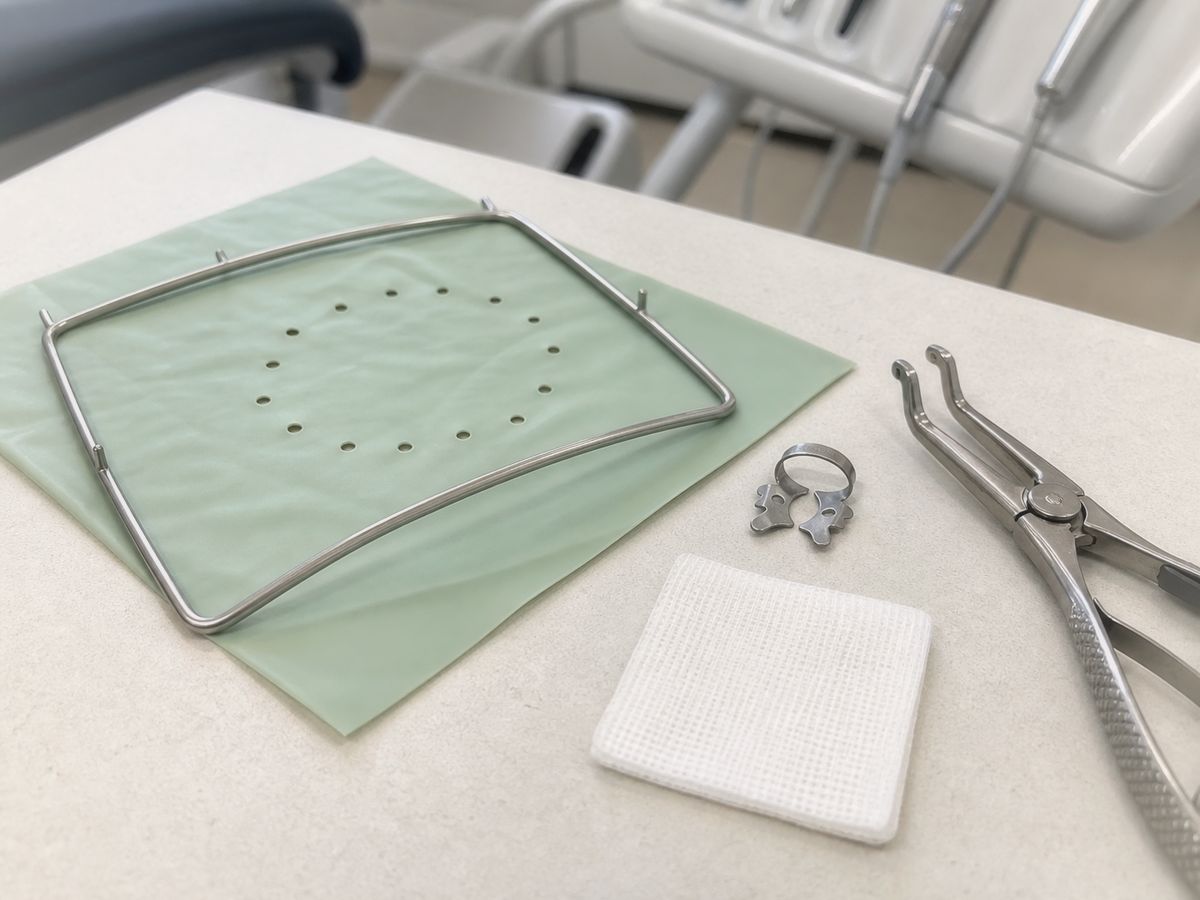
First, the remaining tooth structure. If a tooth is a pillar, what matters is how much solid wall remains above the gum. With enough wall, retreatment plus a new crown can last a long time; if the tooth has collapsed to little more than a root, it will fracture again soon after retreatment.
Second, whether the root is cracked. A vertical root fracture cannot currently be bonded back together. Because symptoms recur even after retreatment, the decision usually leans toward extraction.
Third, how much bone remains around the root. If long-standing inflammation has dissolved bone widely at the root tip, or gum disease has been added on top and the tooth is mobile, saving the tooth leaves no foundation to stand on.
Fourth, whether the canal can be accessed. Hardened filling material, a fragment of a broken instrument left inside, or a sharply curved root all raise the difficulty. Access is not necessarily impossible, but the conditions for success become demanding.
| Option | Favorable when | Duration | Remaining task |
|---|---|---|---|
| Root canal retreatment | Tooth wall remains and the root is not cracked | About 2–4 visits, 4–8 weeks | A new crown is required |
| Root-end surgery (apicoectomy) | Retreatment is difficult and inflammation is confined to the tip | One surgery plus healing | The root becomes shorter |
| Extraction + implant | Root fracture, lost structure, insufficient bone support | About 3–6 months | May need a bone graft |
| Extraction + bridge | Neighboring teeth already have crowns | About 2–4 weeks | Neighboring teeth must be reduced |
As the table shows, retreatment is not "always the better choice" but the choice with the greatest payoff when conditions allow. Nothing beats keeping your own tooth — but holding on to one that cannot be kept lets bone dissolve further in the meantime, narrowing your later options too.
That is the context behind the claim circulating online that "you shouldn't redo a root canal." Retreatment itself is not the problem; repeatedly clinging to a tooth whose conditions don't allow it is — and that idea has been compressed into a slogan.
Now, if retreatment is the plan, here is how it actually goes.
How root canal retreatment proceeds
Retreatment means removing all the material placed the first time, disinfecting again, and refilling. The process resembles the first root canal, with one added stage.
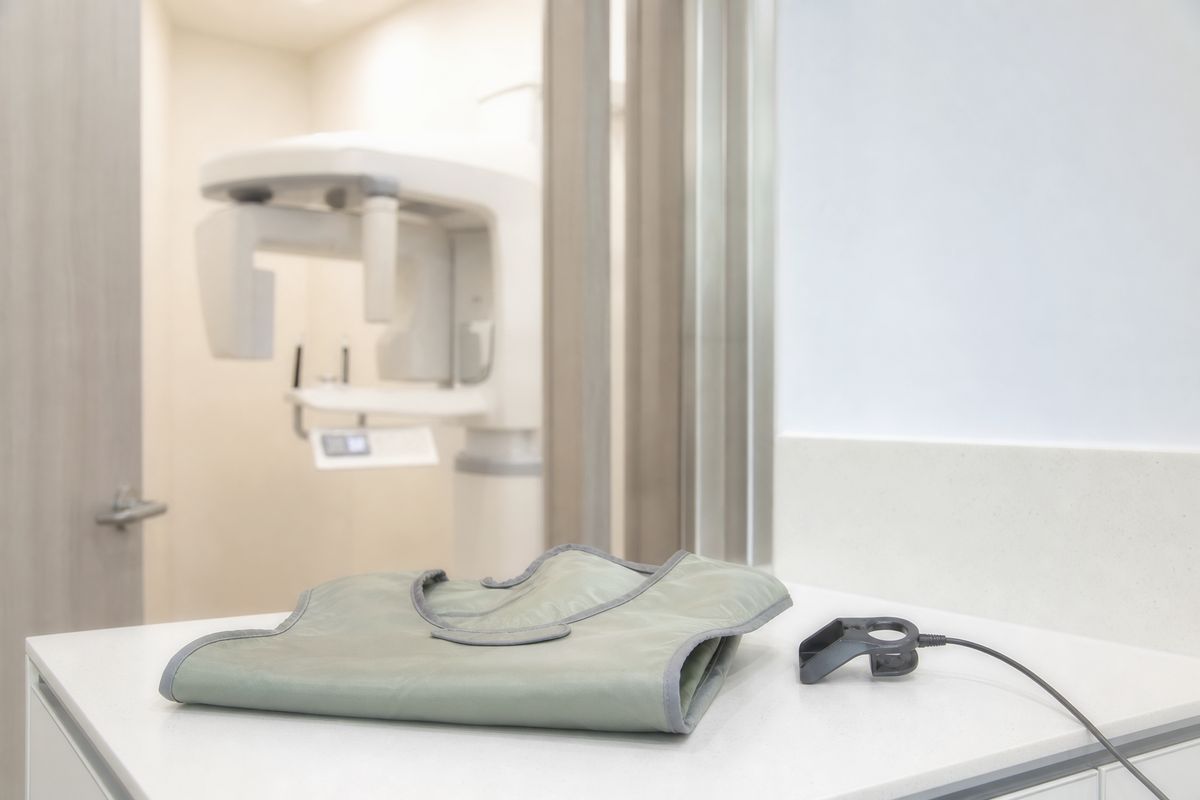
- Diagnosis (about 20–30 min) — X-rays show the size of the inflammation at the root tip and the state of the existing fill. If needed, three-dimensional imaging reveals the number of roots, their curvature, and traces of cracks. We also test to pin down exactly which tooth hurts on chewing.
- Removing the crown and old material (about 30–60 min) — We open the crown and take out the post and the old filling material. This is the stage that most distinguishes retreatment, and the one that takes the most time.
- Canal disinfection and shaping (about 40–60 min per visit, usually 2–3 visits) — We re-widen and disinfect the canals. If inflammation is large, we place medication, wait one to two weeks, and proceed based on the response.
- Filling (about 30–50 min) — Once the canal is stable, we fill it without voids.
- Rebuilding post and crown (about 2–3 weeks) — The tooth wall is thinner now, so re-covering it is not optional. Delay here can mean a split tooth within months.
- Follow-up (about 6 months to 1 year) — Inflammation at the root tip shrinks gradually on imaging. Even without symptoms, one radiographic check is worthwhile.
Overall, plan on roughly 4–8 weeks, or about 2–3 months including the crown. Visits can increase depending on inflammation size and root condition, so it is more accurate to re-evaluate as we go than to fix a number at the start.
Questions that come up during treatment
Q. Is retreatment more painful than the first time? A. During the procedure there is little difference, since we anesthetize. However, we often start with inflammation already present, so a few days of discomfort on chewing between visits is more common than with a first root canal. It usually eases as sessions progress.
Q. If it hurts partway through, has it failed? A. No. Widening and disinfecting canals can make the root tip temporarily sensitive. Swelling or fever, though, is a different signal — tell us right away.
Q. Can I stay in the temporary filling for a while? A. I would not recommend it. Temporary material seals poorly, and bacteria seep back in over time. A canal you worked hard to disinfect gets recontaminated, and visits multiply.
Q. Can I chew on that tooth during treatment? A. It is safer to chew on the other side. With a thinned tooth wall, splitting on something hard genuinely happens.
Q. Could I just take antibiotics and ride it out? A. Antibiotics help calm acute symptoms, but there are no blood vessels inside the canal, so the drug cannot reach in sufficient concentration. Symptoms are usually just suppressed briefly and return.
Q. My treatment was started at another clinic — can it be continued here? A. Yes. Wherever you started, the first step is checking your current state, and the direction follows from that. Any X-rays or treatment records from the previous clinic speed the decision, so bring them if you have them.
Three common misconceptions about retreatment
"A tooth with the nerve removed can't hurt again." The nerve is removed from inside the root, but the bone and gum wrapping the root keep their sensation. When inflammation forms at the root tip, the surrounding tissue hurts — which is why pain on chewing is the classic recurrence signal.
"Retreatment has a low success rate, so it's better to just pull it." It depends on conditions. With enough remaining tooth wall and no root crack, retreated teeth often serve for a long time. A structurally collapsed tooth is better served by a different plan from the start. This is not something to settle in advance as a blanket rule.
"Large inflammation always means extraction." What matters more than the size of the root-tip lesion is where it comes from. If bacteria inside the canal are the source, it often shrinks with disinfection; if a crack is the source, the judgment changes regardless of size.
With the symptoms and process covered, here is the practical part.
Cost and health insurance — retreatment is covered too
Root canal treatment and retreatment are covered by national health insurance. What raises the total is usually not the treatment itself but the new crown.
| Item | Coverage | Notes |
|---|---|---|
| Root canal retreatment | Covered | Calculated by number of canals; molars mean more visits and cost than front teeth |
| Diagnostic X-ray | Covered | Standard imaging |
| Three-dimensional imaging | Conditional | Only where necessity is recognized |
| Root-end surgery | Covered | Calculated by extent |
| Post and core | Varies by material | Covered and non-covered materials both exist |
| Crown — metal (PFM, etc.) | Mostly not covered | Varies by material |
| Crown — zirconia | Not covered | Esthetic and strength purposes |
| Extraction | Covered | Calculated by difficulty |
| Implant | Conditional | Age 65+, two per lifetime |
As a rough range, insured retreatment typically runs about ₩50,000–200,000 out of pocket depending on tooth position and number of visits, with a crown adding roughly ₩300,000–700,000. Choosing extraction and an implant generally starts around ₩1,000,000–2,000,000, rising if a bone graft is needed. These figures shift with materials, difficulty, and each clinic's standards, so treat them as reference ranges and confirm the exact amount after an examination.
Where trying to save money costs more
- Postponing the crown. Retreatment without re-covering leads to a split tooth, and the implant that follows costs far more than the crown you skipped.
- Reaching for painkillers only when it hurts. The larger the inflammation grows, the more root-tip bone dissolves — and a bone graft gets added later.
- Re-crowning without identifying the cause. If the cause inside remains, the new crown has to be opened and the process restarted.
- Being 65 or older and leaving implant coverage out of the calculation. Which teeth those two implants go to changes the whole plan.
- Clinging to a cracked tooth. Stacking retreatment and a crown onto a tooth that cannot be kept means carrying those costs into the extraction anyway.
With the numbers set, let's look at aftercare and at what follows if you choose extraction.
Aftercare, and what to do if you choose extraction
A retreated tooth is not "strong again" — it is a tooth that needs management. It is hollow inside and weak against force, and with no nerve, warning signs arrive late.
Care timeline
- Day of treatment to day 3 — Chewing may be uncomfortable once anesthesia wears off. Eat on the other side and take prescribed medication on schedule.
- Weeks 1–2 — The sting on chewing gradually fades. While still in a temporary state, avoid hard and chewy foods.
- Within 1 month — Complete the crown. Not letting this point slip is the single most important piece of aftercare.
- Months 3–6 — Check that floss does not catch at the crown margin and that the gum is not swelling.
- 6 months to 1 year — Confirm radiographically that root-tip inflammation has shrunk.
- Yearly thereafter — A tooth without a nerve shows symptoms late, so regular checks are what make early detection possible.
Daily care checklist
- Keep ice, crab shell, and bone-in foods away from the root-canaled side
- Run floss past the crown margin daily (this is the doorway to recurrence)
- If you grind or clench, say so — it is the leading cause of splitting
- If that tooth darkens or a bump appears on the gum, get an image taken
- If the "too high" sensation persists when biting, have the occlusion adjusted
If you choose extraction — what comes next
Once a tooth is out, the time it stays empty is what counts. Leave the space too long and the neighboring teeth tip while the opposing tooth drifts down, shrinking the room an implant would need. Bone thins with time as well.
- About 2–3 months after extraction — Gum and bone heal. This is when the next plan is set.
- Implant — Its advantage is not touching the neighboring teeth; a bone graft is needed when bone is insufficient.
- Bridge — Shorter timeline, but neighboring teeth must be reduced. Less of a sacrifice if they already carry crowns.
- Partial denture — Chosen when several teeth are missing or when systemic conditions make surgery a burden.
If you are considering an implant, our implant guide covers diagnosis, process, and long-term care separately.
Choosing where to have retreatment done
Retreatment is more labor-intensive than a first root canal, and above all, accurately sorting out whether the tooth can be saved is half the work.
- Do they explain why it recurred? "Let's just redo it" without a cause can produce the same result again.
- Do they tell you when a tooth cannot be saved? Being told that retreatment is not the answer for a cracked root matters.
- Do they lay out a plan and total cost including the crown? Counting only the retreatment leads to a nasty surprise later.
- Do they review the images with you? Root-tip inflammation appears as a dark shadow. Hearing the explanation while looking at it makes it click.
- Are the hours workable for a multi-visit course? Retreatment runs over weeks. Break it off and you sit in a temporary filling.
- Will they continue treatment started elsewhere? If a move or circumstances interrupted your care, the current state is all we need to start from.
Common failure causes and how to avoid them
First, a tooth splitting because the crown was postponed. The most common and most regrettable failure after retreatment. However well the canal work goes, a tooth without its lid does not last many months.
Second, treating symptoms without confirming the cause. While painkillers and antibiotics carry you along, bone at the root tip dissolves.
Third, missing a crack. Sharp pain only at a specific angle is the classic pattern of a crack. Read as inflammation alone, symptoms persist even after retreatment.
Fourth, leaving grinding untreated. With nightly force on a root-canaled tooth, fracture arrives before recurrence does. If needed, a device to distribute that force is worth having.
In closing
Three things to take away. First, a root-canaled tooth hurting again is not unusual, and the cause is usually root complexity, crown seal, or a crack. Second, retreatment versus extraction is decided by remaining tooth structure and root condition, not by pain intensity — your own tooth is best when it can be saved, but holding on to one that cannot narrows your later options. Third, retreatment is only finished when the crown is done, and most failures come from postponing that one step.
If you have been shrugging off a sting on chewing for months, start by finding out which branch that tooth is standing on. One image and a few tests set the direction. Tooth condition and healing vary from person to person, so we will give you the precise judgment after an examination.
One-line summary: A root-canaled tooth hurting again is a signal, not a failure. Whether to save or remove it is decided by remaining tooth structure, not by how much it hurts.
We are open until 9 p.m. on weekdays and 365 days a year, so a multi-visit course of retreatment can be split across evenings and weekends. After hours, our clinic's AI phone guidance runs 24 hours. We are about a 5-minute walk from Exit 1 of Dobong Station (toward the Dobong 1-dong post office), one stop from Changdong Station, so patients coming down from Uijeongbu-dong travel easily. If you are driving, see our parking guide.