Why Does Root Canal Treatment Take Several Visits? — A Suraksan Station Dentist on Visit Counts and What Happens If You Stop Halfway
Key takeaway Root canal treatment usually runs over two to four visits. It isn't finished in one sitting not because of a lack of skill, but because inflammation needs time to settle and the inside needs disinfecting. What happens at each visit, how far national health insurance goes, and exactly what changes if you stop partway.
Hello. I'm Dr. Oh Ji-hwan, director of Yonsei The Strong Dental Clinic.
Here's the answer up front. Root canal treatment usually takes two to four visits. It isn't finished in one sitting because of skill — it's because inflammation needs time to settle and the inside of the tooth needs disinfecting. A front tooth with a single root canal can be done in one or two visits; a molar with three or four canals takes more.
I lead with that because it's around the second visit that people start to waver. Once the pain from day one has eased, the thought "maybe I don't need to go back" arrives, and a few weeks later the treatment has quietly lapsed. Among patients who come from Suraksan Station, one bus ride from Exit 3, I've had people return long after that point. By then it takes more work than it would have at the start.
So let me unpack what those visits are. What root canal treatment actually does, what happens inside the tooth at each stage, at what point a visit count should raise a question, how far insurance reaches, and exactly what changes if you stop partway.
What root canal treatment actually does
A root canal is treatment that, instead of removing the tooth, clears the inflamed tissue out of the hollow space inside it, fills that space, and lets you keep using the tooth.
Inside a tooth there are narrow canals holding the nerve and blood vessels. When decay reaches that far, or a crack lets bacteria in, inflammation starts inside. That space is sealed off from the outside, so it doesn't heal on its own. Antibiotics don't reach in there either. Opening it and cleaning it out directly is the only route.
After cleaning, the empty canals aren't left as they are — they're filled. Left hollow, bacteria move back in and settle. Treatment is complete only once that filling is done, and then a crown still has to go on top. That whole span is one set — which is the point of this article.
Sometimes the nerve can be saved
Reaching the nerve doesn't automatically mean a root canal.
If the nerve is slightly exposed while decay is being removed but inflammation hasn't gone deep, we can first try covering that spot to keep the nerve alive. The younger the patient, and the less there has been spontaneous pain (throbbing with no trigger), the better the odds.
This isn't a gamble, though — it's only attempted when the conditions fit. We call it a success if there are no symptoms for several weeks after covering; if pain returns, we move to a root canal then. It also means one or two extra check-up visits in between.
If a consultation offers nothing but "root canal, right now," it's fair to ask, "Is there any option to try saving the nerve?" Usually the conditions don't allow it, but hearing why makes the decision much easier to live with.
Where the phrase "don't get a root canal" comes from
Search online and you'll find that sentence often. I get asked about it in the treatment room too.
Half of it is a misunderstanding; the other half is a true statement that travelled badly.
The true part. A tooth whose nerve has been removed loses the channel that supplied it, and over time it becomes easier to fracture. It may also darken slightly. So "better not to, if you don't have to" isn't wrong — it means saving the nerve comes first where that's possible.
The misunderstood part. Applied to a tooth where inflammation has already reached the nerve, "better not to" leaves only extraction. Avoiding a root canal doesn't return the tooth to how it was. The inflammation moves past the root tip toward the jawbone, and you end up with facial swelling or a draining tract in the gum.
Read the phrase as "don't let it get to the point of needing a root canal" rather than "don't have one." For someone already at that point, it says something different.
Filling, root canal, extraction — where the line falls
| Condition | Treatment | Rough number of visits |
|---|---|---|
| Decay stays within the outer layers | Filling (resin, inlay) | 1 |
| Close to the nerve, nerve still alive | Nerve-preserving treatment, then observation | 1–2 + follow-up |
| Inflammation has reached the nerve | Root canal treatment | 2–4 + crown |
| Inflammation extends past the root tip | Root canal (more visits) or surgery | 3–5 or more |
| Root split vertically, little tooth structure left | Extraction, then implant or bridge | — |
The further down the table, the more visits and the poorer the outlook. Caught near the top it's a single appointment; further down it becomes a matter of weeks. I show the table because it helps make sense of "why now."
Which row is my tooth closest to?
- Cold sensitivity that fades within a few seconds
- Throbbing with no trigger at all
- Worse when lying down, especially at night
- Painful with hot food, and holding cold water actually helps
- One specific tooth hurts when biting
- Something like a pimple on the gum that comes and goes
- The tooth has turned darker than its neighbours
Only the first line applying usually means a filling is enough. Several from the second line down, and the odds of it having reached the nerve go up. Pain that worsens at night together with pain from hot food, in particular, is not the kind of thing time resolves.
With the symptoms sorted, here's what happens inside each visit.
What happens at each visit
Each visit takes one step in the sequence remove inflammation → disinfect and check → fill → crown.
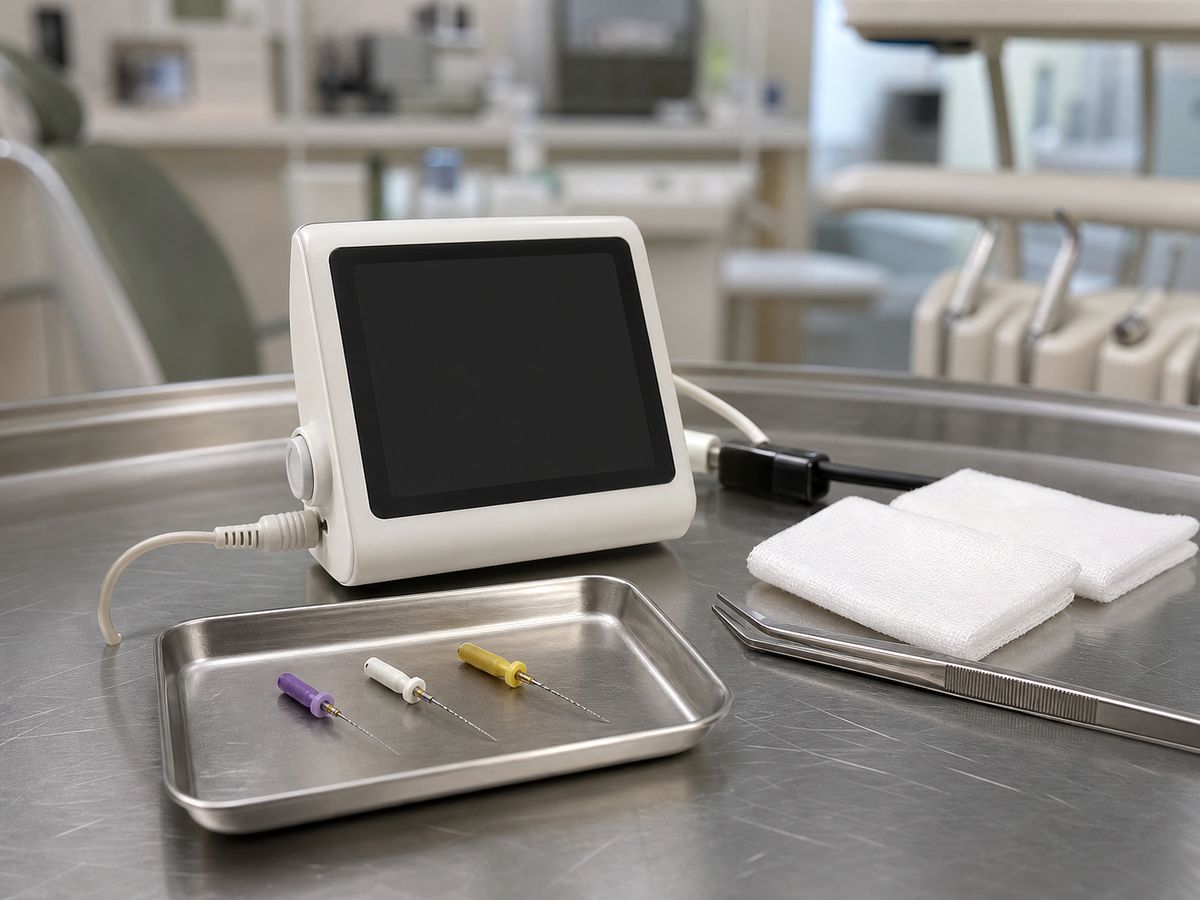
- Visit 1 — opening and removing inflamed tissue. After anaesthetic, the top of the tooth is opened and the inflamed tissue inside is removed. This is the step that takes away the source of pain, so most people feel better from that day. We measure the canal lengths, rinse the inside, place a medicament and seal it temporarily. About 30–60 minutes.
- Visit 2 — disinfection and progress check. A few days later we reopen and look. If inflammation remains, we rinse again and change the medicament. Some teeth finish here; some need one more round. About 20–40 minutes.
- Visit 3 — filling the canals. Once the inside is judged clean, the empty canals are filled with material. We take an image to confirm the fill reaches the end. That completes the root canal itself.
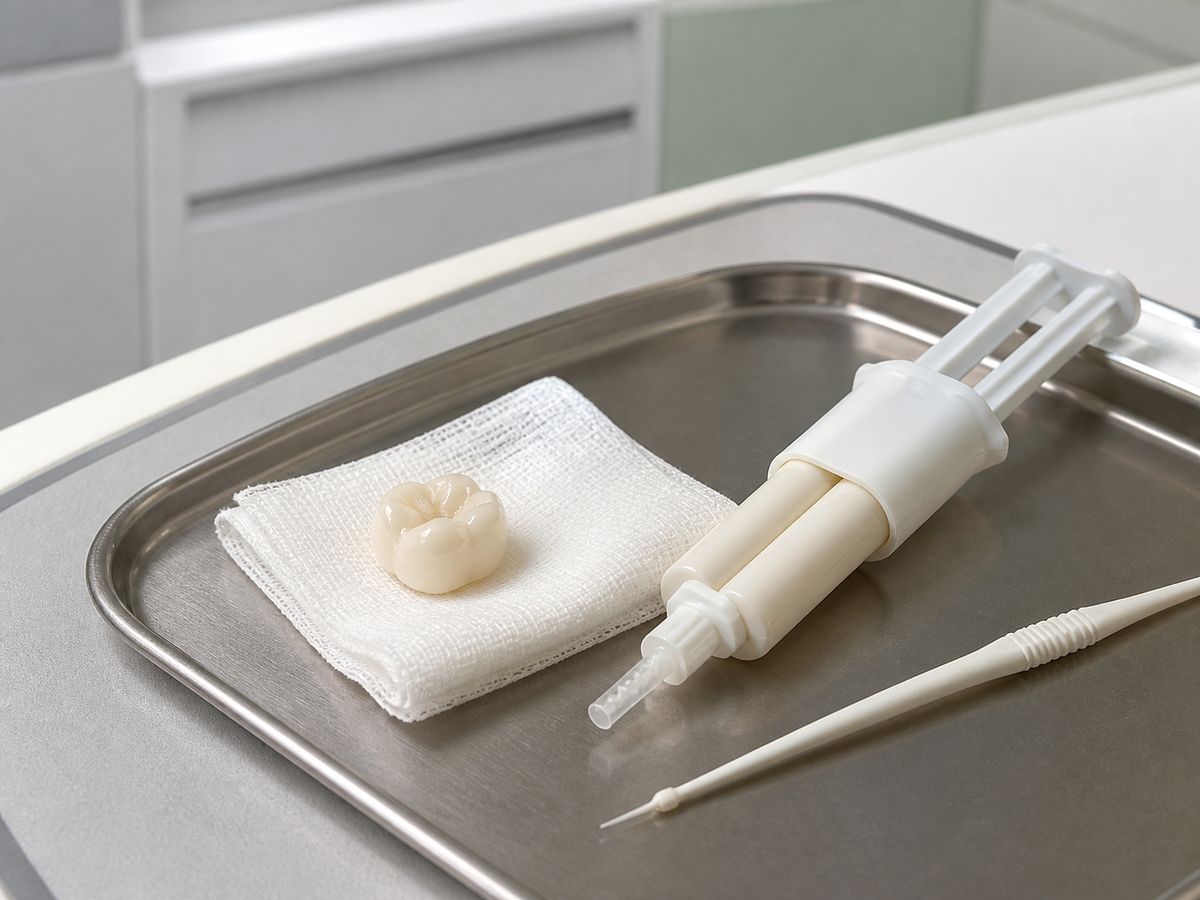
- After that — build-up and crown. A tooth without its nerve dries out and fractures easily. It needs reinforcement inside and coverage on top, and taking an impression through to fitting the crown usually adds two or three more visits.
Visits are typically spaced three days to a week apart. That spacing is part of the treatment — coming daily doesn't finish it faster, because the medicament inside needs time to work.
Common reasons the visit count grows
Two molars can differ — one finishes in three visits, another takes five. The difference is usually one of these.
| Reason | What it causes |
|---|---|
| More canals than expected, or curved ones | Finding and shaping them takes longer |
| A large inflammatory pocket at the root tip | Extra visits waiting for it to settle |
| Continued seepage or bleeding | Filling is postponed until it's dry |
| A tooth treated before | The old material has to be removed first |
| The temporary seal came out between visits | Back to a rinsing stage |
Only the last row is something you can control. The rest are conditions we can't see until the tooth is open, which is also why it's hard to name an exact visit count at the first consultation.
One thing worth adding: more visits isn't a bad sign in itself. Filling in a hurry before the inside is dry brings the pain back years later. Extra waiting visits are usually there to reduce that failure.
Questions I'm often asked
Q. How many visits is too many? A. The count alone doesn't tell you. Molars have three or four canals, so they naturally take more, and a large lesion at the root tip adds visits. That said, if you're past five visits and still can't get an explanation of where things stand, that's worth asking about. The measure isn't the number of visits — it's whether the progress is being shared with you.
Q. Is a root canal as painful as people say? A. During treatment we anaesthetise, so it's manageable for most people. Where inflammation is severe, though, anaesthetic sometimes doesn't take well, and we add more or change the approach. The pain is more often in the days between visits — a day or two of throbbing after the first visit is a common course. Pain that keeps escalating is a different matter and worth calling about.
Q. I was anaesthetised and it still hurt. Why? A. Severe inflammation turns the tissue acidic and the anaesthetic works less well. This isn't something to endure — say so at the time and we can add more or place it elsewhere. Enduring it makes the next visit harder.
Q. I'm pregnant. Can I have a root canal? A. Leaving the inflammation is often the riskier option, so treatment is generally carried out with the timing adjusted. The middle of the pregnancy is usually preferred, and imaging and prescriptions are adapted once you tell us. Please mention how many weeks along you are at the consultation.
Q. Why are front teeth and molars different? A. It's the number of canals inside the root. A front tooth usually has one, a premolar one or two, a large molar three or four. More canals means more work finding, cleaning and filling them, which raises both the visit count and the cost.
Q. Is it alright if the gap between visits stretches out? A. A week to ten days is generally fine. Once it goes past a month, the temporary seal struggles and rinsing visits get added back. If you'll be away for a while for work or travel, tell us in advance — we can place a different temporary so it holds through that stretch.
Q. Can I chew on that tooth during treatment? A. Better not to. A tooth under root canal treatment has been opened and then temporarily sealed, so it's weak under force. If it splits here, finishing the remaining visits may not save it. Chew on the other side until the crown is on.
With visits accounted for, here's the cost side.
Cost and health insurance
Root canal treatment is covered by national health insurance. The crown that goes on top, though, depends on the material.
This much is worth keeping in mind.
| Item | Insurance | Notes |
|---|---|---|
| The root canal treatment itself | Covered | The amount varies with the number of canals |
| Imaging and anaesthetic during treatment | Covered | Images are taken when a check is needed mid-course |
| Internal build-up (core) | Depends on material | Posted in-clinic: resin core 100,000 KRW |
| Crown | Depends on material | Metal-based crowns can fall under coverage |
| Aesthetic-material crown | Not covered | Zirconia (posterior) 550,000 KRW, PFM 400,000 KRW, etc. |
The full list is on our fees page, and period-specific notices are posted inside the clinic.
What actually moves the total isn't the root canal part — it's the covering stage. The root canal is covered by insurance and doesn't weigh much; the crown material decides the rest. Asking only about "the cost of a root canal" gets you half the picture, so ask for the crown to be included.
And here's something I want to be direct about: skipping the crown because of its cost, after paying for the root canal, usually ends up as a loss. A tooth without its nerve fractures easily, and once it splits vertically a few months later there's no saving it. That site moves to an implant, at several times the price of the crown.
Since we're on that, let's look at what happens if treatment stops partway.
Living through treatment, and stopping midway
Between visits, the one thing protecting the tooth is a temporary seal. The inside is safe only as long as that holds.
By stage, it looks like this.
| Stage | How to get through it |
|---|---|
| Day of visit 1 | Don't chew until the anaesthetic wears off; avoid that side for meals that day |
| Between visits | No hard food on that tooth, so the temporary seal doesn't wear or fall out |
| If the temporary comes out | It needs resealing within a few days; left open, the inside is recontaminated |
| After the canals are filled | Still be careful until the crown is on |
| After the crown | Back to normal. Check the root tip at six-monthly reviews |
What exactly changes if you stop
This tends to get glossed over, so here it is in order.
One, pain going away is not the same as healing. Removing the inflamed tissue at visit one takes away the thing that was sending the pain signal. That isn't the inside being clean — it's closer to the nerve that would have complained being gone.
Two, a temporary seal is measured in weeks. It wears under chewing and lets moisture through. It wasn't made to last months, and bacteria re-establish in the meantime.
Three, coming back later doesn't restart from the beginning — it starts further behind. The inside is contaminated, so rinsing visits increase, and if a lesion has grown at the root tip that has to be dealt with first.
Four, at worst a savable tooth isn't saved. Left open too long, the remaining tooth structure crumbles or the root splits. That moves to extraction.
There's one more. A tooth with treatment stopped partway often goes months without hurting. So it feels fine, and yet an image can show a dark shadow growing at the root tip. Symptoms can't tell you about that stretch, so if you have treatment that stalled, it's worth one check even without pain.
If something comes up, then, don't just postpone quietly — find out which stage you reached. If the canals are already filled there's some slack; if only a medicament has been placed, it's more urgent. That's usually a few minutes on the phone.
If this happens
The temporary seal came out. Even without pain, it needs resealing within a few days. Until then, don't chew on that side and rinse so food doesn't get in.
It throbs at night during treatment. A day or two after the first visit is a common course. If it worsens from the third day, or the gum swells and feels hot, that needs checking. If it's late in the day, look at our evening hours or Sunday hours first.
A root canal started at another clinic has been left unfinished. We can pick it up. Earlier images help if you have them; without them we check again and set the remaining steps. Wherever it was started, that isn't something I'll pass judgment on.
A tooth treated years ago is hurting again. Uncommon, but it happens. Some cases are solved by retreatment, some go to root-tip surgery, so it starts with an image.
What to check when choosing a clinic
A root canal happens where you can't see, so how much of the process gets shown to you is essentially all you have to go on.
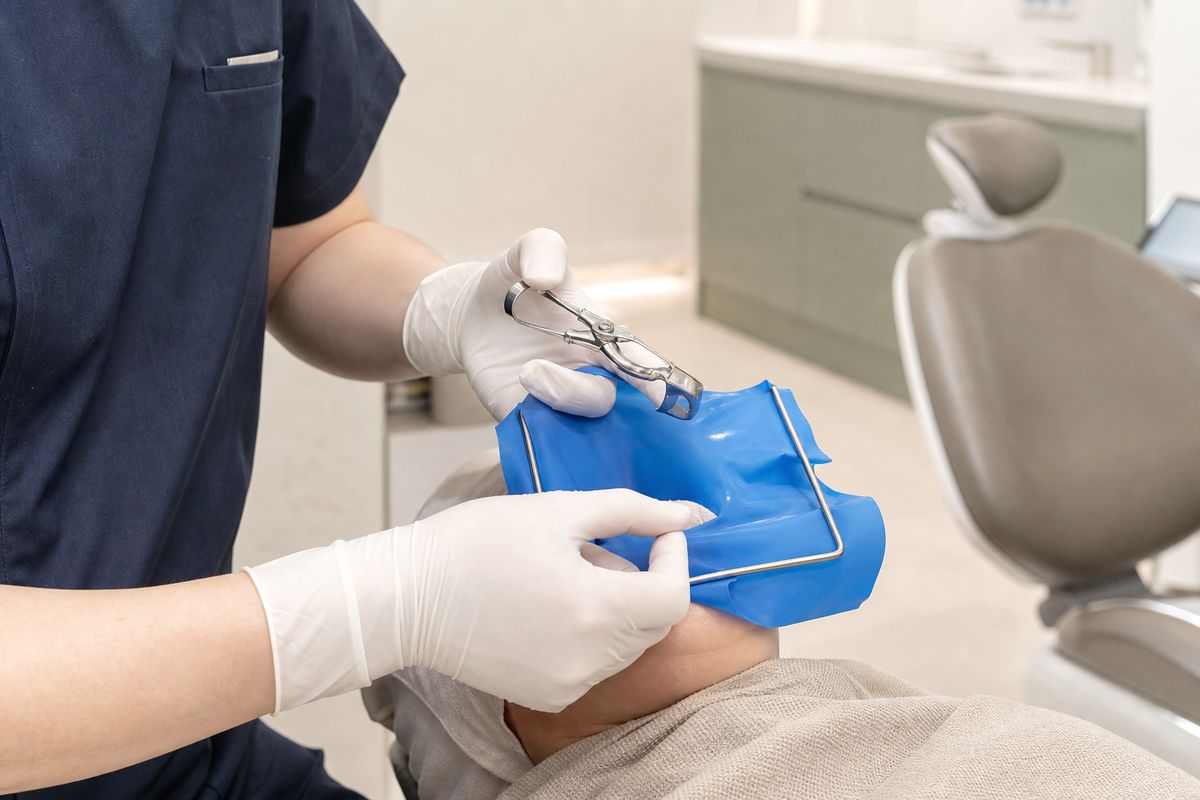
- Do they use a rubber dam? It isolates the tooth so saliva can't get in — a basic condition for keeping the inside clean. It's fair to ask.
- Do they tell you how many canals there are? A clinic that names the number is willing to share what it's doing.
- Do they explain where you are at each visit? If it's only ever "come back again," there's no visible end from the patient's side.
- Do they show you an image after filling? Whether the fill reached the end can only be confirmed on an image.
- Do they give you a plan and price that include the crown? Quoted for the root canal alone, the total looks different later.
- Are the hours ones you can keep? Two to four visits plus the crown means five or six appointments. When the hours don't fit, that's where dropping out begins.
That last item matters more than it looks. When I ask why treatment stopped, it's far more often a scheduling clash than a change of mind.
Where things commonly go wrong
- Stopping after visit one because the pain went — the most common, and the costliest. All that happened is the tissue sending the signal was removed.
- Putting off the crown — if it splits within months, a savable tooth is lost. Covering it with a cheaper material beats leaving it bare.
- Managing a painful tooth with painkillers alone — medication dulls the signal without touching the inflammation.
- Collecting opinions from clinic after clinic — a second opinion helps; meanwhile the inflammation grows.
Coming from Suraksan Station
From Suraksan Station, take Exit 3 and ride bus number 7 one leg, getting off in front of Dobong Station. We're about a five-minute walk from Exit 1 of Dobong Station, heading toward the Dobong 1-dong post office, and there's in-building parking if you drive (parking guide). Directions are on our how to find us page. People coming from Sanggye-dong in Nowon-gu use the same route.
We're open until 9 p.m. on weekdays, until 2 p.m. on Saturdays, from 2 p.m. to 6 p.m. on Sundays, and on public holidays. For treatment that takes several appointments, that's what decides whether it gets finished. There's more on the procedure itself on our root canal page, and credentials are on the dental team page.
To sum up
One, two to four visits is normal, and molars with more canals take longer. A high count isn't the problem in itself — what matters is whether you're being told where you are.
Two, no longer hurting is not the same as healed. The relief after visit one comes from the inflamed tissue being removed, not from the inside being clean.
Three, the crown is part of the same set. Cleaning the nerve out and leaving it uncovered can end in a split tooth and an extraction months later.
Symptoms and healing vary from person to person, so an article can only take you so far. If you have treatment that stalled, don't leave it — start by finding out which stage it reached. Even a phone call sorts out most of that. Any questions, feel free to call us at 02-954-2080.
The number of root canal visits is set by how many canals the root has and how long the inflammation takes to settle, not by skill. Yonsei The Strong Dental Clinic is about a five-minute walk from Exit 1 of Dobong Station, open until 9 p.m. on weekdays and on weekends and public holidays.