My Temporary Crown Fell Out — Do I Really Have to Wait Until Monday? A Suraksan Station Dentist's Complete Guide
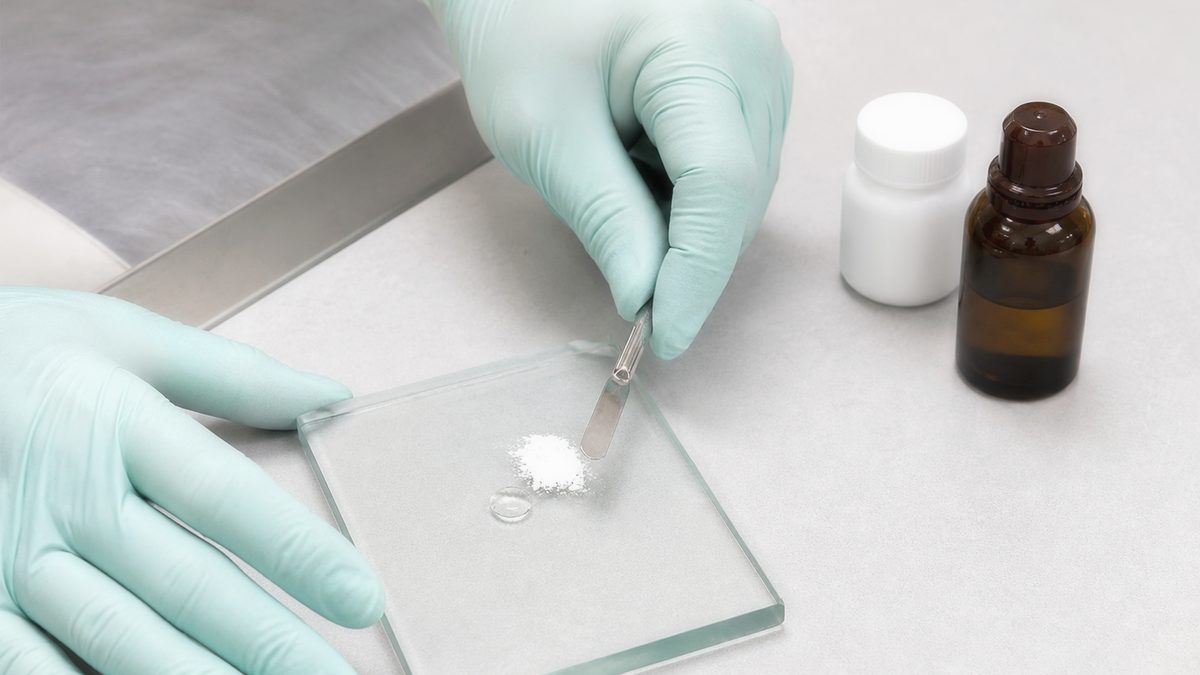
Key takeaway When a temporary crown or a permanent restoration falls out, the first thing to do at home is not to put it back in — it is to store it safely and check a few things. What fell out changes how urgent it is, and whether a fragment of tooth came away with it changes everything. Emergency steps, what never to do, re-cementing costs and insurance, and how to prevent it happening again.
Hello. I am Dr. Oh Ji-hwan of Yonsei The Strong Dental Clinic.
On late-summer evenings, just before we close, the phone calls tend to open with a strangely similar sentence. "Something just popped out while I was eating — I can't tell if it's my tooth or the cap." Usually the caller is holding a small white piece in the palm of one hand and the phone in the other. A patient from Ssangmun-dong first met us through exactly that call, and among the people who come from the Suraksan Station direction, more than one has had it happen on a Friday night and spent the weekend wondering whether to just wait until Monday.
Let me give you the short answer first. How urgent this is depends on what fell out, and the thing to do right now at home is not to push it back in — it is to store it and check a few things. And one more point: not hurting does not mean the situation is fine. Pain is very often the last signal to arrive. Today I will walk you through how temporary and permanent restorations differ, what to do and what never to do in the moment, how we work out the cause in the clinic, roughly what re-cementing and remaking cost, and what needs to change so this does not keep happening.
Temporary and permanent restorations differ in how urgent they are
The first fork in the road is simple: were you mid-treatment, or was treatment finished?
A temporary crown is exactly what the name says — a placeholder used until the final restoration is ready. It is made of an acrylic-type material, and because it has to be removed later, it is deliberately cemented weakly. That weak bond is a design decision, not a mistake. But a temporary crown carries duties that a permanent one does not. It protects the prepared tooth from stimuli, it keeps the gum from creeping over the space, and it stops the neighbouring and opposing teeth from drifting into the gap. So a temporary crown is not "less important because it is temporary" — it is the thing where losses accumulate the longer it is missing.
A permanent restoration (crown, inlay, bridge, implant superstructure) is a different story. If something that was properly bonded has come away, either the cement has reached the end of its life or something has happened underneath. Decay may have returned inside, part of the tooth may have cracked, a screw may have loosened, or chewing force may be concentrating on one side. In other words, a permanent restoration coming off is less an accident than a signal about what is going on underneath.
What fell out — a comparison table
| Category | Temporary crown | Permanent crown | Inlay / onlay | Bridge | Implant superstructure |
|---|---|---|---|---|---|
| What it is | Acrylic-type placeholder used during treatment | Finished restoration bonded in final material | A piece filling part of the tooth | Several units joined together | Upper part fixed by screw or cement |
| How urgent once lost | Fairly urgent | Moderate | Moderate | Urgent | Urgent |
| Can it be reused | Usually re-cemented first | Depends on condition | Depends on condition | Depends on condition | Parts must be checked first |
| If left alone | Gum grows over, adjacent teeth drift | Sensitivity, wear, recurrent decay | Risk of fracturing the remaining tooth | Damage to the abutment teeth | Screw loosening, gum irritation |
| Rough window | Within 1–3 days | Within a week | Within a week | Within 2–3 days | Within 2–3 days |
The "window" above is an average target, not a safety guarantee. If there is pain or bleeding, or if a sharp edge is scraping your tongue, call regardless of the number in that column; conversely, no symptoms does not mean you can postpone indefinitely. Individual responses vary.
A checklist to work out where you stand
- There is a brown or black fragment stuck to the hollow inner surface of the piece that came out (part of the tooth may have come with it)
- The remaining tooth feels sharp and angular to your tongue
- Cold water or cold air causes a sharp twinge
- Biting on that spot produces a pressing pain
- The gum is bleeding or swollen
- What came out is several units joined together, like a bridge
- There is a round hole like a screw channel in the middle of the inner surface (possibly an implant superstructure)
- You could not find the piece
If any of the first four apply, keep open the possibility that simple re-cementing will not be the whole story. Now that the structure is clear, let us move on to what to actually do at home.
Eight things to do the moment it comes out
Just follow them in order. For most people it takes five minutes.
- First, check whether you swallowed it. When something comes out mid-meal, it goes down more often than you would think. A swallowed restoration usually passes naturally, but if you keep coughing or feel short of breath, the problem is the airway rather than the digestive tract — and that needs emergency care, not a dentist.
- If you found it, rinse it gently under running water. Do not scrub it with a toothbrush or soak it in cleaning solution. A damaged surface is harder to reuse.
- Store it in a dry container or a zip bag. Wrapping it in tissue is the single most common way it gets lost. The sentence we hear most often is, "I wrapped it in tissue and I think it got thrown out."
- Photograph the inner surface. Whether there is a fragment of tooth inside or only cement changes the next step. It genuinely helps at the consultation.
- Look at the remaining tooth in a mirror. Note the height of the stump, any sharp edges, and the state of the gum.
- Record the pain and sensitivity. "Only sensitive to cold," "only hurts when I bite," and "throbs even at rest" are three different stories. The last one moves you up the queue.
- If a sharp edge is scraping your tongue, dental wax from a pharmacy or a piece of sugar-free gum can cover it temporarily. This is a measure to get you through a few hours, nothing more.
- Call and book a time. Telling us four things on the phone — when it came out, what came out, whether you have it, and whether it hurts — lets us set the priority far more accurately.
And then there are the things not to do. This list matters more, honestly.
- Never use superglue or industrial adhesive. They are not made for use inside the mouth, and once set they make it impossible to separate restoration from tooth cleanly — so a restoration that could have been reused becomes unusable. This is the most common reason a simple re-cementing turns into a remake.
- Do not force it back in. Pressing it in at the wrong angle can tear the gum or split the remaining tooth.
- Do not keep touching it with your tongue or fingers. The urge is natural, but repeated irritation makes the gum swell and the next procedure more awkward.
- Do not dig inside with a toothpick or a pin.
- Avoid sticky and hard foods. Caramel, toffee, rice cakes, nuts and dried squid are the usual suspects. Stay with soft food and chew on the other side where you can.
Questions we are often asked
Q. Can I use the temporary cement sold at pharmacies? A. If it is a product made for dental use, it is far better than superglue. But it too is a stopgap for a few days, not treatment. In particular, if there is a fragment of tooth inside or you are in pain, covering it with cement postpones your chance to see what is really going on. Even if you do use it, please have the reason it came out checked separately.
Q. I swallowed it. Is that a problem? A. Crowns and inlays generally pass through the digestive tract without incident. As mentioned above, persistent coughing or difficulty breathing is a different matter. And if you swallowed it, that piece is gone — booking on the assumption of a remake will save you time.
Q. It doesn't hurt at all. Do I really need to come in? A. No pain is a good sign, but it is not a safety signal. A tooth that was crowned has usually had root canal treatment or been substantially reduced, so sensation there is often dulled — which means decay underneath can progress quietly. Checking while it does not hurt is actually the point at which you still have the most options.
Q. It happened at night or on the weekend. Should I go to the emergency room? A. A lost restoration is almost always a dental matter rather than an emergency-room one. Unless there is severe pain, bleeding, or facial swelling suggesting infection, booking a dental clinic with evening or weekend hours is the practical route. Until then, follow the eight steps and leave the area alone.
That covers home. Now let us look at what happens when you actually come in.
How we work out the cause in the clinic
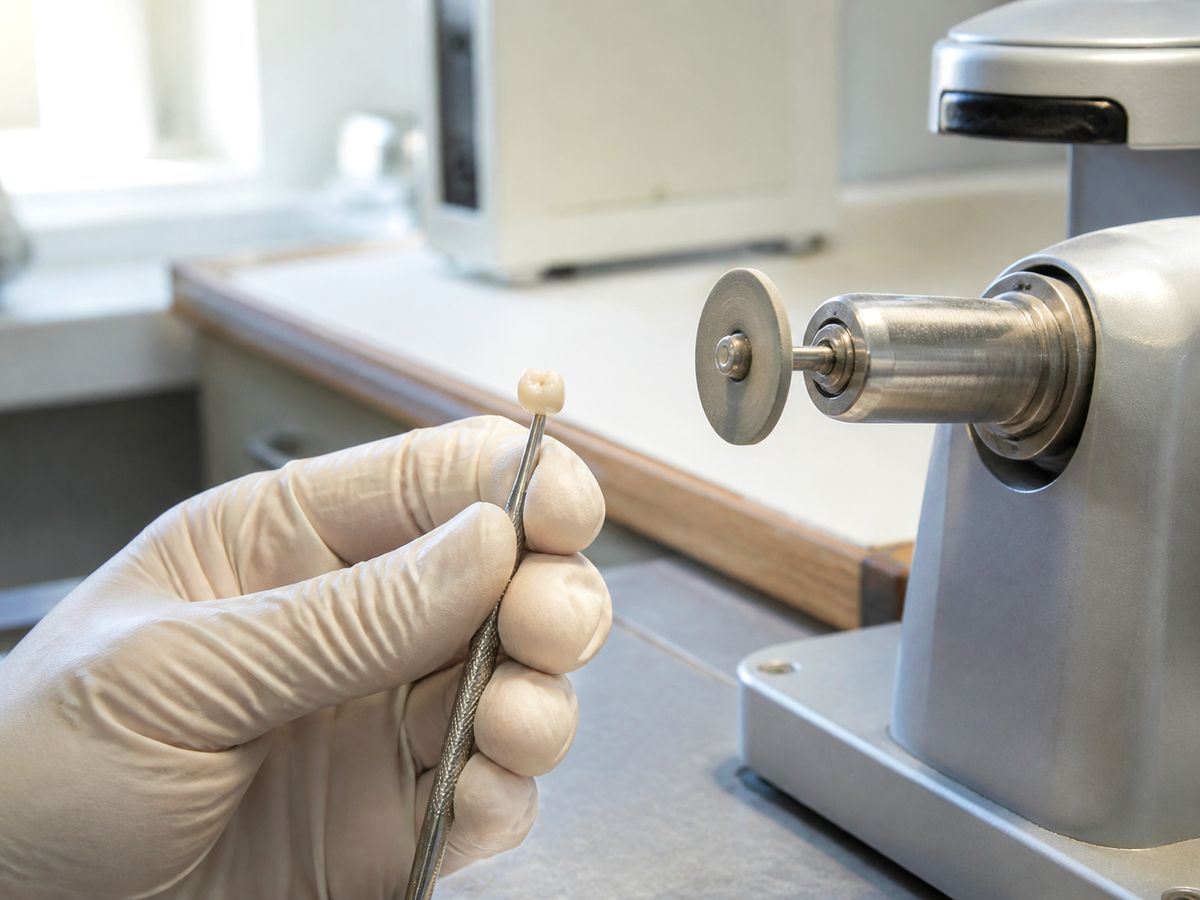
Re-cementing a restoration does not take long in itself. What takes time is always working out why it came off. The sequence usually runs like this.
- We look at what you brought. Whether only cement remains inside, whether a fragment of tooth is attached, whether there is a crack, whether screw components came out with it — each of these changes the examination that follows. That is why we ask you not to throw it away.
- We examine the remaining tooth. The height and shape of the stump, how far below the gum it extends, whether any fracture line is visible. Magnification or transillumination may be used as needed.
- We take an X-ray. Decay that is invisible to the eye, inflammation at the root tip, and for implants the screw and surrounding bone. A localised film is usually enough and takes a few minutes.
- We classify the cause. In practice it falls into about five groups: ① simple loss of cement over time, ② recurrent decay underneath, ③ a crack or fracture in the tooth itself, ④ a loosened implant screw, ⑤ an occlusal problem concentrating force in one place. Different causes need completely different treatment, so skipping this step and going straight to re-cementing tends to bring you back with the same problem.
- We decide the direction. Re-cement as is, adjust and re-cement, remake, root canal then remake, or in some cases extraction and a change of plan.
- We carry out the procedure. Simple re-cementing usually takes around 20–40 minutes, remaking a temporary crown around 30–60 minutes, and remaking a permanent restoration means taking an impression and returning a few days later. Times and visit counts vary with the situation.
Questions we are often asked
Q. What are the odds my crown can simply be reused? A. I cannot give you a number. But the criteria are simple. If the crown itself is not broken, the tooth underneath is intact, and the gum has not encroached into the space, reuse is likely. If a fragment of tooth came away with it, the original crown has probably become a garment that no longer fits.
Q. My temporary crown has been out for a few days. Will that affect the schedule for my final restoration? A. A short gap is usually fine. The problem is when it stretches out. If the gum grows over the prepared tooth or the opposing tooth drifts down, the restoration already being made may no longer fit and have to be remade. That is why a temporary crown is also a device for keeping the schedule.
Q. It's a front tooth and I have to see people. A. A lost front temporary crown is genuinely the most urgent-sounding call we get. We usually prioritise restoring a temporary state the same day. Just saying "it's a front tooth" on the phone changes how we arrange the schedule.
With the cause sorted, let us move to the question everyone asks: the cost.
Cost and health insurance
The first thing to note is that what drives the cost is not the fact that something fell out but why it fell out. The same lost crown means one world if the cement simply needs redoing and another if decay underneath has to be cleared first.
| Situation | Direction of treatment | Health insurance | Approximate cost range |
|---|---|---|---|
| Restoration and tooth both intact | Re-cement as is | Varies by item | About KRW 30,000–100,000 |
| Temporary crown only | Re-cement or remake temporary | Usually part of the treatment course | About KRW 30,000–100,000 |
| Recurrent decay underneath | Clear decay, then remake | Decay treatment covered; the restoration is often not | About KRW 300,000–600,000 depending on material |
| Cracked or fractured tooth | Root canal, or extraction and a new plan | Root canal and extraction covered | Varies greatly with the plan |
| Loosened implant screw | Retighten or replace parts | Usually not covered | About KRW 50,000–200,000 |
| Restoration lost | Make a new one | Depends on material and site | About KRW 300,000–600,000 |
These figures are the ranges commonly seen; they change with the site, the state of the remaining tooth, the material and the clinic. The right answer is to confirm the exact amount after examination.
A few things worth knowing on the insurance side. Root canal treatment, extraction and periodontal treatment are covered by national health insurance. Crowns and other prosthetics vary by material and conditions — but if you are 65 or over, there is coverage for posterior crowns, dentures and implants (two in a lifetime). If it is a parent's restoration that has come out, this is well worth checking.
Some practical ways to keep the cost down. First, bring the piece with you. Whether reuse is still possible is the biggest single fork in the cost. Second, do not use superglue — as above, the classic way a re-cementing becomes a remake. Third, do not postpone. Leave a lost crown for months and the tooth underneath can decay away, turning a remake into root canal treatment or extraction. Fourth, find out the cause. If the real problem is occlusion or grinding, re-cementing over and over simply regenerates the bill.
Having talked about money, let us turn to keeping it from recurring.
After it is back in place — what to watch, and when
Different things matter at different points after re-cementing or remaking.
Day one. The cement needs time to set fully. Avoid food for about an hour afterwards, and it is safer not to chew anything hard on that side for the rest of the day. If you were anaesthetised, take care not to bite your cheek or tongue until sensation returns.
The first 2–3 days. Give sticky foods a rest. When using floss, do not pull it downwards — slide it out sideways. Downward force is a burden on a freshly cemented restoration.
The first 1–2 weeks. A slightly high feeling or mild sensitivity can occur. It usually settles within days, but if that tooth keeps making contact first when you bite, it needs adjusting. Please do not put up with it. Left high, force concentrates on that tooth and it can come off again or crack.
After a month. If nothing feels wrong, use it normally. If the underlying cause was grinding or occlusion, though, that management needs to continue.
A routine that reduces recurrence
- Clean the margin — the line where restoration meets gum — every day. Recurrent decay almost always begins there.
- Use an interdental brush or floss on the sides. Bristles do not reach between teeth.
- Cut down on habitually biting hard objects: ice, nut shells, bottle caps, pen lids.
- If you clench or grind, ask about a night guard. It is a background factor we often find in people whose restorations keep coming off.
- Ask us to check your restorations at routine visits. The early stage of a loosening bond usually has no symptoms.
- Tell the hygienist where your restorations are during a scaling, so the approach can be more careful.
Call us again if
- It still hurts to bite after re-cementing
- Cold sensitivity has not settled after several days
- The gum there is swollen or there is an odour
- The same restoration keeps coming off (twice or more suggests the cause is not the cement)
- It is an implant site and there is a feeling of movement
With management covered, let us look separately at a few situations people often find themselves in.
Situations that play out a little differently
Travelling or away on business. Keep the piece safe and do not chew on that side. If you had emergency treatment where you were, be sure to have it rechecked when you return. A "temporary" fix hardening into the permanent state for months is more common than you would think.
Holidays and festive periods. Rice cakes, sweets and grilled ribs cluster into these weeks, and calls about lost restorations genuinely increase. If something has felt loose before a long holiday, having it looked at beforehand is easier on the mind.
Late at night. Night makes judgement hasty. But keep to the eight steps and most situations will hold safely until morning. Our clinic sees patients until 9 p.m. on weekdays and opens 365 days a year, so people who finish work late or only have weekends free are usually able to be seen the following day.
A parent's denture or bridge. Older patients often endure discomfort without mentioning it. Eating less, or only on one side, can be the first sign — so it helps if a family member checks. Do look into the coverage for those aged 65 and over mentioned above.
A crown on a child's baby tooth. Paediatric crowns are thinner than adult ones, and the timing can overlap with the tooth naturally exfoliating. But if the crown comes off well before that time, the state underneath needs checking. If your child says they swallowed it, do not panic — just watch that the coughing does not persist.
A lost implant superstructure. With screw-retained designs every component is system-specific, so we need to identify which system was used. Records from the clinic where it was placed help, though an X-ray is often enough. Leaving a screw channel open lets food pack in and causes odour and inflammation, so this is not one to postpone.
What to look for when choosing a clinic
For a lost restoration, a clinic that explains why it came off tends to save you more trouble than one that simply re-cements it quickly. Some criteria worth using:
- Do they explain the cause first? Do they show you the inside on an X-ray or photo and tell you why, before cementing?
- Do they judge whether it can be reused? Neither "always make a new one" nor "always just stick it back" — but a decision based on condition.
- Do they check the bite? Do they mark the height with articulating paper afterwards and adjust it? Skip that step and the chance of it coming off again rises.
- Do they address repeated losses? Grinding, one-sided chewing, the height of the remaining tooth — the underlying conditions.
- Do they set out the cost branches in advance? To reduce the "the price changed once we opened it up" scenario, it helps to hear "if it turns out to be this, then that" before starting.
- Do the hours fit your life? Restorations tend to come off in the evening or at the weekend. Whether you can reach someone then is a practical criterion too.
Five common ways this goes wrong
First, reaching for the superglue. If I had to pick one thing to emphasise today, this is it. It turns a reversible situation into an irreversible one.
Second, postponing because it does not hurt. Crowned teeth often have dulled sensation, so by the time pain arrives the options have usually narrowed.
Third, treating a temporary crown as trivial. Once the gum grows over and neighbouring teeth drift, the restoration already being made becomes useless.
Fourth, re-cementing repeatedly without finding the cause. A third loss is rarely about the cement.
Fifth, wrapping the piece in tissue. It sounds trivial, and it is the single most frequent loss. Please use a zip bag or a small container.
In closing
Three things, in summary. First, whether it is a temporary or a permanent restoration, the job at the moment it comes out is to store and check, not to reinsert — and simply avoiding superglue keeps your options wide open. Second, the absence of pain is not a safety signal. Crowned teeth have dulled sensation, so changes underneath progress quietly; checking while there are no symptoms is actually the most advantageous moment. Third, if the same restoration keeps coming off, look past the cement. Unless the background — occlusion, grinding, the state of the remaining tooth — is dealt with, you will simply keep re-cementing. If you are holding something right now and are not sure what to do, take a photo and get in touch. We will work out the answer together. Do bear in mind that conditions inside the mouth vary from person to person, so the precise guidance comes after we have looked.
Today in one line: if a restoration comes out, do not try to stick it back — put it in a zip bag and bring it in. What is attached to its inner surface decides everything that follows.
Our clinic sees patients until 9 p.m. on weekdays and opens 365 days a year, so something that happens over dinner can usually be discussed the same day. Our clinic's AI phone guidance also runs 24 hours a day after closing. We are about a five-minute walk from Exit 1 of Dobong Station, Seoul (towards Dobong 1-dong Post Office), and only a few stops by train from Suraksan Station, so getting here from the Suraksan and Ssangmun-dong areas is straightforward. If you are driving, please see our parking guide.