"Told That Scaling Alone Isn't Enough — What Comes Next? A Changdong Station Dentist's A-to-Z on Gum Treatment Stages, Pain, and Insurance"
Key takeaway Gum treatment is not a single scaling appointment. It is a staged treatment that moves from calculus removal to root planing, subgingival curettage, and periodontal surgery. Most stages are covered by national health insurance, and pain during the procedure is managed with local anesthesia. Here is the full picture — stage differences, how much it really hurts, costs and coverage, and aftercare.
Hello. I am Dr. Oh Ji-hwan of Yonsei The Strong Dental Clinic.
Let me start with the conclusion. Gum treatment is not something that ends with one scaling appointment. It is a staged treatment — calculus removal, then root planing, then subgingival curettage, then periodontal surgery — depending on how deep beneath the gum the problem has gone. And most of those stages are covered by Korea's national health insurance.
As summer eases off and cold water starts to feel refreshing again, more patients have been coming in saying, "Cold water makes my teeth ache, and my gums look like they've dropped." Many of them tell a similar story: "I had scaling done last year, but this time they told me scaling alone won't be enough." That sentence frightened them, so they put it off. A patient who came by bus from Beon-dong and others who ride the train in from around Changdong Station had all stopped at the same point — nobody had explained what "the next step" actually is.
Today I want to walk through that next step from beginning to end: how scaling and gum treatment differ, what actually happens beneath the gum at each stage, whether it really hurts, how far insurance goes, and what you have to do afterward so it doesn't come back. If searching only ever turned up the phrase "periodontal treatment" without telling you what you would actually receive, this article should settle it.
Scaling and gum treatment are different — the dividing line is depth
Gum treatment removes the bacterial deposits and calculus inside the space that has formed between the gum and the tooth root (the periodontal pocket), so the gum has a chance to reattach to the root.
The key word here is depth. Healthy gums wrap around a tooth forming a shallow groove of roughly 1–3 mm — shallow enough for bristles and floss to reach. When inflammation lingers, that groove deepens. Four millimeters, five, six. The deeper it goes, the less a toothbrush can reach and the more comfortably bacteria live inside. Calculus then hardens onto the root surface down there.
Scaling removes the calculus above the gum line, in the visible range. It belongs to prevention and maintenance. Gum treatment, by contrast, reaches below the gum, onto root surfaces you cannot see. We use the same words — "removing calculus" — but the instruments differ, the time differs, and whether anesthesia is needed differs.
So "scaling alone isn't enough" is not a scare tactic. It means the problem has already passed the line where a brush and a scaler can reach. I discussed this in an interview with Medical Today on how periodontal disease progresses quietly; the most troublesome trait of gum disease is exactly that — it deepens without hurting.
Comparison of gum treatment stages
| Category | Calculus removal (scaling) | Root planing | Subgingival curettage | Periodontal surgery |
|---|---|---|---|---|
| Target depth | Above the gum, up to ~3 mm | About 4–5 mm | About 5–6 mm or more | About 6 mm or more, or recurring sites |
| Anesthesia | Usually not needed | Local anesthesia in many cases | Local anesthesia | Local anesthesia |
| What is done | Removes visible calculus and stain | Removes root-surface calculus, then smooths it | Also removes inflamed tissue | Gum is reflected to clean under direct vision |
| Time per session | About 20–40 min | About 20–40 min per area | About 30–50 min per area | About 40–90 min |
| Number of visits | 1 | Usually split over 2–4 | Usually split over 2–4 | Once per site, plus suture removal |
| Health insurance | Covered (once a year as a rule) | Covered | Covered | Covered |
| Recovery | Normal day right away | 1–2 days of sensitivity | 2–3 days of numb ache and sensitivity | About 1–2 weeks of care |
As the table shows, moving up a stage does not mean switching to an entirely different treatment. It means widening the depth and the field of view in service of the same goal — a clean root surface. That is why treatment often stops at an intermediate stage.
Which stage am I at? A self-check list
- Blood appears when you brush, and the water you spit has a reddish tint
- Your mouth feels sticky in the morning and the odor bothers you
- Gums have receded, so teeth look longer than before
- Cold water stings around the root area
- Gums swell and settle, over and over
- A particular tooth wobbles slightly or can't take chewing force
- The same symptoms return a few months after scaling
- Floss slips unusually deep at one specific spot
If only the first two or three apply, you are likely at an early inflammatory stage; the further down the list you go, the more likely the problem has moved below the gum. But a checklist is for deciding when to come in, not for diagnosing yourself. Gum disease often deepens without symptoms, so the actual stage is determined by probing the depth and checking bone height on an X-ray.
That covers what the treatment is. Now let's look at how it actually unfolds once you're in the chair.
How gum treatment proceeds — from examination to re-evaluation
The flow runs examination → planning → removing calculus above the gum → deeper treatment site by site → re-evaluation, and the re-evaluation decides whether you move to the next stage or into maintenance.
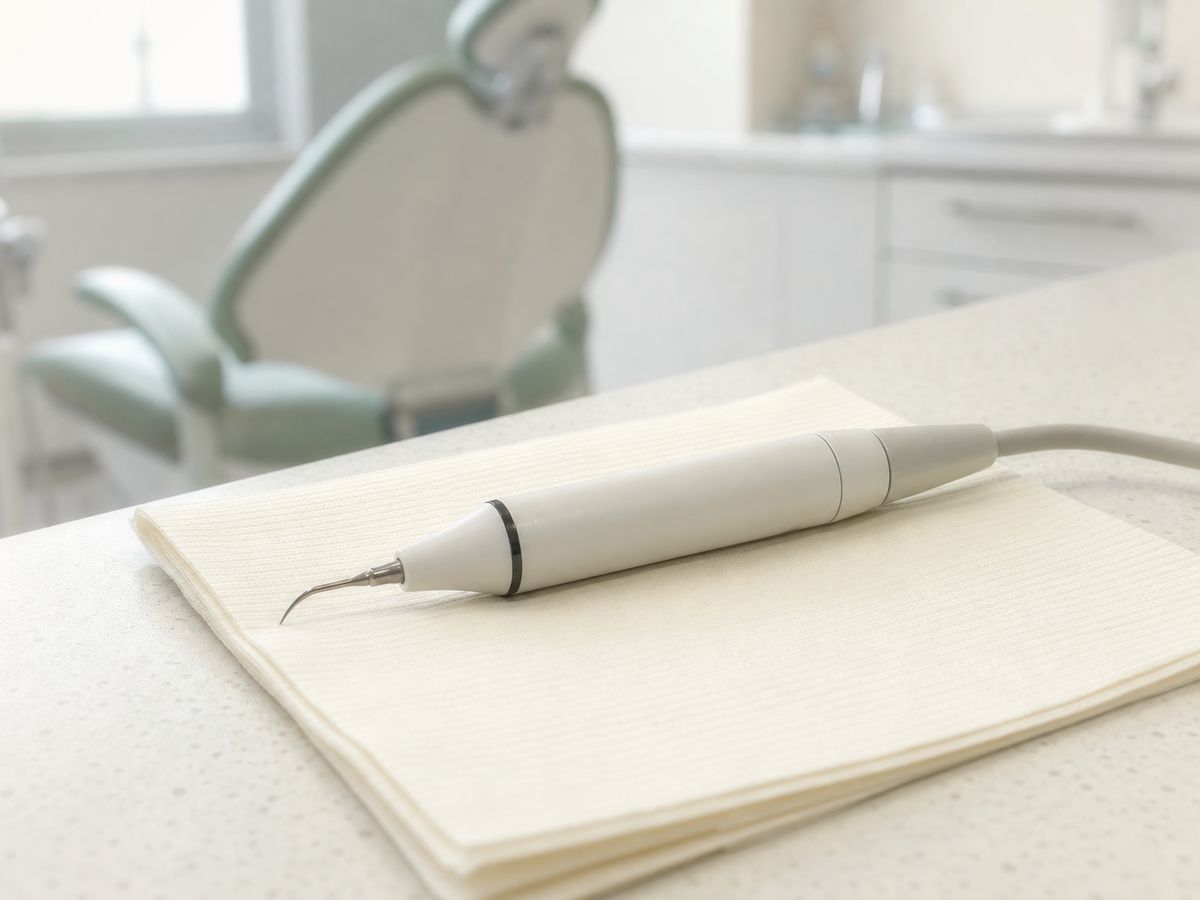
- Periodontal charting and X-rays (first visit, about 20–30 min) — With a slim instrument called a probe, we measure the depth at six points around every tooth. Numbers like "5 mm" become the backbone of your plan. The X-ray taken alongside shows how much supporting bone remains. Gums can recover, but bone that has dissolved is hard to bring back, so this image sets our realistic target.
- Explaining the plan (same day) — We decide which areas to treat, in how many sessions, and by which method. Rather than doing the whole mouth at once, we usually split it left/right and upper/lower, to keep the anesthetized area small and to check healing as we go.
- Removing calculus above the gum (about 20–40 min) — We clean the upper range before going deeper. Sometimes that alone reduces swelling and shallows the pockets, which makes the next stage much lighter.
- Root planing and curettage, area by area (about 20–50 min per area, usually 2–4 sessions) — After local anesthesia, we go below the gum, remove calculus from the root surface, and smooth it. If inflamed tissue has thickened, we clear that as well. With the area numb, most patients say the vibration and water sound register more than any pain.
- Re-evaluation (about 4–6 weeks later) — Gums need time to heal, so we re-measure after roughly a month. If most sites have shrunk to a manageable depth, we move into maintenance.
- Surgery, only where needed (optional) — If depth remains after re-evaluation, or the bone shape blocks instruments from reaching, we reflect the gum slightly and clean under direct vision. In most cases this involves only the few remaining sites, not the whole mouth.
Step 5 is where misunderstanding most often creeps in. It is not "treatment is finished" but "let's see how much has healed." If you skip it because symptoms disappeared, the deep sites that remain quietly grow again.
Questions I hear often in the chair
Q. My tooth feels looser since the gum treatment. Did something go wrong? A. In most cases this is a normal part of the process. As swollen gum settles, the grip that swelling was providing disappears, so mobility becomes more noticeable. Gums usually firm up and stabilize over several weeks. If the looseness keeps increasing, though, that needs another look.
Q. My teeth look more gapped after treatment. A. Also a common change. As the swollen gum returns to its proper level, the original bone height is revealed — the treatment did not remove your gum. That said, food catches in these spaces easily, so learning to use an interdental brush is essential.
Q. Coming several times is inconvenient. Can't it be done in one go? A. Depending on your condition, sometimes yes. But doing it all at once means a wider anesthetized area and a much longer appointment. Splitting it also lets us adjust the plan as we watch healing. If it is hard to make time, tell us in advance and we can look at reducing the number of visits.
Q. I'm pregnant and my gums bleed. Should I wait? A. Hormonal changes during pregnancy make gums swell and bleed more easily. Basic gum care and calculus removal during the stable period is often helpful rather than risky. Timing and method should be judged alongside your obstetric care, so let us know how far along you are and come in for a consultation.
Even so, what is probably still on your mind is something else. Let's talk about that.
Does it really hurt? Honestly, stage by stage
This is the most common question, and the part most easily exaggerated online. The short answer: pain during the procedure is controlled by anesthesia, and what actually bothers people is a few days of sensitivity and numb ache afterward.
| When | What you actually feel | What helps |
|---|---|---|
| During anesthesia | A prick as the needle goes in, heaviness as it spreads | Topical anesthetic applied first to dull the first sting |
| During treatment | Vibration, water sound, and jaw fatigue more than pain | Agree on a hand signal to stop at any time |
| That evening | Numb, throbbing gums as anesthesia wears off | Prescribed painkiller, avoid cold foods |
| 1–3 days | Cold water and cold air sting around the roots | Lukewarm water, toothpaste for sensitivity |
| 1–2 weeks | Sensitivity gradually fades | Brush gently, but do not skip the area |
| 4–6 weeks | Mostly comfortable; time for re-evaluation | Keep the re-evaluation appointment |
To be candid: sensitivity after gum treatment is fairly common. The root surface that calculus had been covering is now exposed. It is less that calculus was protecting you and more that it was hiding a surface that was already exposed. This sensitivity usually fades over a few weeks, though recovery speed varies from person to person. If it has not changed after a month, we can treat the sensitive sites specifically — please don't just endure it.
In fairness, the reverse also deserves a mention. If diabetes is poorly controlled or you smoke heavily, healing is slower and recurrence more frequent. That does not make treatment impossible, but the same treatment yields different outcomes. With those conditions, it is better to plan more tightly and shorten the interval to re-evaluation.
After pain, the next most common question is cost — and here there is some welcome news.
Cost and health insurance — gum treatment is covered care
Most stages of gum treatment fall under national health insurance, so the real burden is usually lower than people expect.
| Item | Coverage | Notes |
|---|---|---|
| Calculus removal (scaling) | Covered | Age 19+, once per year (resets each January 1) |
| Calculus removal for periodontal purposes | Covered | When performed as part of gum treatment |
| Root planing | Covered | Calculated by area (groups of teeth) |
| Subgingival curettage | Covered | Calculated by area |
| Periodontal surgery (flap curettage, etc.) | Covered | By area, when needed after re-evaluation |
| Gum-related prescriptions | Covered | Only when required |
| Gum grafting and esthetic procedures | Not covered | Depends on purpose |
The cost comes down to which stage is done and across how many areas. For insured gum treatment, the out-of-pocket cost per session tends to fall in the range of roughly ₩10,000–50,000, and treating the whole mouth over several sessions often totals roughly ₩50,000–200,000. Periodontal surgery adds to that. These figures shift with the number of teeth, the number of areas, and each clinic's calculation, so the accurate amount is what you're told after the examination.
Practical checkpoints for keeping costs down
- Don't let your once-a-year insured scaling go unused. It resets each January and does not carry over.
- Keep the re-evaluation appointment. Once re-evaluation moves you into maintenance, you only pay maintenance costs from then on. Skip it, and next year you start again from a deeper stage.
- Come before the site grows. Catching it at 3 mm and catching it at 6 mm differ from the very first session count.
- Don't hold on to a wobbling tooth indefinitely. Leaving a tooth whose bone has largely dissolved often means a bone graft is later needed for an implant — a larger bill in the end.
- If you are 65 or older, factor in implant coverage (two per lifetime). Whether a tooth is saved or replaced depends on gum condition, and only with that condition in view does the whole cost picture appear.
Once the numbers are settled, one question remains: "After all this, will it come back?"
Aftercare — the real other half of gum treatment
The outcome of gum treatment is decided not on the day of the procedure but over the three months that follow, because the newly cleaned root surface has to stay that way for the gum to reattach.
Timeline of what to do, and when
- Day of treatment — Avoid hot food and chewing until the anesthesia wears off. Do not rinse forcefully or spit repeatedly. A slight tinge of blood is normal.
- Days 1–3 — Brush the treated side gently but do brush it. Avoiding the area because it hurts lets bacterial film build back up and undercuts the treatment. Lukewarm water and soft foods are easier.
- Week 1 — Start interdental brushes and floss even if sensitivity remains. If you had periodontal surgery, sutures usually come out around now.
- Weeks 2–4 — Gum color shifts from red toward pale pink and swelling subsides. Bleeding while brushing drops noticeably.
- Weeks 4–6 — Re-evaluation. We re-measure depth and decide whether another stage is needed.
- Every 3–6 months — Maintenance. If you have been treated for gum disease, a shorter interval than the usual yearly visit is safer.
Daily care checklist
- Soft bristles, angled 45 degrees at the gum line, with small vibrating strokes
- Floss or an interdental brush at least once a day — for spaces opened after treatment, an interdental brush is more efficient
- Interdental brush size can differ site by site, so have the right size confirmed at the clinic
- Clean gently as far back as the tongue (a large share of bad breath originates there)
- Smoking directly hinders gum healing — cut back at least during this period
- If you have diabetes, treat blood sugar control and gum care as one set
Troubleshooting Q&A
Q. The treated area started hurting again on day three. A. The trend should be downward, so a return of pain is a signal worth checking. If there is swelling or a feeling of heat, move your appointment up.
Q. A suture came out on its own. A. If it came out early, leave it and come on your scheduled day. If the site opens up or keeps bleeding, contact us.
Q. Can gum medication replace treatment if I keep taking it? A. No. Gum medication may ease symptoms, but it cannot dissolve calculus attached to the root. Removing the cause comes first; medication is a supporting role.
Q. My breath got worse after treatment. A. Temporarily, the wound sites and remaining inflammation can do that. It usually settles within one to two weeks, and often ends up better than before treatment.
That covers treatment and care. Finally, let's talk about what to look for when choosing a clinic.
Choosing a clinic for gum treatment — what to look at
Gum treatment does not end in one visit; it continues over months. So the conditions that let you keep coming back matter as much as technique.
- Do they show you the numbers? Periodontal charting produces a figure for each tooth. Look for "this site is 5 mm," not just "your gums are bad."
- Do they mention re-evaluation from the start? A plan to re-measure in 4–6 weeks should be part of the first explanation.
- Do they lay out the whole plan and the number of visits? Knowing how many visits and what happens at each is what keeps people from stopping halfway.
- Are they open when you can actually come? Gum treatment runs in sessions. If you cannot come after work or on weekends, it tends to break off midway.
- Do they actually watch you brush? Daily care matters more than the procedure, and a clinic that checks it with you in front of a mirror gets different results from one that only describes it.
- Do they explain the criteria for saving versus extracting? Neither "let's just save it" nor "let's pull it" is acceptable without grounds. The standard is whether remaining bone height and mobility are laid out for you.
A clinician's credentials and specialty can be verified through public records, even at a community clinic. Our own team is listed on the doctors page, so you can apply the same standard when you look at other clinics.
Common failure patterns in gum treatment
First, quitting midway because symptoms disappeared. Gum treatment feels dramatically better by the second or third session — which is exactly the riskiest moment. The deep sites are often still there.
Second, skipping re-evaluation. Re-evaluation is not the closing formality of treatment; it is the step that sets the coming year.
Third, returning the maintenance interval to once a year. Sites treated for gum disease recur easily. A 3–6 month interval is the core of holding your result.
Fourth, repeating treatment while brushing stays the same. If what accumulates daily is never cleared, you end up repeating the same treatment every few months.
In closing
Three things to take away. First, gum treatment is staged, and "scaling alone isn't enough" means the problem has moved below the gum — root planing and curettage are not exotic procedures but the next step matched to that depth. Second, most stages are covered by health insurance, pain during the procedure is controlled by anesthesia, and the real discomfort is a few days of sensitivity. Third, the outcome is decided at re-evaluation and in 3–6 month maintenance — treatment is half of it, and the other half comes after.
If you have been shrugging off blood when you brush for months now, simply having the depth measured once will make the road ahead far simpler. Gum condition and healing speed vary from person to person, so we will tell you the precise stage and plan after an examination.
One-line summary: Gum treatment is not "scaling that failed" — it is the next step matched to depth. It is insured, it is done under anesthesia, and it isn't finished until re-evaluation.
We are open until 9 p.m. on weekdays and 365 days a year, so even a multi-session course of gum treatment can be split across evenings and weekends. After hours, our clinic's AI phone guidance runs 24 hours. We are about a 5-minute walk from Exit 1 of Dobong Station (toward the Dobong 1-dong post office), one stop from Changdong Station, so patients from Chang-dong and Beon-dong come without difficulty. If you are driving, see our parking guide.