Just One Tooth Turned Dark — A Dobongsan Station Dentist Explains Non-Vital Tooth Discolouration, A to Z
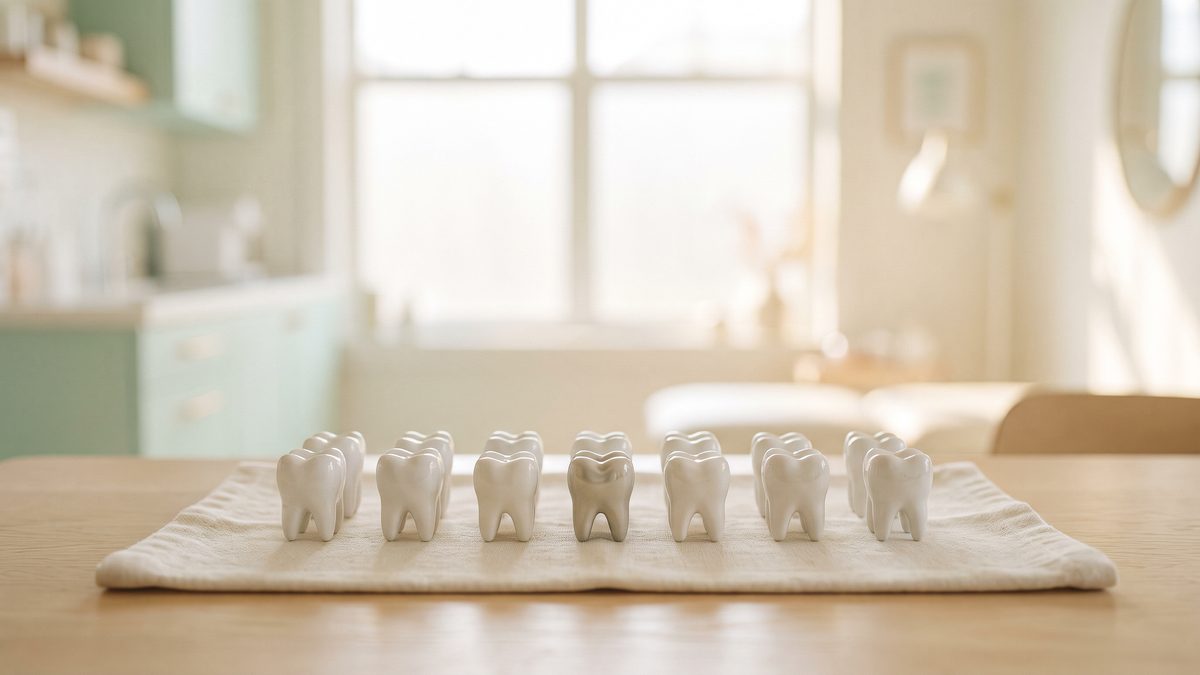
Key takeaway Several teeth yellowing together and one single tooth turning dark have completely different causes. When only one darkens, something has usually happened inside that tooth, and ordinary whitening will not bring it back. Here is how to tell the causes apart, what internal bleaching and prosthetic options involve, and what costs and aftercare look like.
Hello, I'm Dr. Oh Ji-hwan of Yonsei The Strong Dental Clinic.
Some patients come in after sorting through their summer holiday photos. They enlarge a picture of themselves smiling at the beach and notice that one front tooth looks darker than the ones beside it. "I thought it was the lighting, but it looks the same in every other photo." That is what one patient who came by bus from Beon-dong said while holding out a phone. Among those who come from the Dobongsan Station direction, too, there are people who arrive holding a single photograph.
Let me draw a line here first. Several teeth looking evenly yellow and exactly one tooth turning dark are entirely different stories. The first is a matter of the surface and of age, and it is approached with the whitening most people know. The second is something that happened inside that tooth, so no amount of brightening the outside will bring the colour back. Today I'll go through why a single tooth darkens, how to work out which situation you are in, what order treatment follows and what the options are, how costs and insurance work, and what you need to keep up once the colour has been restored.
Where tooth colour actually comes from
Many people picture a tooth as a solid white stone, but it is really three different layers stacked together.
The outermost layer is enamel. It is the hardest tissue in the body, and it has almost no colour of its own — it is closer to translucent glass. Inside that sits dentine, which is naturally yellowish. And at the very centre there is a hollow space where the nerve and blood vessels run: the pulp.
The colour we see is not the colour of the enamel itself but the colour of the dentine showing through translucent enamel. It is like looking at the colour of a drink in a glass. The glass does not decide the colour; what is inside it does.
Once you understand that structure, the types of discolouration sort themselves out naturally.
- Colour that sticks to the outside (extrinsic): pigments from coffee, black tea, wine and tobacco build up on the enamel surface and in tiny crevices. This usually affects several teeth fairly evenly.
- Colour that seeps out from inside (intrinsic): the dentine itself darkens or thickens. Both the overall deepening that comes with age and the darkening of a single tooth belong here.
A single dark tooth is almost always the second kind. And within that group, one cause is by far the most common.
Why that particular tooth
Fine blood vessels run through the pulp. If a tooth is knocked, if deep decay is left untreated for a long time, or if repeated irritation builds up during a large restoration, those vessels can be damaged. Blood components seep into the microscopic tubules of the dentine and oxidise over time, and that one tooth turns greyish-brown or a deep yellow. The principle is not so different from a bruise taking on colour.
One fact matters a great deal here. The colour may change long after the injury itself. It genuinely happens that someone knocked a front tooth in primary school, seemed fine at the time, and only years or even decades later, as an adult, saw the colour come through. In the clinic I often see someone say "I've never hit it" and then, much later, remember: "Ah, when I was little…"
A tooth that has had root canal treatment darkening belongs to the same family. Once the pulp is removed, the filling material and remaining tissue components can stain the dentine, and above all, the loss of moisture supply from living tissue changes how the tooth holds light. So the colour often changes not because something went wrong with the root canal, but as the natural course of a tooth without a nerve.
With the principle settled, the next step is working out which category your tooth falls into.
Comparing types of discolouration
| Category | Surface staining | Age-related overall change | One tooth darkening (non-vital) |
|---|---|---|---|
| Extent | Several teeth, mainly front surfaces | Upper and lower arches evenly | Usually one tooth, often a front tooth |
| Shade | Brown or yellow-brown patches | Deeper yellow overall | Greyish, grey-brown, deep yellow |
| Speed | Gradually, over months | Over years or decades | One direction, over months to years |
| Effect of scaling | Improves considerably | Almost none | None |
| Effect of ordinary whitening | Responds well | Responds to a degree | Very limited response |
| Main approach | Scaling and daily habits | Surface whitening | Identify the cause, then internal bleaching or a prosthesis |
If you feel you belong in the right-hand column, checking the cause first is far more economical than spending time on over-the-counter products or ordinary whitening. When the colour comes from the inside, polishing the outside cannot change it.
Worth having checked if any of these apply
- One particular tooth is noticeably darker, and the gap has widened over the past few months
- You remember knocking or injuring that tooth as a child
- That tooth has had root canal treatment in the past
- A small pimple-like spot appears and disappears on the gum near the dark tooth
- That tooth feels oddly different when you bite
- It is unusually unresponsive to cold, or unusually sensitive
- A dark band is visible along the gum line
A pimple-like spot on the gum that comes and goes is a signal worth checking regardless of colour. The absence of pain does not mean things are quiet inside.
What we check, and in what order
Colour alone cannot tell us the cause. In practice, the process usually goes like this.
- History taking (about 5–10 minutes): when the colour changed, whether you remember an injury or previous treatment. Even if it was long ago, telling us what comes to mind helps.
- Visual and lighting assessment: we compare the shade under natural and clinical light, against the neighbouring teeth and the matching tooth on the other side. A photographic record makes later changes much easier to judge.
- Pulp vitality testing (about 5 minutes): we check whether the tooth responds to a cold or gentle electrical stimulus, to gauge whether the nerve inside is alive. We never conclude from one test alone but read it alongside the other findings.
- Radiographs: we look for changes in the bone around the root tip, how far any previous root canal treatment went, and whether there is resorption of the root. Sometimes we add a three-dimensional image.
- Discussing the direction (about 10–20 minutes): we set out the options that fit what we found, along with the sequence, the timeframe and the cost.
That much usually happens at the first visit. What follows divides broadly into three paths.
First, the nerve is alive and only the colour has changed. The irritation has passed and only a trace remains. We may monitor and record the colour, or consider surface whitening to match the brightness of the surrounding teeth.
Second, the nerve has already lost its function. The correct order is to clean out the inside with root canal treatment first. Colour comes afterwards. Reverse the order and you can end up with a brighter surface while the problem inside carries on.
Third, a tooth that has already had root canal treatment has darkened. Here the common choice is internal bleaching (the walking bleach technique). A small access is made at the back of the tooth, bleaching agent is placed inside and sealed temporarily, then changed every few days so the colour lifts from within. It usually takes 2–4 visits over about 2–4 weeks, and once the desired brightness is reached the access is filled with a final material. Its greatest advantage is restoring colour without cutting the tooth down.
If internal bleaching is not enough, or if the tooth has already lost a lot of structure or is cracked, we consider a prosthesis such as a veneer or a crown. These can address colour and shape together, but the tooth has to be prepared, so it is best decided once you fully understand that it cannot be undone.
Questions we're often asked
Q. Won't whitening toothpaste or strips work? A. They help to a degree with surface staining, but they cannot reach colour coming from within the dentine. When only one tooth is dark, spending time this way can actually brighten the surrounding teeth and make the difference stand out more.
Q. It doesn't hurt — do I really need treatment? A. If it is purely a colour issue, there is no rush. But when the change in colour is a sign that the nerve inside has lost its function, inflammation can settle around the root tip without any pain. That is why I suggest asking "what state is it in now" before asking "should I treat it".
Q. Will internal bleaching bring the colour all the way back? A. How much it brightens varies a great deal from person to person, depending on the cause, how long it has been, and the condition of the tooth. Sometimes it becomes almost indistinguishable from the neighbouring teeth; sometimes we finish at around halfway. It helps to agree on a target together before starting.
Q. My child's front tooth changed colour after a knock. If it's a baby tooth, can we leave it? A. It is easy to think a baby tooth will fall out anyway, but what matters is that the permanent tooth is forming above it. Inflammation at the root tip of a baby tooth can affect the permanent tooth, so if you see a colour change, please have it checked.
Q. Is it too late after several years? A. Time does not remove the options. However, pigment settles more deeply as the years pass, which can limit how much it brightens, and we also need to check whether anything has changed around the root in the meantime.
With the options mapped out, let's look at the practical side.
Costs and health insurance
It helps to set out the principle first. Health insurance covers treatment that addresses "function", not treatment that addresses "colour and shape". The same tooth can fall on either side depending on the purpose.
| Item | Nature | Health insurance | Sense of cost |
|---|---|---|---|
| Examination and radiographs | Diagnosis | Covered | Small out-of-pocket amount |
| Pulp vitality testing | Diagnosis | Covered | Small out-of-pocket amount |
| Root canal treatment | Restoring function | Covered | Varies by tooth type and number of canals |
| Internal bleaching | Cosmetic | Not covered | Roughly KRW 50,000–150,000 per visit, total varies with number of visits |
| Surface whitening | Cosmetic | Not covered | Roughly KRW 200,000–400,000 depending on method |
| Veneer | Cosmetic prosthesis | Not covered | Roughly KRW 500,000–900,000 per tooth |
| Crown (cosmetic purpose) | Cosmetic prosthesis | Not covered | Roughly KRW 400,000–800,000 depending on material |
| Crown (protective, after root canal) | Functional prosthesis | Partly covered depending on material and conditions | Considerably lower when covered |
These figures are approximate ranges that vary with material, the condition of the tooth and the number of visits needed, and they differ between clinics. The actual amount should be confirmed at a consultation after your tooth has been examined.
A few things genuinely help keep costs down.
- Keeping the order matters most. If a prosthesis is placed before the nerve status is confirmed, a later root canal may mean drilling through it or remaking it.
- Considering the less invasive option first. If internal bleaching gives a satisfactory result, there is no veneer cost. Reverse the order and it cannot be undone.
- Checking your dental insurance policy in advance. Root canals and prostheses are covered by some products, but cosmetic items are generally excluded. Confirm the requirements and paperwork before treatment.
- You don't have to do it all at once. Separating the urgent part (inside the tooth) from the deferrable part (colour) spreads both time and cost.
Once the colour is back, the question becomes how long it stays that way.
Aftercare, stage by stage
With internal bleaching, what happens afterwards matters just as much. Here is the timeline.
Day 1–3: bleaching agent is inside and the access is temporarily sealed. Please don't chew anything hard on that tooth, and if the temporary material feels as though it has come away, contact us rather than leaving it. Bacteria get in while the inside is open.
Weeks 1–2: the colour lifts a little with each visit. The change may not be obvious each time, so comparing with the photo taken before the first visit helps you see it.
The two weeks after the final visit: the colour settles a little further over several days. During this period it is best to avoid deeply coloured food and drink such as coffee, black tea, wine and curry, as well as smoking, because the surface takes up pigment easily at this stage.
Months 1–3: we look again at how the tooth sits with its neighbours and consider fine adjustments if needed. A photo at this point becomes the reference for judging later changes.
Six months to several years: the colour sometimes drifts back a little. That is a common course, and a short additional session can be considered then.
The daily routine is simple.
- Rinse with water after deeply coloured drinks
- If you drink coffee often, use a straw or keep drinking sessions short rather than sipping all day
- Brush at least twice a day with a soft brush, reaching the gum line
- Clean between the teeth once a day with floss and interdental brushes
- A check-up every six months, and the annual scaling covered by health insurance
- Don't use front teeth to bite nails, bottle caps or thread — all the more so for a tooth that has already taken one knock
Please contact us rather than waiting if
- The temporary seal has come out or feels loose
- The tooth or gum has started to throb
- The gum is swollen or a pimple-like spot has appeared
- That tooth has newly started to hit first when you bite
- The colour was lifting and then suddenly darkened again
These signals usually mean something inside has changed, so it is better to be seen quickly than to wait for the next appointment.
When it isn't just one tooth — other reasons colour changes
So far we have covered the "only one tooth" situation. In the clinic, though, we meet other stories often, so here are a few, in case they help you place your own.
A filling showing through. As an old restoration ages, its margins can look dark, or the shadow of a metal core beneath can come through thinning enamel as a grey cast. This is not the tooth itself changing but what is inside becoming visible, and it often resolves once the material is dealt with. I've written separately about when an old filling should be replaced.
Only the gum line looks dark. When the gum recedes slightly and the root-side dentine is exposed, that band alone looks deeper. Here the state of the gum and the neck of the tooth comes before colour — especially if sensitivity comes with it.
White spots or streaks across several teeth. This reflects differences in enamel density formed while the teeth were developing. The colour is not deepening but standing out whiter, so the approach is entirely different.
Several teeth banded in grey-brown. This is a pattern associated with certain medication during tooth formation. It tends to respond poorly to ordinary whitening, so prosthetic options are often considered.
These categories are hard to tell apart by eye and call for different approaches, so guessing wrong costs both time and money. That is why deciding "what is causing this" before "what shall we do" is ultimately the fastest route.
If your child has knocked a front tooth
This deserves its own section. Knocking a front tooth in the primary school years is more common than people think. And what follows the injury matters more than the treatment on the day.
Immediately afterwards we check for mobility, displacement and fractures. Even when everything looks fine, examination matters because changes in the root or surrounding bone only show on a radiograph. After that, we generally review at these points.
- After 1–2 weeks: whether mobility has settled and whether colour change has begun.
- Months 1–3: this is when colour most often begins to change. Even a faint pink or grey cast is worth recording.
- Six months to a year: whether there are changes around the root tip or signs such as root resorption.
- Beyond that: with a permanent tooth, the colour can deepen gradually over years, so we look at it again at routine check-ups.
Here is the point parents most often miss. "It's fine right after the knock" does not mean "it will be fine from now on." It means the state on that day was checked. So please note the date of the injury, and at check-ups tell us "this is the tooth that was knocked back then".
A colour change beginning does not automatically mean treatment is needed, because it sometimes darkens temporarily and then returns. The judgement rests not on colour alone but on the direction the colour is moving, the radiographic findings, and whether there are symptoms.
What to look for when choosing where to go
Treating the colour of a single tooth involves more judgement than it appears. These points are worth watching during a consultation.
- Do they start with the cause rather than the colour? If a consultation begins with "whitening will fix it" without any testing, it is worth asking again.
- Do they explain at least two options? You need to hear the pros and cons of internal bleaching and of a prosthesis, and whether each can be undone.
- Are they honest about the range of results? Look for an explanation of how much brightening is achievable, what is difficult, and that individual variation exists.
- Do they keep records? Pre-treatment photographs and shade records are what make later judgement possible.
- Do they map out the schedule? Knowing roughly how many visits and how many weeks lets you plan around it.
- Do they avoid pressing for an immediate decision? Colour rarely changes overnight. A place that gives you time to think is a good sign.
Five common reasons things go wrong
First, skipping the cause. Treating the colour without checking the nerve lets a problem inside progress quietly.
Second, choosing the irreversible option first. Veneers and crowns can give excellent results, but the tooth must be prepared. Checking whether a less invasive route is possible is the safer sequence.
Third, starting without aligning expectations. Beginning with "it will look exactly the same" makes even a good result feel disappointing.
Fourth, relaxing during the two weeks after the final visit. Pigment exposure in that window often shapes the outcome.
Fifth, missing follow-up check-ups. Colour drifting back is something that can be topped up, but leaving it unnoticed for a long time makes it more work than it was at the start. I've also discussed why regular check-ups matter in an interview with Economy Science.
In closing
Three things, then. First, a single tooth darkening is not a surface issue but the result of something that happened inside that tooth, so the starting point is identifying the cause, not ordinary whitening. Second, settling the nerve status before addressing colour often means improvement without cutting the tooth down, and it leaves room to change course. Third, half the work is keeping the colour once it returns, so the two weeks after the final visit and regular check-ups afterwards are what carry the result. How much a tooth brightens varies from person to person, so if that tooth in the photograph has been on your mind, it is worth finding out which situation you are in.
Today in one line: when several teeth yellow together it is a matter of the surface; when one tooth darkens it is a matter of the inside of that tooth. The order always starts with the cause.
We're open until 9 p.m. on weekdays and 365 days a year, so a schedule like internal bleaching — several short visits a few days apart — is a little easier to fit around work. Our clinic's AI phone service also runs 24 hours after treatment hours end, so please leave a message if something urgent comes up. We're about a five-minute walk from Exit 1 of Dobong Station (toward Dobong 1-dong Post Office), near Dobong Station in Seoul, and patients coming from Dobongsan Station or the Beon-dong area find us easily. If you're driving, see our parking guide; if you'd like to know who will be treating you, see our dental team.